United States intercepts Iranian ship in Hormuz and Tehran denies resumption of talks
Donald Trump announces that Vance will return to Islamabad, amid new threats of destruction
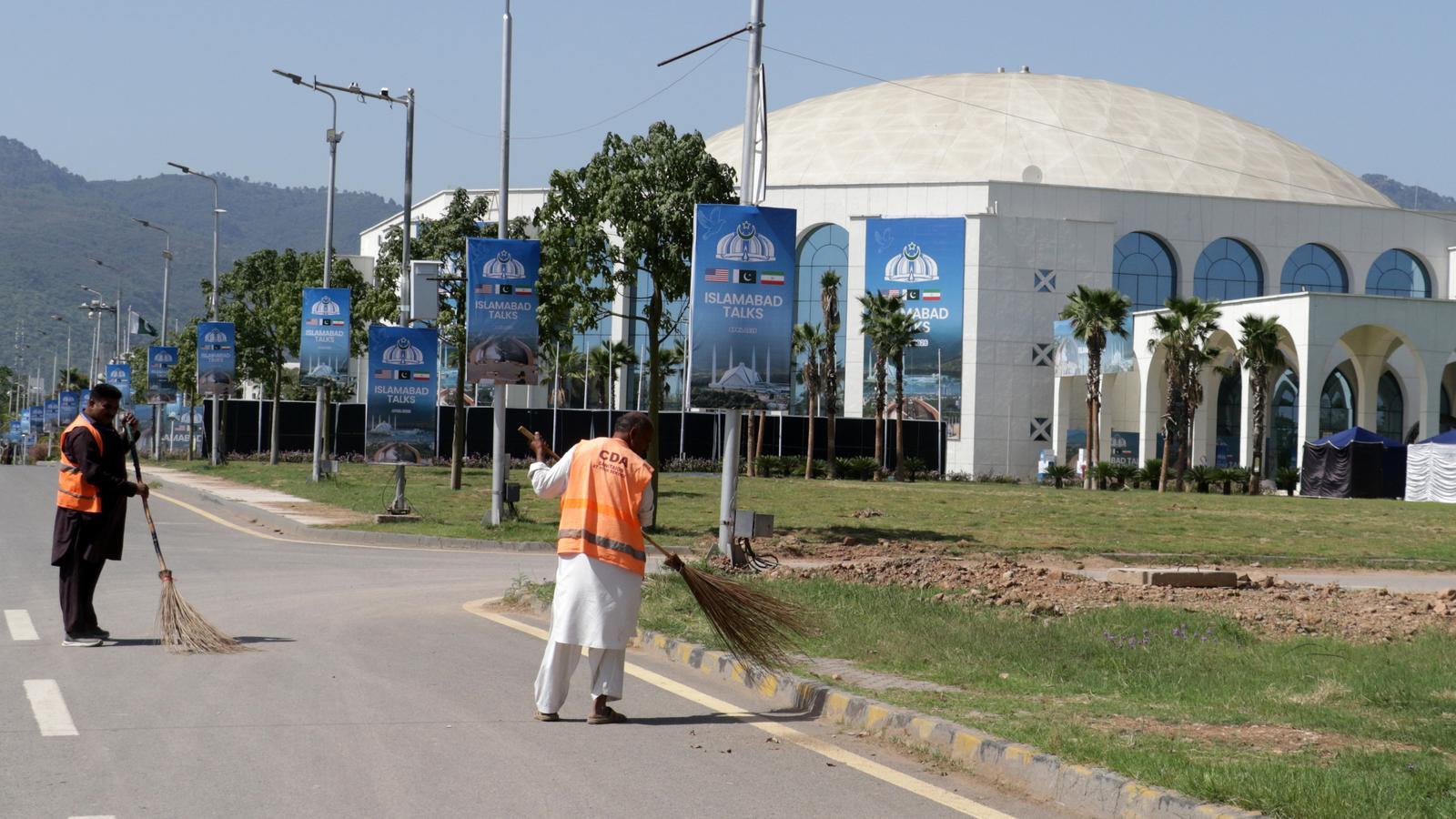

BarcelonaThe United States and Iran are squeezing the last days of the ceasefire, which expires on Tuesday night to Wednesday, in a race against time negotiation. Neither wants to return to an open war that would have unpredictable consequences, but no significant approximation of positions is seen either. The truce is affected by the situation in the Strait of Hormuz, which remains closed. Iran announced on Friday that it would allow commercial vessels to pass through a route under its control, but, after Washington said it maintained its blockade on the passage of Iranian vessels, the Revolutionary Guard said the strait "returned to the previous situation," and attacked several vessels. Trump considered it a violation of the ceasefire, and this Sunday he announced that his representatives will arrive in Islamabad on Monday night. He also stated that the US military had captured an Iranian ship attempting to cross the naval blockade. Vice President J.D. Vance will once again lead the US delegation, along with envoy Steve Witkoff and President's son-in-law Jared Kushner. Iranian authorities, on the other hand, have not confirmed the second round of talks and have accused Washington of "excessive demands, unrealistic expectations, constant changes of stance, repeated contradictions" and consider the US naval blockade a violation of the ceasefire.
Trump, however, also threatened with a post, once again, to destroy all of Iran's power plants and all of its bridges. "We are offering a very fair and reasonable deal, and I hope they accept it because, if not, the United States will destroy each and every one of Iran's power plants, as well as all of its bridges. Enough of playing smart! They will fall quickly and easily, and if they don't accept the deal, it will be my honor to do whatever is necessary, something that other presidents would have had to do in Iran over the last 47 years. It's time to end Iran's killing machine." Later, Trump told Fox News that "if they don't sign the deal, the whole country will blow up." The same threats of committing war crimes, which are escalating as he sinks deeper into the quagmire of a war conceived to be won in a lightning strike and which has already dragged on for seven weeks.

According to the semi-official Tasnim agency, Tehran warns that it is prepared to return to war, and denounces military movements by the United States, especially the deployment of warships, an "unprecedented airlift to transfer materiel" and numerous reconnaissance drone flights over its islands in the strait. Tehran considers that it could be psychological pressure to influence negotiations or preparations for a surprise attack. And it recalls that on two occasions – in June of last year and in the attack of February 28 that triggered the current war – the United States attacked when negotiations were open. The Iranian regime also threatens to impose "memorable hellish hours", and says it has reorganized and prepared during the truce. Specifically, it says that if the war starts again and its infrastructure is attacked, it will respond by blocking the passage of Bab el-Mandeb, which gives access to the Red Sea, which would further strangle oil, the facilities of the Saudi oil company Saudi Aramco, Yanbu and Fujayra.
The Strait of Hormuz, Iran's nuclear program, and the war in Lebanon between Israel and Hezbollah continue to be stumbling blocks in the negotiation. According to the President of the Parliament and head of the Iranian negotiating delegation, Mohammad Bagher Ghalibaf, there have been advances in the negotiations, but positions are still far apart on these essential points. This Sunday, Iranian President Masoud Pezeshkian has once again defended Iran's right to develop nuclear energy for peaceful purposes: "Trump cannot say that Iran cannot use its nuclear rights, without saying why: who is he to deprive a country of its rights?", he said according to an Iranian agency.
The fact is that Tehran continues to use its strategic advantage in the strait, through which 20% of the world's gas and oil traffic previously passed, as a means of pressure to force Donald Trump into an agreement that allows the regime's survival. Pakistan, as a mediator, continues to push for a second round of talks after the first meeting on April 12 ended with no other result than the agreement to continue talking. Pakistani Prime Minister Shehbaz Sharif has traveled these days to Saudi Arabia, Qatar, Turkey, and Egypt, and this Sunday he called Pezeshkian, in what he described as an "affectionate and cordial" conversation.

