The European Union plays with fire: it will host the Taliban

-
CAT -
CAST
BarcelonaI wonder if we would be scandalized if the European Commission invited members of the Islamic State to Brussels, the terrorist group that terrorized Europe with attacks and beheaded foreign journalists in front of a camera to then disseminate the images. That's why I'm so surprised that the news that the Commission plans to meet in Brussels in the coming weeks with a delegation of the Taliban, who are more or less like the Islamic State, has gone unnoticed.
The chronicles in ARA by Afghan journalist Madina AyarThe chronicles in ARA by Afghan journalist Madina Ayar are good proof of this. It can be said that the only thing that differentiates the Taliban from the Islamic State is that they do not intend to expand their fanaticism beyond Afghan borders. At least for now.
The spokesman for the European Commission, Markus Lammert, confirmed days ago that they have sent a letter to “the de facto authorities of Afghanistan” to invite them to “a technical-level meeting” in Brussels. In other words, they will receive the Taliban with all honors in the capital of the European Union, despite the contradiction this entails. Neither the European Union, nor any country in the world, except Russia, has recognized the Taliban as the legitimate government of Afghanistan, although they are the ones who de facto hold the reins in the country.
In fact, the meeting aims to negotiate the deportation of Afghan immigrants who “do not have the right to remain in Europe and pose a security threat”. That is, to get the Taliban to allow their return to Afghanistan, which they will logically only accept in exchange for something. In 2016, the European Union already agreed with the then Afghan government on the forced repatriation of up to 80,000 people. At that time, however, Brussels was in a position of superiority: Afghanistan depended on European economic aid for its survival. Let's hope that this time the EU does not put a check on the table to the Taliban, or something even worse: legitimizes them as a government.
The community spokesperson insisted that the meeting does not constitute recognition of the Taliban regime, as it will be strictly technical, without political representation. However, the person expected to lead the Taliban delegation is the spokesperson for the Ministry of Foreign Affairs, Abdul Qahar Balkhi, who is precisely responsible for hindering the entry of foreign journalists into Afghanistan and for modulating the message disseminated about the regime. It cannot have more political connotation.
Condemnation of the visit
This week, around thirty European parliamentarians and countless NGOs and human rights organizations have condemned the visit. Despite this, there is little that can be done. It is organized based on the request of twenty out of the twenty-seven member states: Austria, Belgium, Bulgaria, Cyprus, Czech Republic, Slovakia, Estonia, Finland, Greece, Hungary, Ireland, Italy, Lithuania, Luxembourg, Malta, Norway, the Netherlands, Poland, Sweden, and Germany. In fact, this last country has also negotiated on its own with the Taliban, and in the last two years, it has already carried out two repatriation flights with about a hundred people. Last October, the Taliban sent two representatives to the Afghan consulate in Bonn to specifically handle logistical matters. That is to say, since then, they have had a diplomatic presence in the country considered the engine of the European Union.
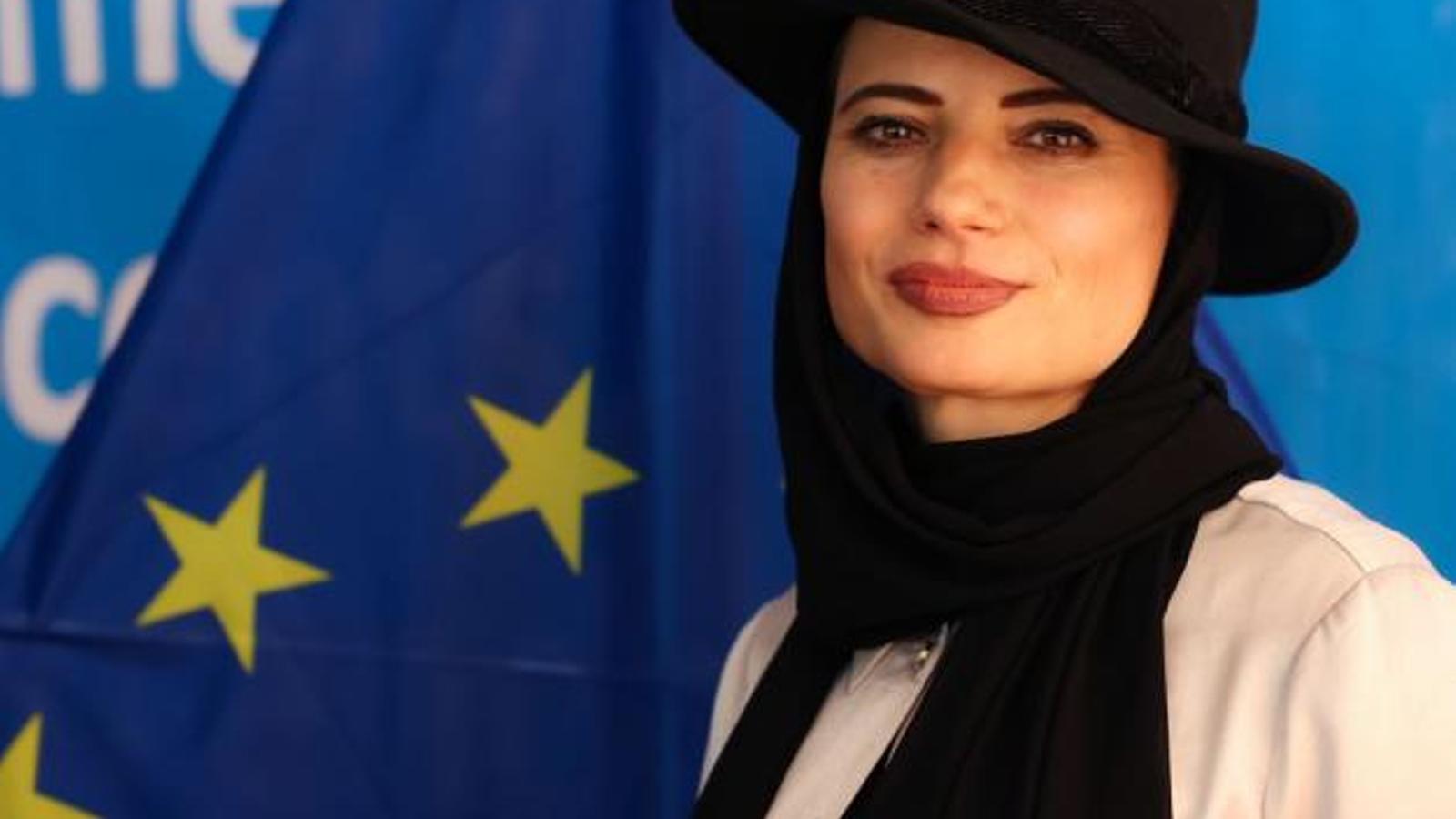
"The European Union maintains its commitment to the Afghan people: their dignity, their resilience, and their future," wrote on X on May 9th the Chargé d'Affaires of the EU Delegation to Afghanistan, Veronika Boskovic Pohar, after an event in Kabul to commemorate Europe Day in which, as usual, she wore a wide-brimmed hat and which was attended by many foreigners, but few Afghans. I don't know what future awaits the Afghan people with allies like the European Union. Undoubtedly, however, they will need a lot of resilience.

