Narcolanxes piloted by kamikazes already carry cocaine
The authorities warn of the rise of the African route and focus on new landings in Huelva and Catalonia
-
CAT -
CAST
Algeciras / BarcelonaThey skim over the water at over 110 km/h, surfing on the waves, with the bow making playful leaps. Since the 90s, they were responsible for introducing hashish from Morocco. Now the narcolanches also carry cocaine that arrives in the Iberian Peninsula through Africa. The National Police and the Civil Guard have already seized some of these vessels. The officers thought there was hashish, and the bales, in reality, carried white powder. "The speedboats are increasingly carrying more cocaine," admits Lisardo Capote, head of the Customs Surveillance Service (SVA) in the Campo de Gibraltar.

- If you want to investigate the graph in more detail, open the high-resolution version in another tab.
Traditionally, cocaine has been moved in maritime containers because more quantity can be transported that way and its high price made it possible to pay the associated costs, such as bribing port or ship employees or hiring transporters. Furthermore, the fact that it comes from South America rules out the possibility of crossing the entire Atlantic Ocean with a drug-smuggling boat, something that is indeed viable with hashish coming from Morocco. But times are changing: according to data from the World Drugs Report 2025, cocaine production soared by 34% in 2023, exceeding 3,708 tons. In 2019, half that amount, 1,784 tons, was recorded.
The drug works like any normal market – the more surplus there is of a product, the lower the price – and this has caused the cost of cocaine in large quantities to fall by almost half: from 50,000 euros per kilogram to 25,000. This decrease has opened up the possibility, according to police sources, for hashish to now be a currency exchange for cocaine. That is, South American cartels obtain hashish (which they do not produce there) and Moroccans obtain cocaine. This is one of the reasons, according to police sources, that has led to drug-smuggling boats carrying white powder.
The increase in cocaine demand has also led to increased activity on the so-called African route. According to a recent United Nations report, the African route has consolidated as a strategic axis connecting the production centers of Bolivia, Colombia, and Peru with high demand from Europe, taking advantage of the geographical proximity between Brazil and the coastline between Senegal and Guinea-Bissau. Once the merchandise reaches the West African coast, the trafficking branches out into three main routes: a maritime route that goes up the continent, an air route that uses airports like Bamako (Mali), and a growing land route that penetrates the Sahel, crossing Mauritania, Mali, and Niger until reaching Algeria and Libya. This drug transfer has seen a massive increase in seizures, rising from just 13 kg annually to 1,466 kg in 2022. When the drug reaches the Mediterranean coast, drug-smuggling boats come into play.
Mafias
The mafias that introduce drugs into Spain with drug-trafficking boats are established on both sides of the Strait of Gibraltar and the vast majority of their members are Moroccan. This also applies to those operating in Catalonia. Historically, it was Spanish drug traffickers who went to Morocco to collect hashish and bring it to Spain. But in recent years the business has diversified, often adding cocaine shipments, and at the same time it has been practically monopolized by citizens of Maghrebi origin.
–in charge of watching the area in case the police come–; the On the drug-trafficking boat there are usually 3 or 4 people – the driver, a couple more members and, sometimes, the insurance, a member of the gang who acts as a guarantor–; but to them are added the lookouts – in charge of watching the area in case the police show up–; the petaqueros – responsible for supplying gasoline–, those who guard the drugs in the warehouses – the premises where the merchandise is stored–, those who unload the bundles at high speed... On one trip, they can carry between 2,000 and 4,000 kg of drugs and, often, they can spend days at sea waiting for the right moment to land.
The most sought-after in this business are the drivers of the drug-trafficking boats. They can earn a lot of money for a single trip. Paco Mena, the most visible voice in the fight against drug trafficking in the Campo de Gibraltar from the association Alternativas, recounts the story of a boatman who ended up at his organization: "He was the best. He earned 60,000 euros on one trip and spent it all in a weekend on prostitutes and drugs. When he ran out of money, he lost his friends. He ended up leaving the area because he lost everything. A few years later, he confessed to me that he worked as a carpenter, earning 1,800 euros a month, but he was finally living peacefully."
The punts are usually young men from coastal towns where merchandise arrives and the petaqueros are part of a second tier. A few weeks ago, the National Police dismantled a network for supplying gasoline and provisions to the drug-trafficking speedboats waiting in the open sea to enter the Iberian Peninsula. In total, 800 drums containing 20,000 liters of fuel were seized, with an approximate value of 160,000 euros. Drugs provide work for many people.
Furthermore, the police are also very concerned about the increase in violence. At sea – one only needs to look at the maritime accidents, some of them fatal, involving Civil Guard vessels – but also on dry land. This week, in fact, some drug traffickers who were unloading hashish in Huelva – one of the areas with the most speedboat traffic in recent months – were met with gunfire by the Civil Guard. Police sources explain that there are increasingly more narco-assaults or vuelcos –when a criminal group steals drugs from another clan – and the thieves often pose as police officers. This means that sometimes drug traffickers open fire without knowing if they are thieves or police.
The origin
The first narcolanches, much more rudimentary than the current ones, were built in the 80s in Galicia, in the shipyards of coastal municipalities such as O Grove or Vilagarcía de Arousa. They were used for tobacco smuggling, although in a short time the Galician smugglers saw the opportunity to make a lot of money and began to introduce cocaine, becoming drug traffickers. The merchandise was unloaded from ships coming from South America and brought in with the narcolanches through the Galician estuaries. In the late 90s, police and media pressure caused the shipyards to move inland and industrial warehouses began to be used in industrial estates in inland provinces such as Ourense or Lugo. The next step was to cross the country: Portugal entered the scene.
The builders of the also called inflatables moved a few kilometers until they crossed the border. Especially from 2018 onwards, when the socialist government, led by the Minister of the Interior Fernando Grande-Marlaska, intensified police pressure in the Strait of Gibraltar area and promoted a change in the law: the use, manufacture, and possession of narcolanches over 8 meters or more than 300 horsepower was prohibited. As legislation was more lenient in Portugal, manufacturing was concentrated in Portuguese towns close to Galicia such as Valença do Minho, Caminha, Vila Nova de Cerveira, and also around Porto. They were built in northern Portugal, transported by truck to the south of the country, to the Algarve region, or to Huelva and Cadiz, and there the powerful engines – which can cost 40,000 euros – were added and they were launched into the water.

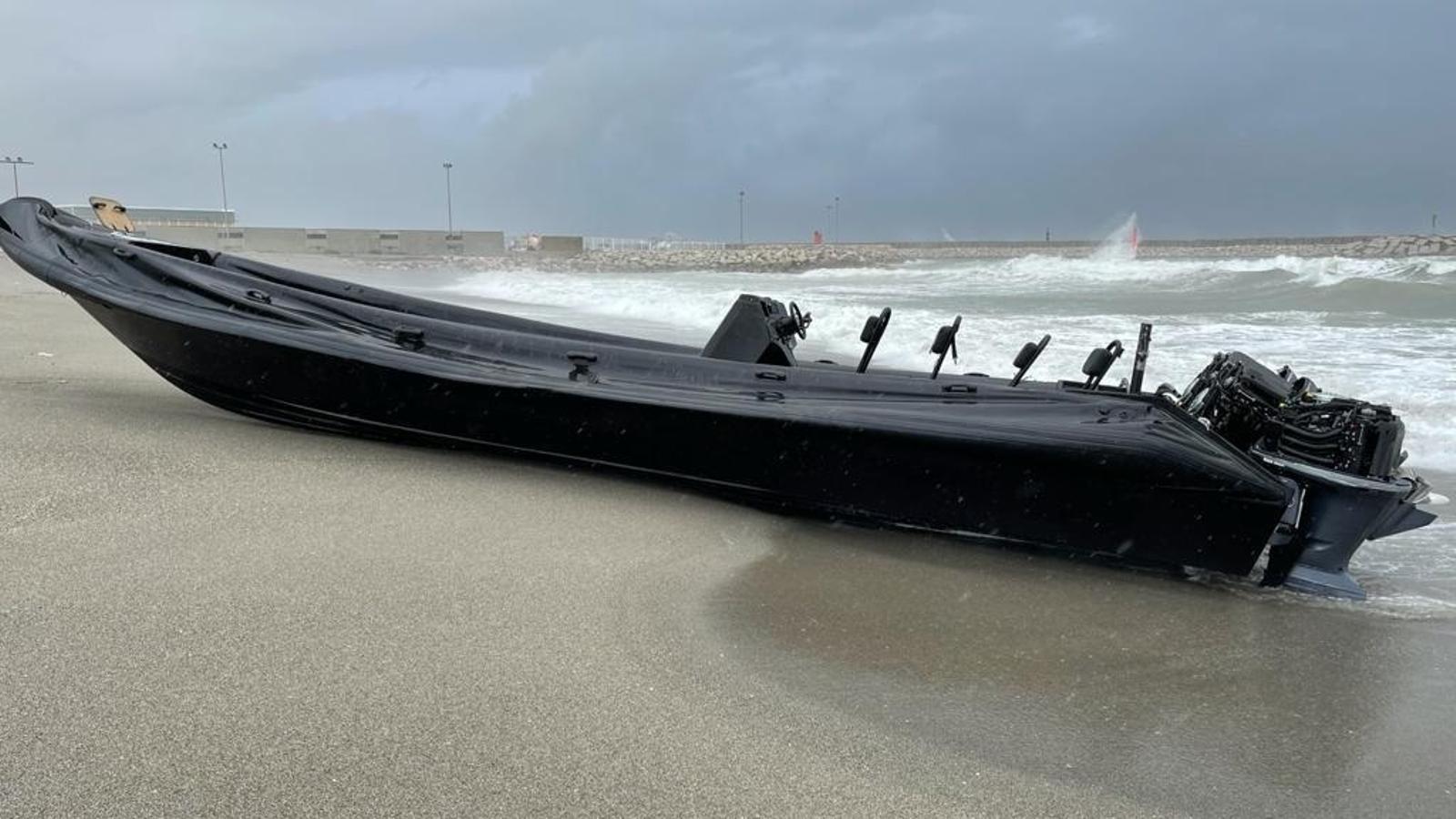
For the volume of business these organizations move, narcolanxos are not expensive. For 200,000 euros you can have one fully equipped, with the three engines that will allow it to exceed 100 km/h and the necessary satellite radar equipment. "When they break them, they abandon them. After a good storm, you find several along the coast, stranded on the beach," explains Lisardo. For the head of the Customs Surveillance Service of the Campo de Gibraltar, the problem in the fight against narcolanxos is not locating them – which they have resolved thanks to SIVE (Integrated System of External Surveillance), radars and air assets – but stopping them.
That is why in recent years there have been accidents in which Civil Guard agents have lost their lives. These boats are flying machines, often driven by kamikazes, often driven by kamikazes. "They have the legitimate right to flee. In Spain, you cannot use force unless it is to repress an attack. You cannot do like in the United States where they go "}boom" and that's it, the nonsense is over. They set off at high speed with the entire load, and we can reach their level, but the problem is stopping them," argues Lisardo.
An Andalusian police officer recalls how in an operation near La Línea de la Concepción (Cádiz) they had located up to 7 narcolanxos with a helicopter. Which one were they following? How could they stop them? Which one was carrying the merchandise? Whether in Spanish or international waters, states are obliged to pursue them because they are pirate vessels, without a flag, name, or official registration. Precisely, in May, Spain received good news in its anti-drug trafficking policy: Portugal has also banned narcolanxos, equating its law to the Spanish one.
Catalonia, transit zone
Catalonia is also currently a transit zone for drug-smuggling boats. Inspector Antoni Salleras, head of the Central Area of Organized Crime of the Criminal Investigation Division (DIC) of the Mossos d'Esquadra, explains that in the 2000s there was already a high rate of hashish landings. They even detected drug-smuggling boats at the mouth of the Llobregat River. In those years, the transport of drugs was mainly carried out by Spanish individuals, native clans who benefited from trafficking with Morocco. Now, however, hashish mafias already have their lieutenants in Catalonia.
From 2010 onwards, landings decreased, but due to police pressure in the Strait of Gibraltar, drug-smuggling boats returned to Catalonia after the pandemic. In fact, in the south, this pressure in the Strait has also led traffickers to head more towards the Huelva area, the mouth of the Guadalquivir, and coastal towns like Chiclana. Unlike Andalusia, drug-smuggling boats carrying cocaine have not yet been detected in Catalonia, but the Mossos are aware of it and are analyzing the phenomenon. Last year, about six or seven drug-smuggling boats were detected in Catalonia looking for coves where they could land the drugs. In all of Spain, there were up to 600.
At the end of the day, however, any place is good for traffickers: from the most hidden beach of Cap de Creus to the port of Mataró, where 5,000 kilos of hashish were found. They have even detected drug-smuggling boats in Lleida: it was in 2023 and the police forces found two boats to transport hashish in Torre-serona, almost 100 kilometers from the sea. Lleida was the place where they kept the boats that were later to make the route from Morocco.
