Treves evasive

-
CAT -
CAST
The negotiation to reach a truce is usually complicated, especially if there is no real will to sustain it, as is the case we are dealing with. It is natural when countries are military superpowers. Why should the United States and Israel sign truces, and respect them, when they have powerful armies, much more powerful than those of Iran, Hezbollah or Hamas?
On the other hand, the proclamation of truces has become almost a daily occurrence and has lost the solemn meaning it had in the past, a meaning that even had a certain grandeur. Now one truce follows another and very often they are violated, as we see in Gaza,Lebanon or Iran.
In fact, one of the fundamental points that the United States and Iran are negotiating, perhaps the most important, is the Iranian demand for credible guarantees that once an agreement is reached, the United States will not return to war seeking any kind of excuse.
Finding excuses
Everyone knows that excuses are easily found when one wants to find them. This week the Americans attacked Iran, disregarding the latest truce. Furthermore, how can it be guaranteed that Israel will not violate the truce that the United States and Iran sign, either in Iran or in Lebanon, not to mention the Gaza Strip?
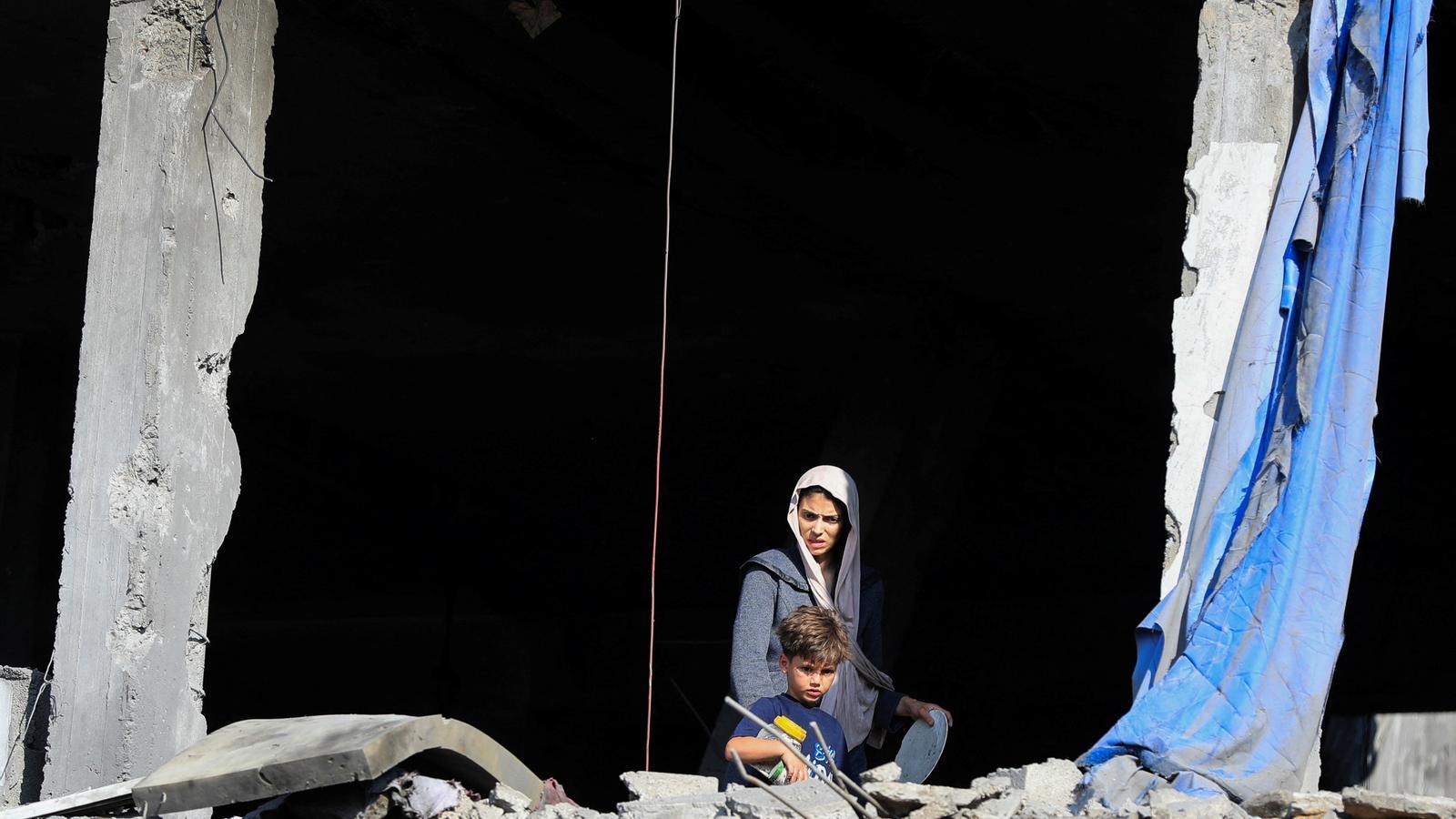
The Israeli army bombs the Gaza Strip daily, and without any reaction from Hamas. Every day there are half a dozen deaths in the Strip, or a whole dozen. The vast majority are civilians, women and children, a circumstance that everyone sees, but no one does anything to stop it, neither in Europe nor in the United States.
This week some Israeli authorities have again spoken openly about the expulsion of the Strip's population. They want the Palestinians to leave voluntarily as much as possible, and therefore it is a matter of making their existence impossible, an issue that the Israeli authorities master and are also applying in the West Bank.
Hamas says that Israel is breaking the truce, that the agreement first contemplated a gradual withdrawal of the Israeli army from the Strip, a withdrawal that is not happening. Israel says that the agreement foresees the disarmament of Hamas, another circumstance that is not happening.
It is easy to find a reason to violate a truce, and therefore it is understandable that Tehran wants guarantees. But who can guarantee a truce? The United States, which violated it this week? Israel, which violates them permanently? No one can guarantee it, neither the United States nor Israel, at least in a persuasive and credible way.
A truce signed by Iran is more credible than a truce signed by Israel. Perhaps this explains why the United States is not demanding guarantees that Tehran will respect the truce, because the Islamic republic respects the agreements it signs, unlike the United States or Israel.
The problem would have a solution if Israel wanted to resolve the conflict with the Palestinians, but every day it shows that this is not its intention. And there is a decisive factor: Israeli elections will be held in September or October, and Prime Minister Benjamin Netanyahu is not interested in peace, now less than ever. This means that even if there is a truce, Israel will seek a way to violate it, because on the eve of the elections Netanyahu's popularity depends precisely on violence and war.
