Viola Ardone: “Children must disappoint their parents to have freedom”
The Italian writer publishes 'Tanta vida todavía', a novel about two women united by a child who flees from Ukraine

-
CAT -
CAST
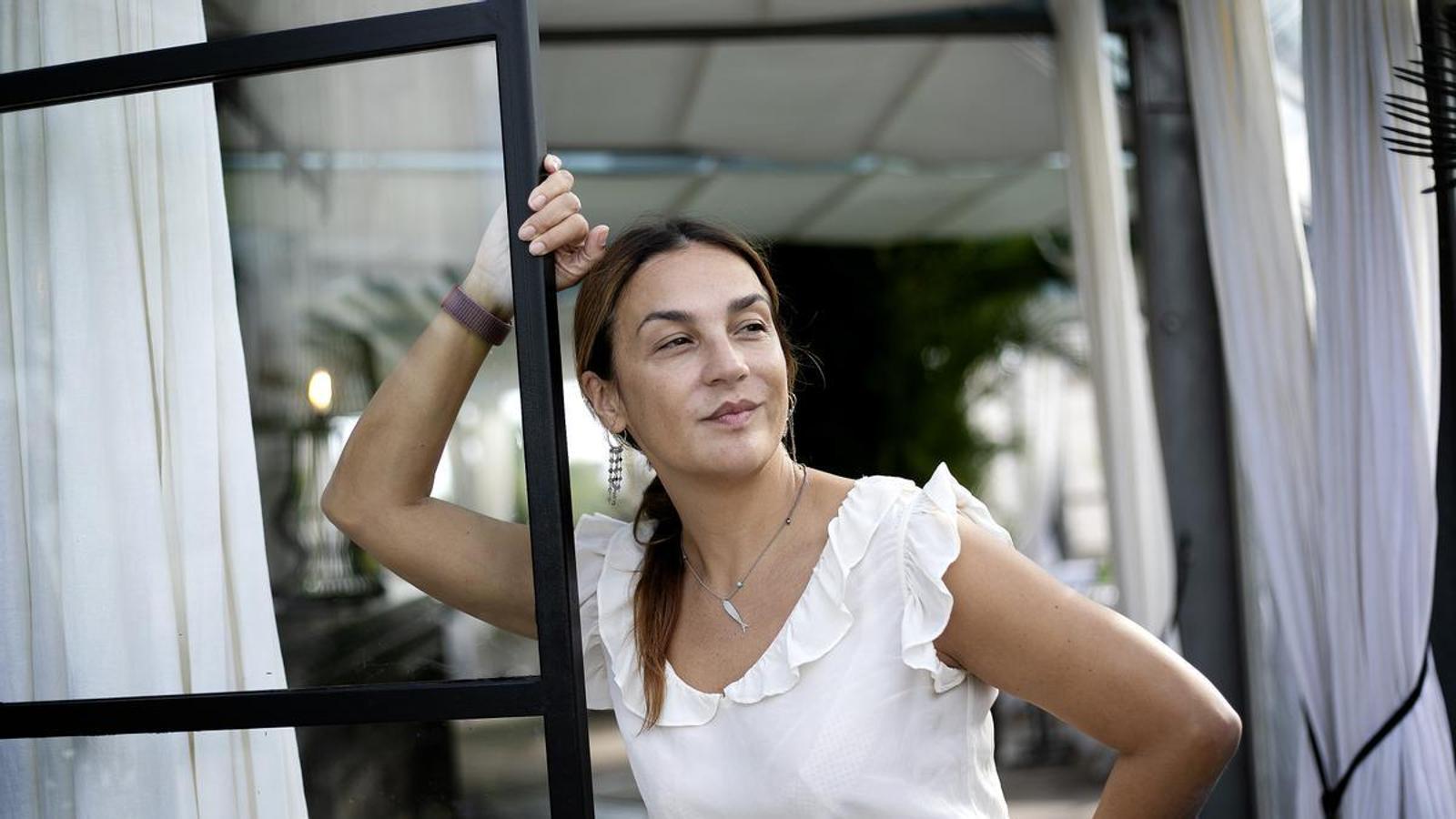
BarcelonaIn the third book by Viola Ardone (Naples, 1974), The Children's Train (Columna, 2020), a child boards a train after the Second World War to escape misery. That novel was a phenomenon in Italy, was translated into several languages, and Netflix made it into a film. Ardone has continued her literary career; in 2023 she published The Decision (Columna) and has been combining writing with teaching Italian and Latin at a high school. Now she returns to bookstores with a new story that also begins with a boy boarding a train. The novel is titled Grande maraviglia (Random House) and has been translated into Spanish by Marilena de Chiara (the book is not published in Catalan). One of the protagonists of this story is Kostya, a 10-year-old boy who, in the middle of the war, leaves Ukraine alone to meet his grandmother, who has been living in Italy for years.
“In The Children's Train I told the story of those children who, in the middle of the postwar period, crossed Italy to save themselves from hunger and poverty. They did it accompanied, with organizations behind them like the Communist Party and the Union of Italian Women. Now, unlike then, if children are saved, they do it alone. The idea that children are a common heritage and that they must be protected has disappeared,” states Ardone. Kostya will flee, pushed by his father, who wants to enlist in the army and cannot take care of him, and his journey will be a sum of hardships and coincidences. In Italy, he will reunite with Irina, his grandmother, who graduated in philosophy but works as a cleaning lady at the home of Vita, a wealthy teacher. “Children have the power to change the balance between people. Kostya’s arrival will move everything, it will make the lives of Vita and Irina activate again,” says the writer.
The novel is structured into three parts, each of which gives voice to one of the protagonists. The child's perspective is the starting point of the story, which continues with Vita's narrative voice and ends with Irina's. The two women, beyond their professional bond, also share the fact that they are mothers and this brings them closer together. “Motherhood is one of my obsessions,” Ardone points out. “I am interested in how relationships between parents and children must always involve a betrayal. Parents must disappoint their children so that they can grow, and children must disappoint their parents to have freedom.” Vita's story, moreover, is marked by a deep wound: the loss of her son, which has driven her into depression. “Her motherhood has been cut short. Is a mother who has lost a child still a mother? It is a huge question to which I have no answer,” says the author.
Two traumas of Europe
For Ardone, “covid and the war in Ukraine are the two great traumas of contemporary Europe”. The writer wanted to capture the perspective of someone living through the war from afar, as is the case with Vita, and interweave it with the experiences of a woman for whom the armed conflict has defined her reality, as happens with Irina. Through her, Ardone reflects on the arrival of migrants in Italy and the response of the society that welcomes them. “Ukrainian women are well accepted in the country, because they take care of our grandparents and our children, they work in factories, and they have the same skin tone as we do. But then there are the migrants who do not look like us and whom we think are dangerous, a threat. The character of Irina wants to show that the good migrant and the bad migrant do not exist. Everything is stereotypes,” asserts the writer, who demands “a more adequate management of migratory flows and that Europe adopt a more solidary common policy” because “all European states need migrants”.
The writer’s experience as a high school teacher is present in the novel through Vita, who teaches night classes to youth and adults. Teaching brings light to the character and also to the story, emphasizing the importance of education to achieve a better society. “Teaching is exhausting, but it gives me a lot of energy. I cannot give it up –emphasizes Ardone–. To think about the future honestly, the only investment that a state should make is putting money into schools and high schools”.
