Xi's orchids send a grave message to the world
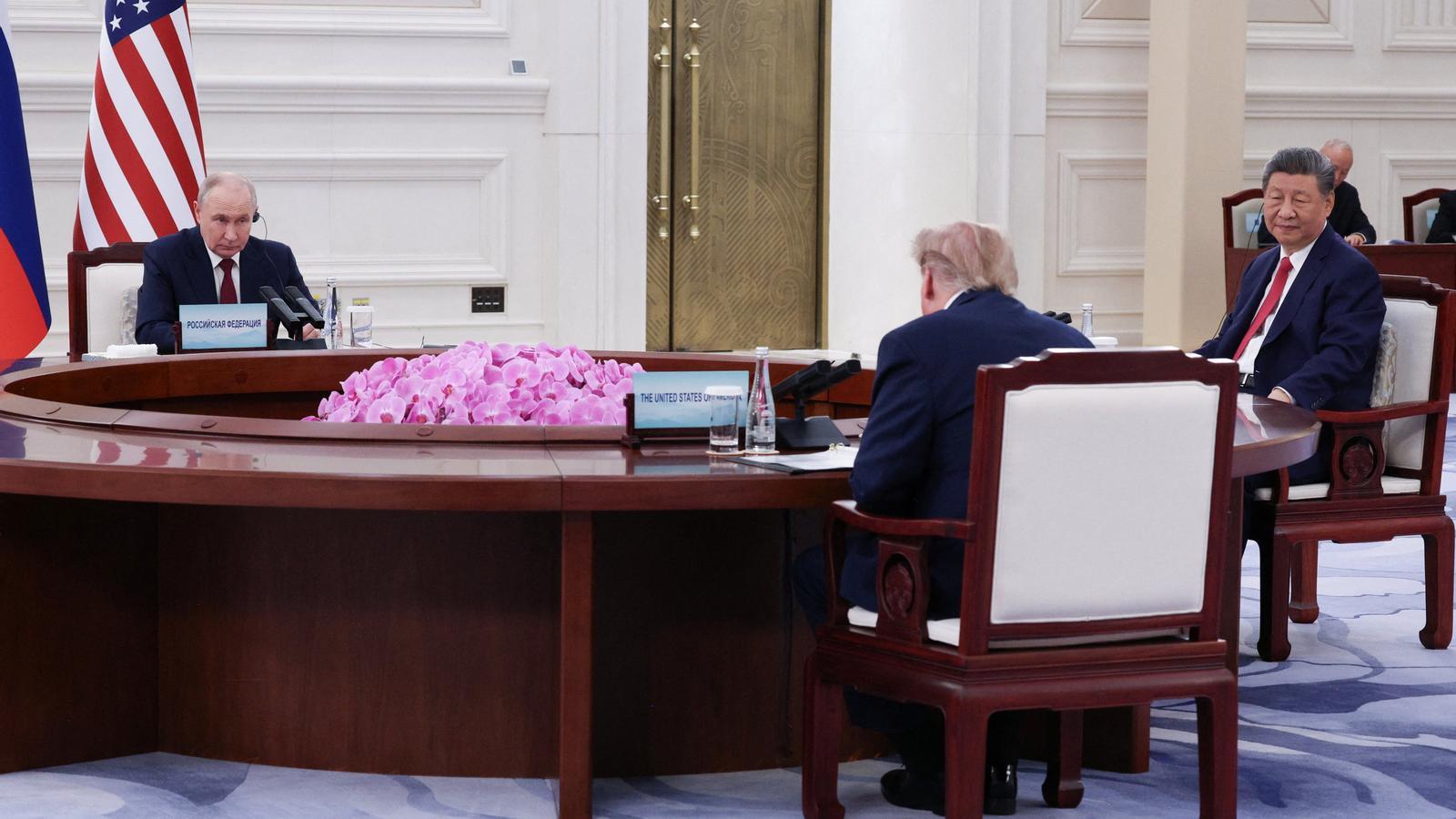

The exquisite Chinese diplomacy has chosen butterfly orchids – pink and lilac, colors of love – to decorate the center of the large round table where Xi Jinping, Donald Trump and Vladimir Putin have met. Of all the harmonious meanings that Asian tradition bestows upon these flowers (elegance, nobility, moral perfection, prosperity) there is one with a clear political reading: lasting friendship, sincere friendship.
“Who is he? He is my friend,” joked Trump about Putin before greeting him effusively. And regarding Xi, the American president also made a childish-toned ode to friendship: “You are a friend of mine and we have a very special relationship.” The Russian and the Chinese are also very close friends, just as the infinite, borderless strategic alliance that Beijing and Moscow signed just twenty days before the bombs began to rain over Kyiv reads.
The photo we have seen today in the futuristic Shenzhen, the pride of Xi’s technological innovation – his great geopolitical weapon – is the clearest confirmation of Washington’s vocation to embrace the bond, the friendship, with Beijing and Moscow. It is a dangerous embrace – also for the future of the United States – that confirms another known vocation of President Trump: the marginalization of Europe, which is also signifying the rupture of the West. The change in the international order has accelerated and does not seem to have a turning back.
Regarding these international moves by Trump, much more strident in his second term, the same question always hovers: is there any strategic logic behind them? Trump’s praise for Xi sounds strange if one takes into account that Beijing has been, and will continue to be for years, Washington’s greatest challenge in foreign policy. But with Trump, often, conventional logic is not understood and other more immediate, more mundane aspects can take precedence, such as his obsession with the Nobel Peace Prize – it is no joke that he devoutly desires it – or his admiration, which is also no joke, for strong and autocratic leaders.
The strategic logic is indeed clearer in the case of Xi and Putin. The Chinese leader, without changing a comma of his foreign policy discourse (China does not interfere, China is committed to peace, China is pragmatic), has today shown his global influence, and there are probably many reasons now to agree with German analysts Stefan Aust and Adrian Geiges who, in 2021, published the book Xi Jinping: The World's Most Powerful Man. And Putin is, without a doubt, the big winner in Shenzhen. In the eyes of the Russian leader, one of the main objectives of the aggression against Ukraine was to heal past humiliations and recover Russia's imperial greatness. Almost five years of war later, the Kremlin occupies one of the three most important chairs in the world order, and, on the Ukrainian front, Putin counts on the favor of Beijing and also Washington to face the most decisive winter of the war.

