Rebecca Christie: "That the United Kingdom obtains more benefits than it had when it was in the EU makes no sense"
Researcher at the think tank Bruegel

-
CAT -
CAST
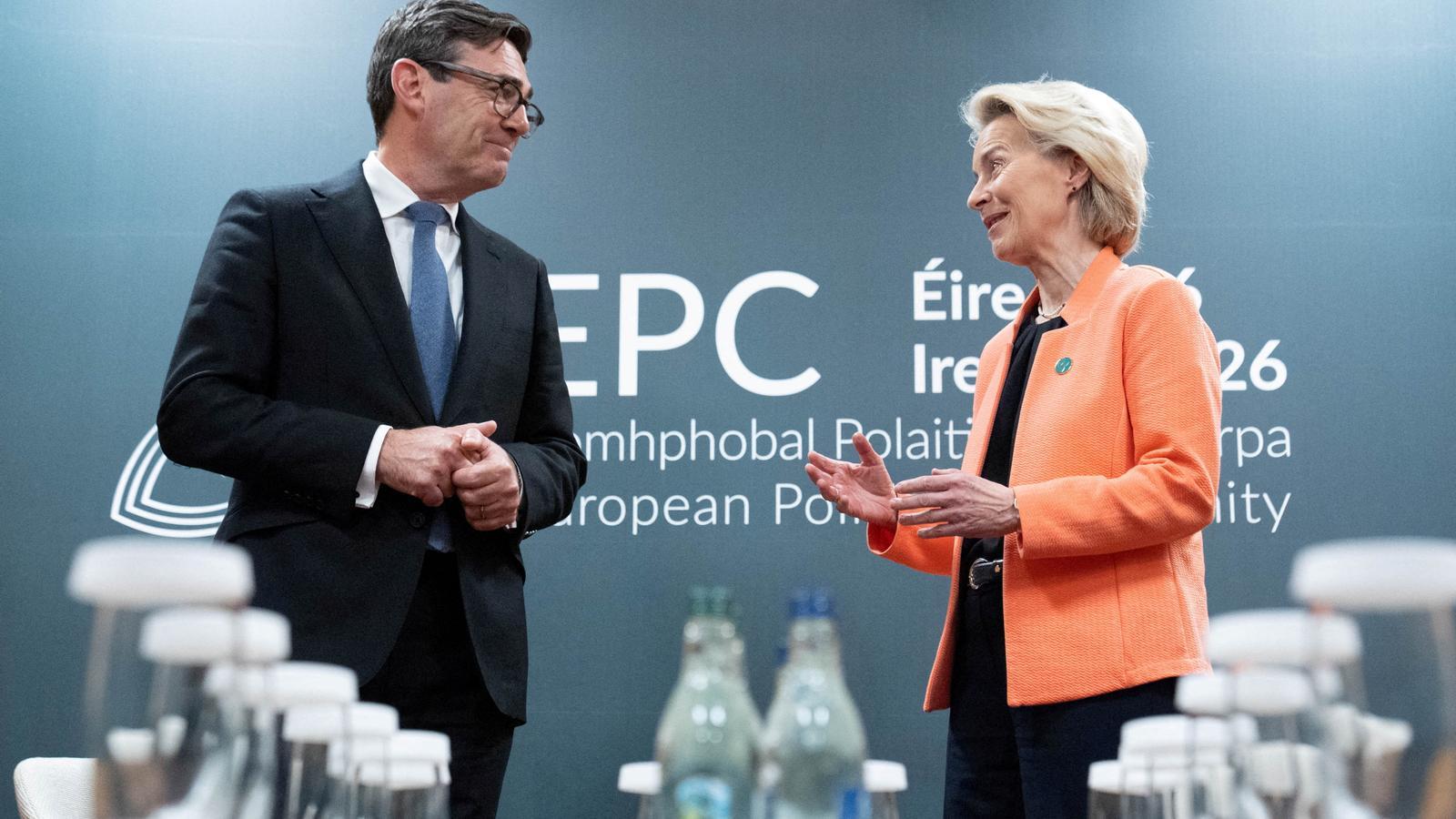
BrusselsThis Friday, Brussels hosts the staging of a rapprochement between the United Kingdom and the European Union unprecedented since Brexit. On the table is an agreement on agri-food trade, the made in Europe, youth mobility, and university tuition fees. But in the air, there is a deeper debate: to what extent is the United Kingdom willing to move closer to Brussels? We discuss it with Rebecca Christie, a researcher at the think tank Bruegel.
What has changed since Brexit?
— On one hand, British politics. There is a new prime minister, Andy Burnham, and he arrives with much more enthusiasm on the part of voters to rethink the United Kingdom's relationship with the EU. On the other, the initial tensions of Brexit have been calming down. Brexit is done and people are realizing that it hasn't been very good for the majority. A lot of business volume has been lost by people working with the EU. More bureaucracy, more costs, more labeling. So there is a lot of interest in what can be done.
Burnham admits that Brexit was a mistake, but rules out full EU membership. What does the United Kingdom really want?
— It is a good question, and it is more difficult than it seems. We know that the agenda for this summit includes an agreement on agri-food trade, the possibility of studying the emissions trading system (ETS), and progress in youth mobility. The latter is key. Ordinary people want to travel again without headaches or queues at the border, which have been very burdensome for everyone. But this clashes with the United Kingdom's suspicion regarding immigration. Even without joining the Schengen area, facilitating mobility would be a great step to unlock many impasses. The other issue is money. There are many areas where it makes sense for the United Kingdom and the EU to work together. Brussels has offered to cooperate in areas such as defense, but it demands that London pay its share. And the United Kingdom continues to have budget problems. So it is difficult for much cooperation to move forward if they do not intend to pay for it.

In Brussels, it is often said that London wants the best of both worlds: the benefits of being part of a bloc and the freedom to go its own way. Do you believe that is the case?
— I would not be so harsh, but yes. The United Kingdom already had a very good deal when it was part of the EU. It had exemptions on defense and the euro, and a British rebate on the budget. Now that it has left, the idea that it should obtain even more special privileges than it had when it was a full member and contributor makes no sense from the EU's perspective.
What problems would a partial access to the single market entail?
— If the United Kingdom wants to enter the single market, it must enter with all the consequences. It cannot be a part of it and, at the same time, maintain its own rules, export controls, or tariffs. The essence of the single market is that one enters it fully. Although it still has shortcomings and fragmentation, the EU will not let someone in who is not interested in the project as a whole.
What incentives does Brussels have to open the door for them?
— I do not think this question can be answered without looking at everything as a whole. What is the United Kingdom willing to be a part of? Which of its red lines is it willing to renounce? How do they view the issue of the four freedoms [movement of goods, services, people, and capital]? If the United Kingdom is interested, I believe the EU will talk about it. But as long as the United Kingdom maintains its current red lines, we will remain stuck.
Is the United Kingdom ready for an approach to the EU?
— For a closer relationship than it has been until now, yes. But we are not there yet. In fact, Burnham has said that he will wait until mid-December to present his full proposal. He wants to buy time and see how things go.
What should we expect from this Friday's summit?
— I hope it serves not only to close the agri-food agreement but also to test the waters and see how everything looks. If they return home having made concessions, people may say two things: “It makes sense, we want to sit at the table with something to offer,” or they will be suspicious and say: “Listen, we left it, why are we offering them things?” This is a question for the British. I think most think that Brexit was a mistake, but that does not mean they want to undo it. That is the thing about democracy: it allows you to choose an option even if it is not the best one.
How should we interpret the agreements expected with London: as a symbolic gesture or as a real breakthrough?
— It depends on how many steps are taken and how positive they are. If we come out of it tomorrow with an agri-food agreement, the outline of an agreement on youth mobility, and some concrete ideas on electricity and the ETS, it will be a very good sign. If we come out of it without any agreement, it will be bad. And if only the agri-food agreement is reached but no progress is made on the rest –or if a squabble breaks out because the EU is wary of sharing cheap electricity that its own citizens need–, the situation will not help at all. I hope it doesn't go that way. But these are just speculations.
