The mountain neighborhoods take the floor in the World Capital of Architecture
An exhibition reviews the historical struggles of the neighbors of this area of the city
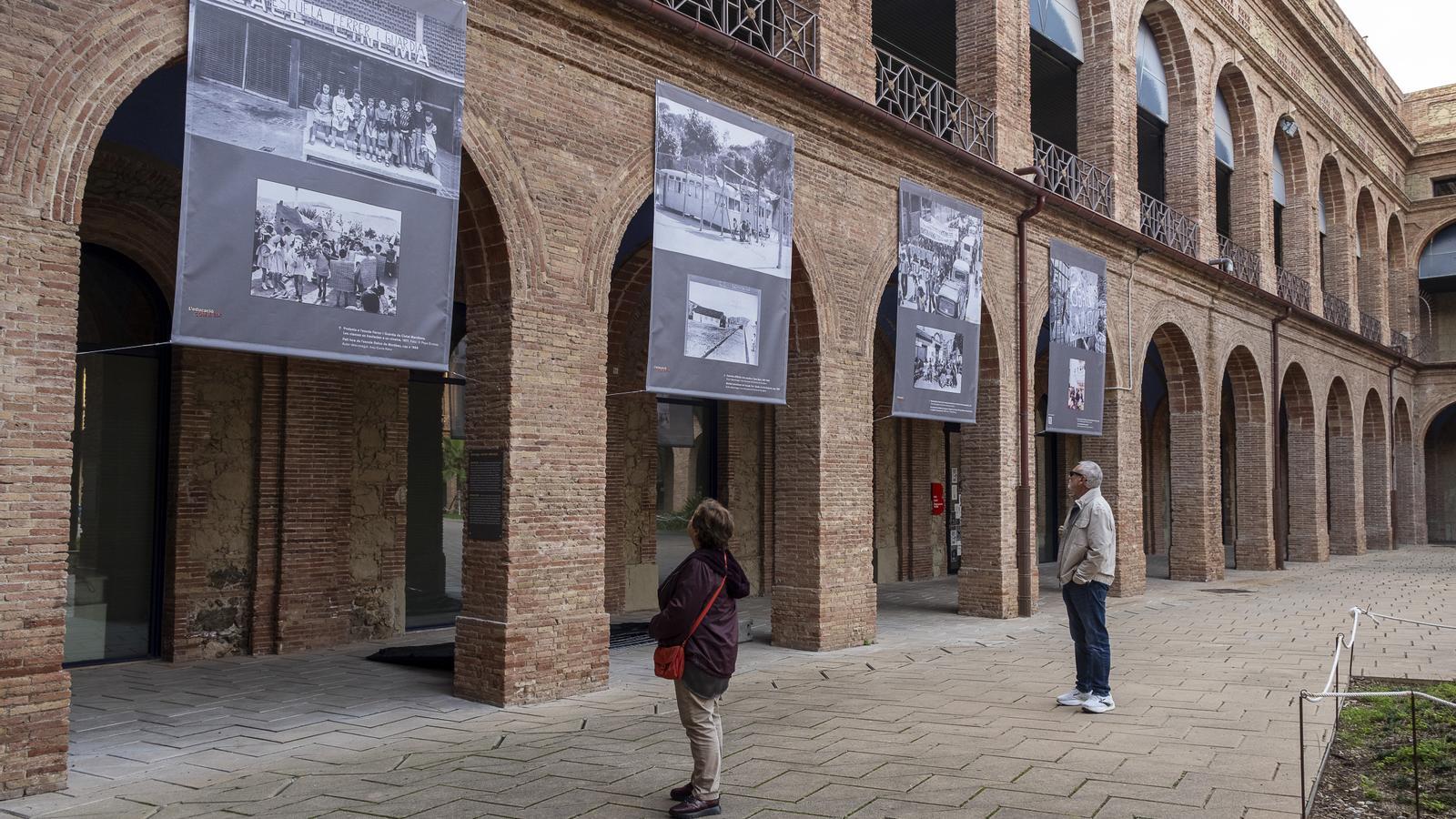

BarcelonaThe heavy rains at the beginning of October once again brought to the table the deficits that the mountain neighborhoods in Barcelona still suffer from today. The residents of Torre Baró, Sant Genís dels Agudells, or Font del Gos denounced once again the neglect to which they are often subjected. A situation that highlights that the struggles of these parts of the city, portrayed by the exhibition The Right to the City: The Mountain Neighborhoods from Sant Genís to Trinitat Nova remain as alive as ever.
The exhibition, which can be visited until December 13th within the framework of the World Capital of Architecture, reviews the history of the neighborhood struggle in the neighborhoods on the slopes of the Collserola mountain. To do so, its curators, architect Fernando Marzá and art and design historian Neus Moyano, have delved deeply into public and private photographic archives. From there, they have selected a series of images that, printed in large format, capture an era.
The photographs show how the citizens of these neighborhoods organized themselves to win basic rights, in many cases building them with their own hands. In conversation with ARA, Moyano emphasizes that in many cases it was the neighborhood residents themselves—who often worked in construction—who were in charge of building not only the houses they lived in during their free time, but also the sewage systems or the streets of their neighborhoods. It was what was called "urbanizing on Sunday," she says.
All of this was immortalized in thousands of photographs that, after in-depth research, Marzá and Moyano are now showing to the general public. Among the images, the historian explains, there are some by photojournalists like Kim Manresa, Manel Armengol, or Pepe Encinas, "who at that time worked for Tele/eXpres and were beginning to take an interest in the neighborhoods."
Three different facilities
The exhibition unfolds in three different facilities. The district headquarters of Nou Barris focuses on the struggle for decent housing and infrastructure, with the great demonstrations, under the slogan "No to the regional plan, yes to the popular plan," which led to the renewal of public space and the arrival of facilities and services in the neighborhoods. It also portrays the struggle during the Transition to obtain primary care centers in the area and improve the quality of educational centers in the neighborhoods.
At the Casa Groga, in the Horta-Guinardó district, the exhibition focuses on another of the battles of the mountain neighborhoods that still persists: that of transport. Now that the filmEl 47 has popularized the struggle of Manolo Vital and his neighbors to bring the bus to Torre Baró, the exhibition documents decades of demands for the bus and the metro to reach not only Torre Baró, but also Sant Genís, Montbau, Roquetes, and Trinitat Vella. Struggles that connect with a demand that is more than three decades old, but which still persists: the covering of the Ronda de Dalt.
Finally, at the Montbau Multipurpose Hall, the exhibition focuses on heritage and documents some of the examples that have disappeared, such as the old monastery of Sant Jeroni de la Vall d’Hebron and many of the farmhouses that occupied the Horta valley.
The lost landscapes
Precisely these days and also within the framework of the World Capital, another exhibition can be seen in Barcelona that deals with lost heritage in the city. In this case, with the title Lost Landscapes, it can be seen at the Pati Llimona Civic Center, in the Gothic Quarter, and it proposes a journey between the past and the present of some places in the city. With a simple game of overlapping images, it allows one to grasp at a glance the transformation of Barcelona and resurrect for a while spaces such as the Paris cinemas on Portal de l'Àngel or the Frontó Txiki-Alai, in the Raval.
The exhibition is curated by Dolors Canuda and Mariano Serrano with the collaboration of the Heritage Commission of the Federation of Neighborhood Associations of Barcelona (Favb). It does not only focus on large iconic buildings, but also remembers streets and modest buildings that were part of the history of the neighborhoods that has become blurred.
