The photo that we did not take on the coast of Saint-Louis

-
CAT -
CAST
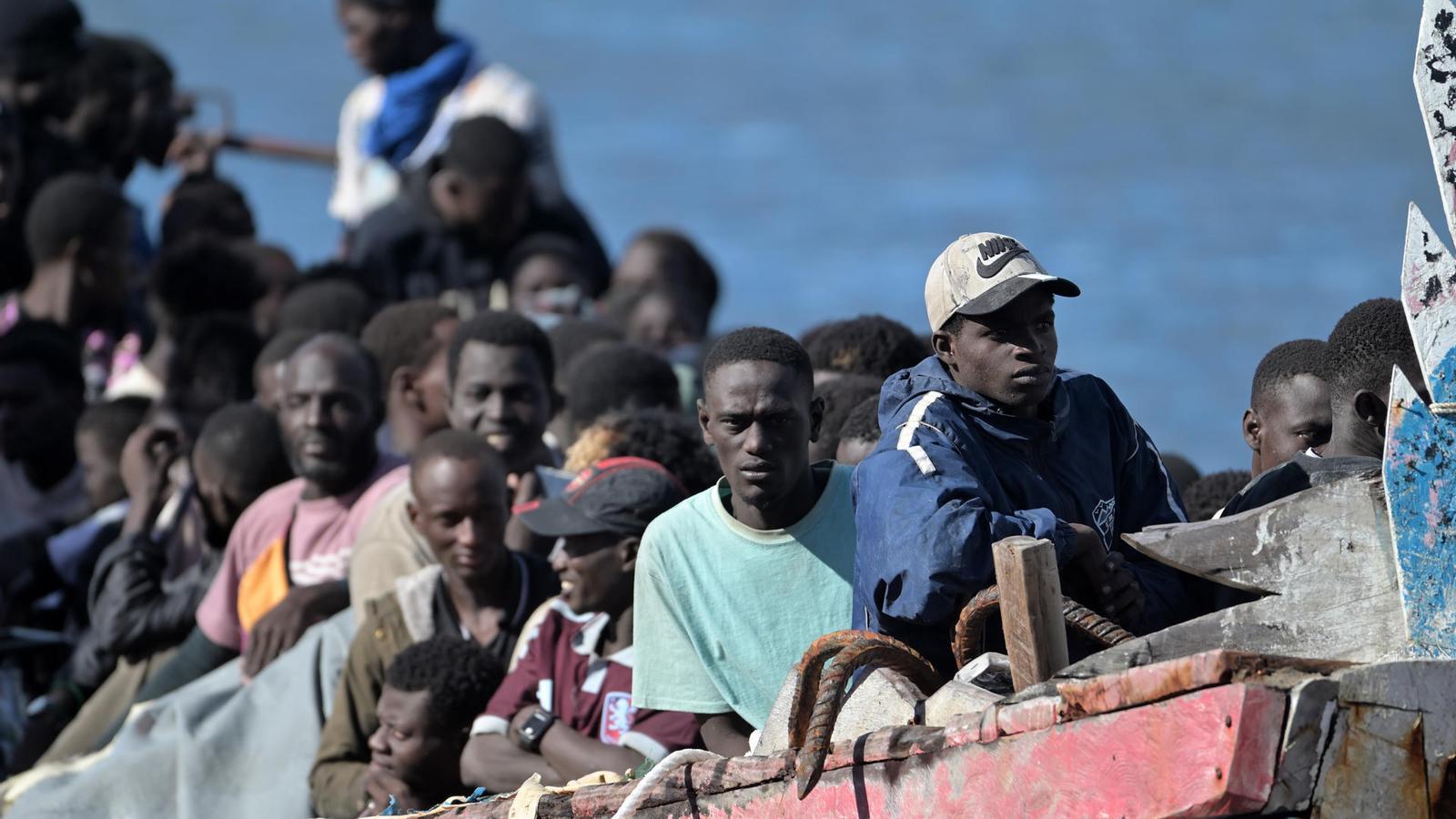
In mid-August, among the authorities in charge of migration control there was a certain climate of satisfaction with a number: arrivals in the Canary Islands between January and April had been 2,276 people, 78% less than during the same period of the previous year, noted the Canarian newspaper La Provincia, citing data from the International Organization for Migration (IOM). Among the main reasons, it was argued that collaboration with the African police at departure points had dismantled some of the mafias that organize the trips. The month of November, which is now ending, has destroyed the argument: the record for arrivals in a single day has been broken twice in a few days, and more than 14,000 people have arrived during the month of November. Most of them depart from Senegal, from Gambia, and even from Guinea-Conakry. Increased surveillance in Mauritania has shifted departure points towards the south, making the trips longer, more expensive, and more dangerous.
The true pull factor is seen every day by Senegalese (or Gambians or Guineans) in their cities and villages. It is quite simple: those who receive remittances from relatives abroad have more well-being than those who have no one. To a certain extent, remittances cover the shortcomings of states that are failing everywhere: in 2026, Senegal –an economy of 37 billion dollars– paid more than 9 billion dollars in debt service. To meet these payments, public works of all kinds have been halted in Senegal, leaving the feeling of a stagnant country, which faces a lost decade if it is not able to renegotiate the terms of the debt with its creditors. Among these, there are asset managers, investment funds, and banks from countries such as France, Germany, the United States, and Spain.
Two riverbanks
From the Parcelles Assainies neighborhood, on the outskirts of Dakar, arrivals by boat in the Canary Islands are experienced with a sense of admiration. If in Spain they awaken alarm due to the feeling of loss of control of the situation, in Senegal they generate a mirror effect. The latest trend is for people from the same village or a large part of a family to go on the same boat. If they make it, they arrive with a support network; if they fail, they will all die at once. When they manage to arrive alive, those in the village begin to have a feeling that gnaws at their soul: “If they could make it, why can't I?” The other major novelty is that more and more women are leaving with their children. Migration from Senegal and The Gambia has historically been primarily male, but more and more women are rejecting the role of being the people who stay at home – usually, with the in-laws – waiting for the husband's annual visit.
The departure by boat from Saint-Louis, in the north of Senegal, costs about 600 euros. Last October I was on the city's beach, from where one could see the liquefied natural gas platform located about 10 km from the coast. Most of the profits from the gas extraction end up in the pockets of the project owners, British Petroleum; the Senegalese state only has 10% of the shares. Senegalese fishermen, who have lost areas where they used to fish, are among those most harmed by the project. The income from exports will serve, in large part, to pay the debt. I asked the photojournalist Guillem Trius, who was accompanying me, to take a photo with the drone. We stopped when we saw a ship very close by: the Senegalese navy. “Watch out for boats leaving for Spain,” Abba, our Senegalese driver, told us. We didn't take the photo, but I won't forget the scene, a perfect summary of the relations between Europe and Africa: Senegalese gas leaves headed for Spain and Italy, the people affected by the extraction, do not.
