On November 29, elections with a license to kill

-
CAT -
CAST
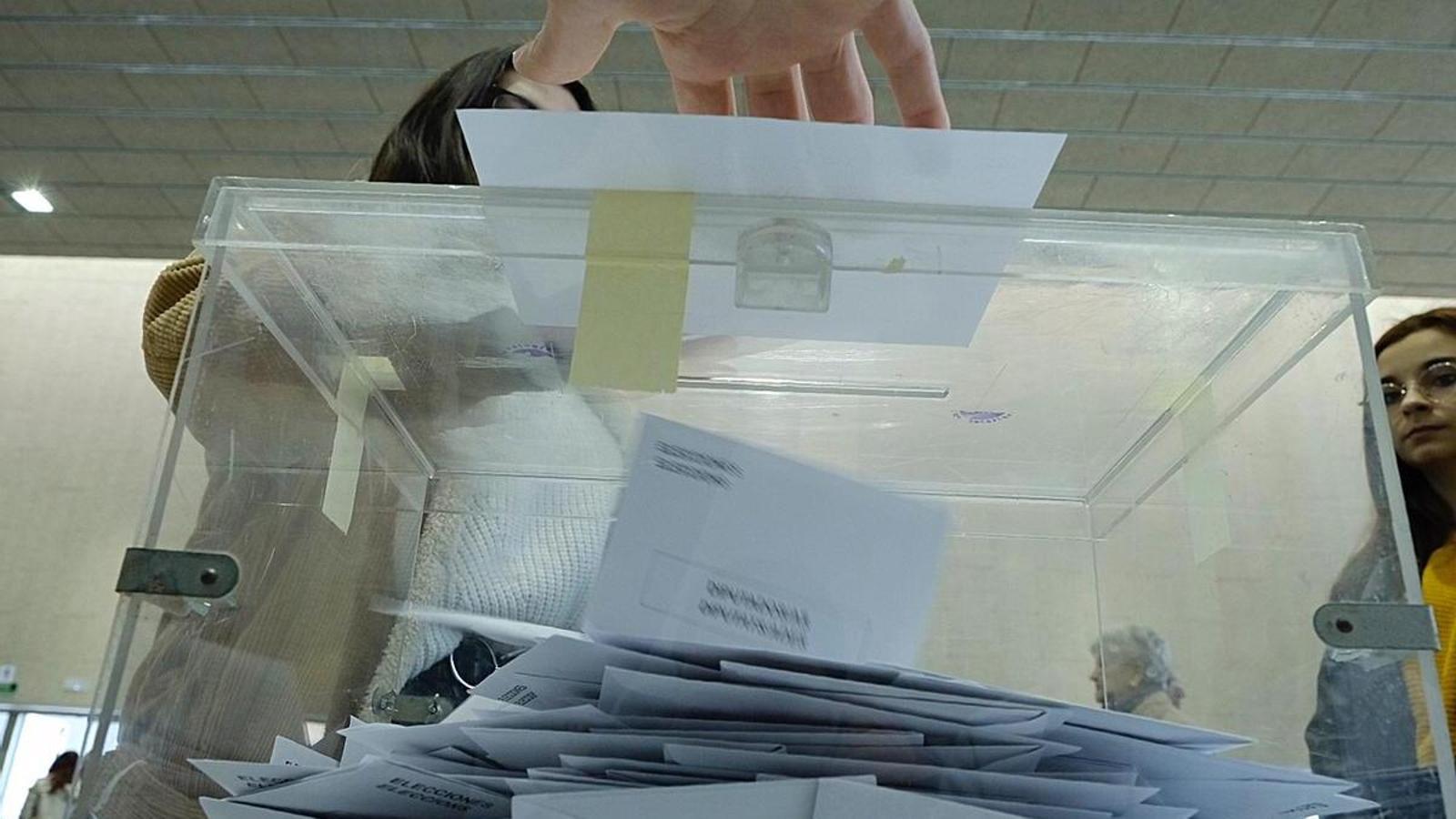
MadridThis November 29th we are facing decisive elections for the democratic history of the State. A poll in which the two Spains will mobilize to the maximum to decide whether the almost last progressive Gaul of the European Union, the government of Pedro Sánchez, remains standing and triggers a kind of domino effect in Europe after the Democratic victory in the mid-term elections in the United States. Or, on the contrary, after eight years of left-wing governments and unresolved problems, the change of cycle announced with the tandem formed by Alberto Núñez Feijóo and Santiago Abascal in the Moncloa finally arrives. However, beyond that, which is obviously not a small thing, if we look closely we will see that this November 29th is also a turning point for all the political projects that are running. These elections, politically speaking, have a license to kill.
Sanchismo
The PSOE, which in September was at a very low point due to the Ceuta crisis, has experienced one of the most massive campaigns in its history. Now, however, the moment of truth arrives. November 29th could politically sweep away Sánchez, their mass leader, if he does not manage to gather a progressive majority. If this happens, the dilemma will be the following: if, despite not reaching a majority, he were to win the election, Sánchez could do a Lula da Silva, remain in the opposition, and try to conquer the Moncloa again in 2030. The other option is for him to decide to step down and initiate the transition towards post-Sanchismo, which he would want to personally oversee. The President of the Generalitat, Salvador Illa, always appears as an option, but his inner circle ensures that his project right now is Catalonia. This does not mean that, if the situation arose, he would not have a lot to say in the succession within the PSOE, which would not open until after the municipal and regional elections in May.
The right
Alberto Núñez Feijóo's outlook is do or die; he has said it himself before the same thing happens to him as it did to Pablo Casado. Feijóo has already stated that this is his last chance to be president and that, if he does not succeed, he is going home. In this scenario, a battle for the succession of the PP would open up, with names from the right-wing wing such as Isabel Díaz Ayuso or from the more moderate one such as Juan Manuel Moreno Bonilla. In Vox, Santiago Abascal's leadership does not seem to be in danger, but after the internal purge he has carried out this legislative term, if he does not double the result, it will also be a disappointment for his supporters.
The 15-M left
This November 29th could completely close the cycle that began with the 15-M movement. At that time, it seemed that the new left, first Podemos and later Sumar and Front Ampli, could overshadow the PSOE. In fact, the Spanish socialists have saved themselves from 'pasokification', in allusion to the fall of Pasok in Greece following the 2008 crisis –it later recovered– and its substitution by a more centrist party, as could have been Citizens, just as it happened in France with Emmanuel Macron's platform. In these elections, it will be seen that the PSOE has managed to eat up the alternative left thanks to Pedro Sánchez. If Ada Colau gets around ten deputies, she will reduce her space to the minimum expression despite having been part of the council of ministers, while if Irene Montero is left without a seat in Madrid, it will be the definitive proof that there is no space for a party like Podemos.
The independence movement
This November 29th, the Gabriel Rufián phenomenon has exploded in Catalonia –in Madrid, he has been a kind of pop star for some time– and if he actually achieves a minimum of 10 seats, in addition to remaining the best-rated politician in the polls, he could start to overshadow Oriol Junqueras, who wants to be the presidential candidate in the parliamentary elections. That is why it will be so relevant to see how Rufián and the party coexist from the day after the elections, as everything points to the tug-of-war being constant and that Junqueras will be tempted, on more than one occasion, to get rid of the group leader and use the coming four years to build a new leadership.
And Junts? After a decade with Carles Puigdemont in exile, he will return to the Principality on December 12th and will have to decide whether or not he maintains the reins of the party. The result of this Sunday at the polls, which polls point to a historic low, will influence the final determination of the former president, as it could be a prelude to what he might encounter if he is a candidate in the 2028 parliamentary elections.
