The farewell of a pizzeria nine kilometers from the war front in Ukraine
Life in Kramatorsk is fading with massive evacuations and businesses that are closing
-
CAT -
CAST
Kramatorsk (Ukraine)About fifteen people gather around a table in the evening at the Rodina restaurant for dinner. Activists, journalists, and evacuation volunteers bid farewell, amidst pizzas and a bit of wine, to one of the most famous establishments in the city of Kramatorsk, which will close its doors forever the next day. "I decided to quit a month ago, I have a young son and the situation has become unsustainable. We don't know what we will do, but now everyone is closing," says Rose, who opened a gastronomic venue in an old cinema three years ago. Now it is surrounded by the fiber optic cables of Russian drones that remain hanging in trees and buildings shaken by daily explosions. When Rose took over the Rodina, which in Russian means "homeland," she kept the name because in Ukrainian the same word means "family".
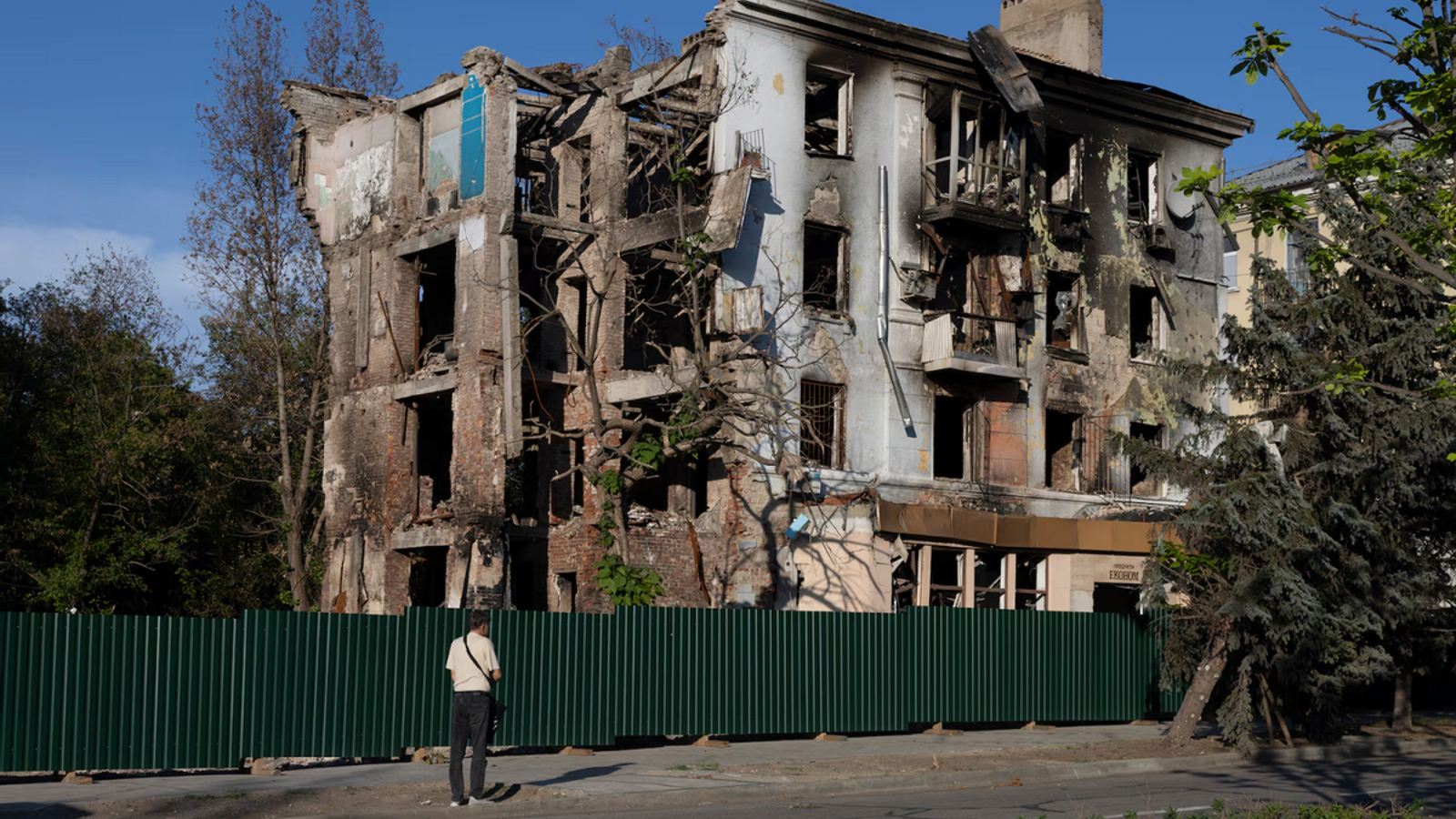
The Ukrainian authorities have already declared Kramatorsk and Sloviansk areas of "active combat zone". The only two cities that still remain in the belt of fortresses of Ukraine's last bastion in the Donbas region are fading away with mass evacuations and businesses closing. Neighborhoods of Kramatorsk, such as Bilenke, are already located just nine kilometers from the most important active front in Ukraine, and the anti-drone nets that cover the streets cannot stop the FPV devices that hunt cars and civilians on bicycles.
The government has declared the mandatory evacuation of minors, and although a meager commercial activity is maintained, there are recurring power and water outages. In the last month, many businesses that had withstood the pressure have pulled down their shutters. A final decision, because many intuit that they will never return. "We will ask for some kind of financial aid to continue the activity near Kyiv. Many soldiers who came to my barbershop have begged me not to close, but several employees depend on me and the risk is too high," says one of the hairdressers on Akademichna Street, who even in the last minute before leaving does fades and trims beards for his loyal army clients.
On the other side of the street, a twenty-three-year-old hairdresser, Alyna, keeps the establishment open. "I see in Kramatorsk the same decay that I experienced a couple of years ago in Druzhkivka, only fifteen kilometers from here, but for me the situation is still not that serious." The owner of the business where she works lives outside the Donbas and the decision to close depends on her. "I split the earnings with the owner 50/50, and I am saving up to live with my boyfriend, who is serving on the front line."
Like her, many commercial premises depend on their young workers with a very specific profile: very young women or men not susceptible to being mobilized because they are under twenty-five years old. The economy of Kramatorsk and Sloviansk, the heart of this war, which in this part of the country dates back to 2014, when pro-Russian separatist forces deployed there after the Euromaidan revolt, rests on them.
Offensive on postal codes
Lately, the attacks between Ukraine and Russia have focused on mutually destroying postal and e-commerce services, such as those seen in recent weeks with long-range Ukrainian drones on large Russian parcel warehouses like Wildberries. For its part, Russia has bombed, especially in Kramatorsk, the headquarters of Nova Poshta, the largest private express courier company in Ukraine and vital for soldiers serving on the front line to receive personal supplies or technological products such as Starlink antennas or monitors for drone positions. Ukrainians want to create discontent among the Russian citizenry against the Kremlin, and the Russians want to make life unbreathable and cut off economic activity in the towns near the front and in Kyiv. Nova Poshta offices are usually the last civilian infrastructures to leave a town or city besieged by war, and when they close, it is a heavy blow to the population and a symbol that civilization, there, is being extinguished.
"It seems that everyone is already writing the epitaph of our city," says the journalist and one of the last local reporters still remaining in Kramatorsk, Maksym Khodushko. A worker for the Kramatorsk Post, he explains the sadness it causes him to read in the press and on social media how the end of this part of the Donetsk region is being announced, and how they speak of it as a strategic enclave and the gateway for future Russian invasions into the rest of the territory. "We are not just the key for the war to spread to other regions, it is our home, and I call for my compatriots in Kyiv to protest to demand that Kramatorsk can still be and must be saved." Maksym, who suffered a harsh attack of 250-kilogram guided aerial bombs in his neighborhood this very week, maintains hope and cries out "do not bury us yet" from his Facebook account. It is estimated that about 80,000 people live in Kramatorsk and Sloviansk, mostly elderly people who refuse to leave their homes.
The fountain in the courtyard of the legendary Rodina restaurant no longer flows with water, the terrace has been dismantled and the establishment boarded up. Rose, in her thirties and with an 8-year-old son who already knows how to distinguish between the sounds of a drone, a bomb, or an artillery shot, concludes that her life and that of her neighbors in Kramatorsk is like that of a butterfly: "It is wild, fragile, and we do not know when it will disappear, perhaps in a day, in a few hours, or right now."
