The meeting of the "crab" leaders: more oil, same weapons and dismantling multilateralism
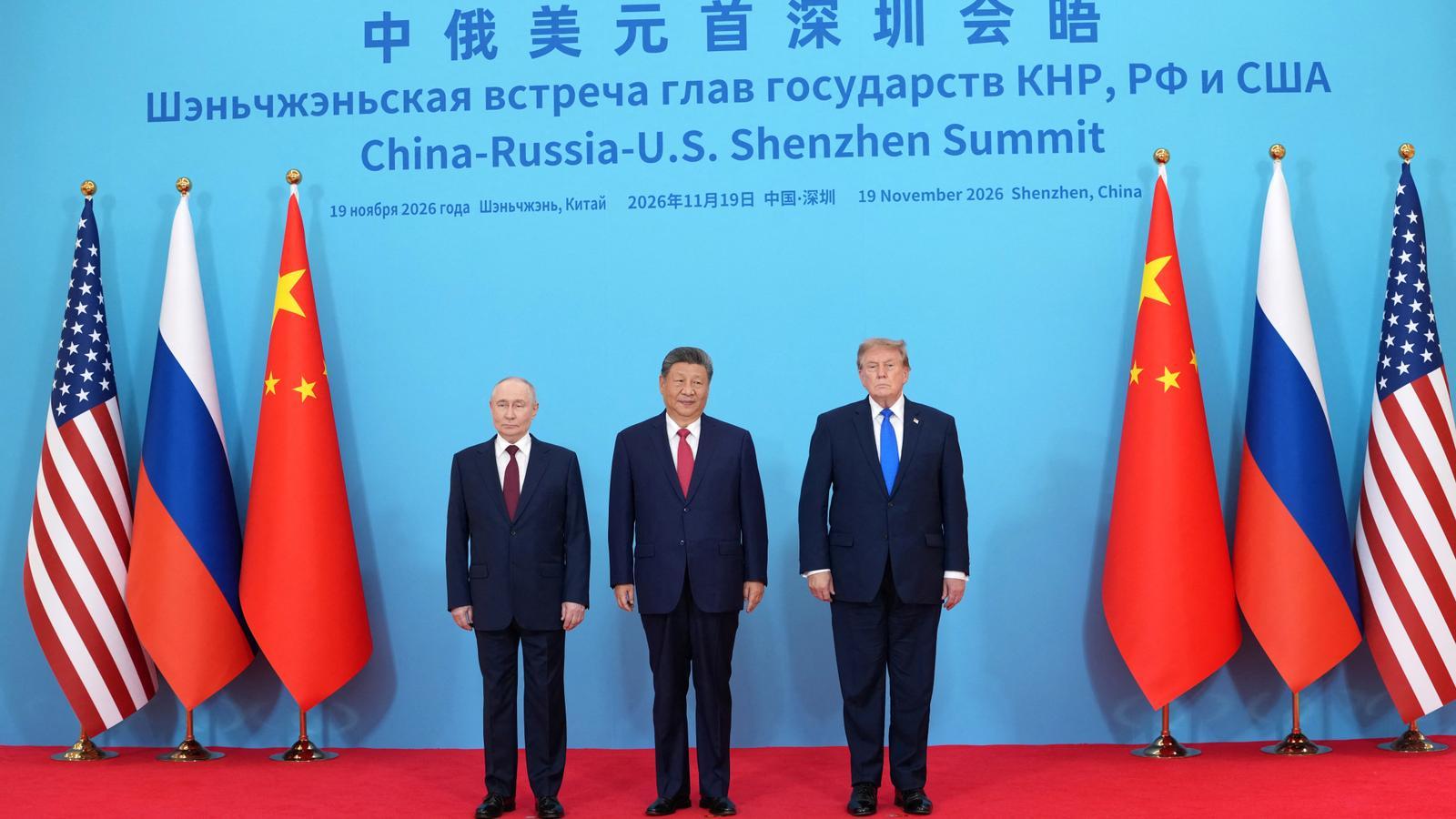

As if, like crabs, they were walking backwards, towards the past in which the powers divided the world among themselves and there was no kind of shared control of the world, yesterday's trilateral meeting between Xi Jinping, Donald Trump and Vladimir Putin showed to what extent the future they envision has scents of the past, of the worst past. To begin with, it smells of gasoline. Of the four points of the agreement that has been made public, the second states verbatim: “The three countries plan to increase the production and supply of refined petroleum products for the benefit of all nations”. You didn't want broth? Well, here is a cup and a half. This coincides with the day on which the COP31 negotiations in Ankara have stalled because the final draft of the UN climate summit, in which the United States is no longer even directly participating, has directly removed all reference to fossil fuels.
But if this point of the agreement, which was not foreseen in the meeting's script, has surprised analysts, the most worrying ones are the first and third points. The first says that, as members of the United Nations Security Council –composed of 15 countries, of which five, the nuclear powers, are permanent: the United States, the United Kingdom, France, Russia and the People's Republic of China–, they commit “to reform the UN so that it can respond more effectively to global challenges and adjust to its fundamental mission of international peace and security”. What does this mean? Taking into account the withdrawal of development aid funds by the Trump administration and its campaign to eliminate the organization, it does not seem that the reform aims at better global governance but rather at adjusting the institution to its own interests.
The third point goes along these lines. Neither Russia, nor China, nor the United States are part of the International Criminal Court, but it bothers them that this body, which this year received the Nobel Peace Prize in the person of the South African jurist Navanethem Navi Pillay, who was a magistrate there, holds genocidaires to account. For this reason, in a statement that is unclear in its meaning, in their third point they claim “the principle of state consent and respect for the immunities of state officials,” and they agree that “the International Criminal Court and other similar bodies must not abuse their jurisdiction.” It is unclear whether this is a concession to Trump’s rage for not having obtained the Nobel himself or a first step towards a more coordinated attack against this body.
To finish, the fourth point, the only one that was actually on the agenda, regarding nuclear non-proliferation, is diluted in a vague statement about a future dialogue between the three “on the reduction of nuclear risks and the prevention of nuclear proliferation.” That is all. Beyond the symbolism of the photos and the four mentioned points, it is unknown what else they have agreed upon. Putin left the meeting saying he does not intend to sign any peace agreement in Ukraine and Trump did not want to engage in a confrontation with Xi over the trade war or military dominance in the Pacific. It has only become clear that they want to call the shots and that they do not want anyone to control them. More than a new Yalta, it felt like a return to the world before Yalta.
