Ukraine turns Wildberries, the Russian Amazon, into the new target of its attacks
A drone kills five people near a company warehouse in the deadliest attack in the Moscow region

-
CAT -
CAST
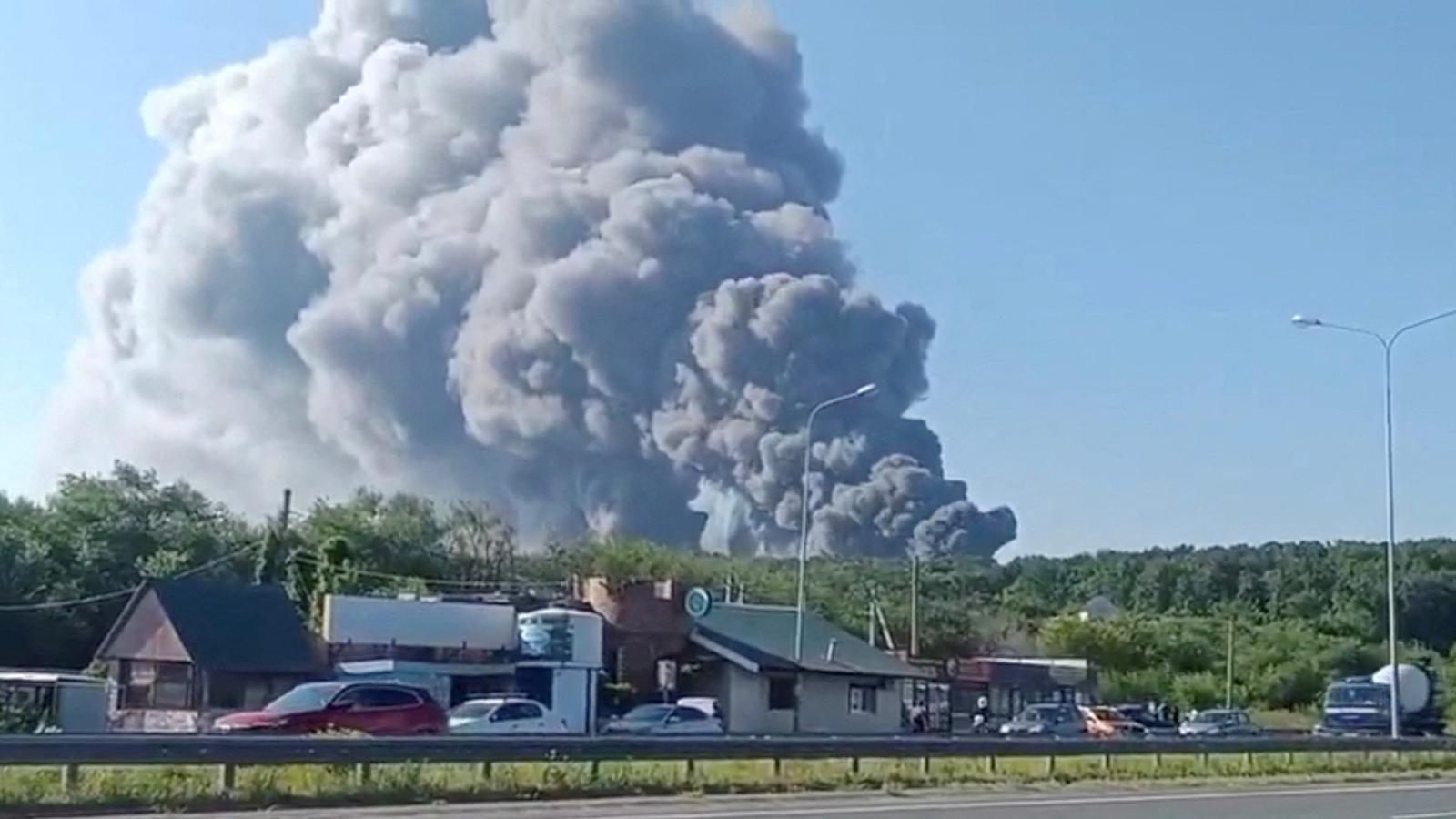
MoscowUkraine has gone a step further in its strategy to put pressure on the Russian economy. In addition to systematically hitting oil refineries and logistics routes, it has now launched a campaign against the warehouses of the main Russian e-commerce company, Wildberries. In just over two weeks, it has attacked them nearly thirty times and rendered more than one and a half million square meters unusable.
Indeed, in the early hours of Tuesday, it bombed two of the company's facilities in the Leningrad and Tver regions, while in an attempt to hit another installation seventy kilometers from Moscow, a drone killed five people and injured at least ten more. It is the deadliest attack the capital region has suffered since the start of the war, an a bloody August for Russian civilians, with more than twenty dead since the weekend alone. This Monday, seven bathers, including three children, died on a Black Sea beach in the Krasnodar region, and more than fifty were injured when air defense systems diverted a Ukrainian aircraft and it crashed onto the sand.
Volodymyr Zelenskyy justifies this new strategy against Wildberries because the company distributes “drone components, GPS, and other military equipment” to the Russian army. But Kyiv's objective is more ambitious and seeks to collapse a key sector for the Kremlin and, in turn, provoke a banking crisis. Wildberries employs tens of thousands of people, and between 500,000 and one million small vendors depend on it, some of whom have been ruined by Ukrainian bombings. The network has been filled with videos of those affected asking for help from the authorities. “We are a huge number of small and medium-sized businesses that find ourselves bankrupt, in horrible conditions. Please intervene, because the situation is very critical,” lamented an entrepreneur.
One of the problems they face is that Wildberries can neither and wants to assume compensation. On the one hand, because it lacks liquidity to do so, and on the other, because ten days before the first attack it updated its policy of agreements with sellers so that they would accept that drone bombings would be considered force majeure circumstances in the face of which the company was exempt from any responsibility. Although its owner, the multimillionaire Tatiana Kim, has promised that she will “not abandon” clients and has begun to pay compensation to some of the most affected entrepreneurs, the amounts paid are derisory. It is estimated that sellers' losses could exceed, for the moment, the equivalent of 3 billion euros.
Faced with this situation, merchants are demanding moratoriums so as not to have to face taxes and not have to immediately repay loans to banks. This has already put on guard, among others, VTB, Russia's second-largest entity, which in May signed a partnership agreement with Wildberries. The bank fears that these merchants may not be able to repay their credits now or may be forced to finance the reconstruction of the company's facilities.
The Kremlin's dilemma
If the Kremlin detects the risk that the company may falter, leaving around 100,000 employees unemployed, hundreds of thousands of merchants in the lurch, and dragging the country's main banks with it, it may be forced to rescue the company. However, Vladimir Putin faces a dilemma because the cost of this rescue threatens to become a new incentive for Ukraine to expand its offensive campaign against other online trading platforms. As economic analyst Stanimir Dobrev explains to ARA, if the Russian government goes all out to compensate sellers, Kyiv will have reasons to increase attacks on warehouses because, in this way, millions from the Kremlin's coffers will not be allocated to the war.
The expert also predicts a bleak future for Wildberries and the rest of Russian online markets. “I don't expect the business model to survive as it is – he says – it is even debatable whether it will have a long-term future.” Meanwhile, economist Vyacheslav Shiriayev points out that “large marketplaces have become not only commercial platforms but also a vital part of the country's financial and logistics infrastructure.” He believes that these bombings create chaos in supply chains and disrupt entire sectors of the economy. “The entire logistics system is under attack,” he concludes.
It is estimated that almost 90% of the Russian population buys through Wildberries and its main competitor, Ozon, which has also suffered the consequences of some of the attacks. Last year, online sales represented 26% of all retail sales in Russia, and almost 50% of this volume was managed by Wildberries, according to the exiled economic media The Bell.. To try to quell the crisis, Tatiana Kim has prohibited her employees from accessing warehouses with mobile phones to prevent them from recording the attacks, while she has begun to explore the possibility of building secure facilities in Kazakhstan.
