The "war of cities" in Russia and Ukraine portends a bloody year for civilians
The Kremlin threatens Kyiv with systematic attacks, but experts do not believe it is capable of it

-
CAT -
CAST
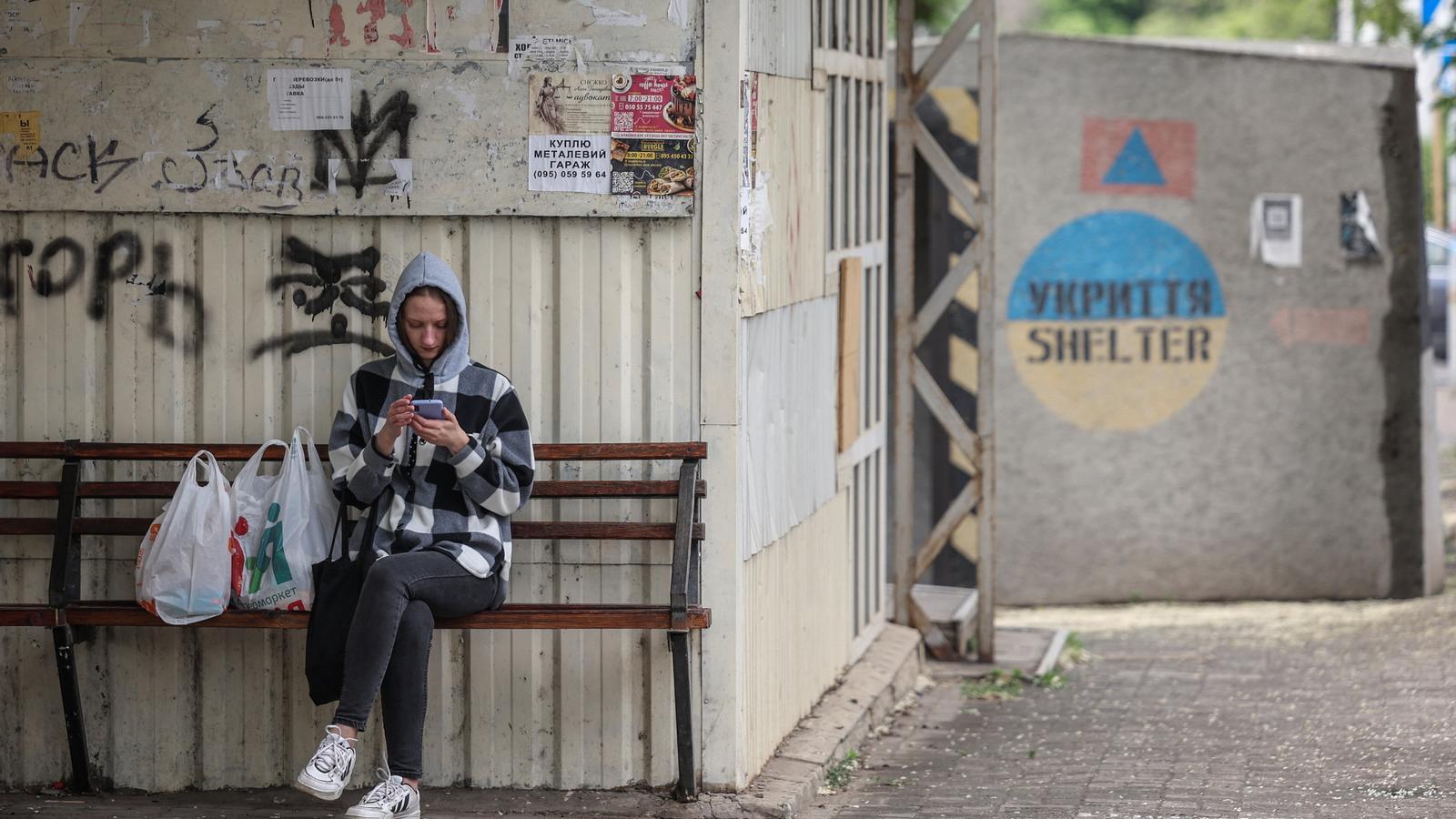
MoscowFrom attrition to exhaustion. The conflict in Ukraine has entered a phase of military and diplomatic stalemate that has pushed both armies towards long-range attacks. While the lines move drop by drop, more and better drones and missiles fly into the depths of the enemy country. The result of this escalation is a death toll among the non-combatant population that is on track to break all records this year.Officially, neither army is bombing civilian targets. Ukraine has been successfully hitting Russian industries, refineries, and ports for months,
but since the beginning of the year these attacks have caused more victims than beforeBut fear has crept into the air defenses of Russian cities under Volodymyr Zelensky's statement of "returning the war to where it came from." And, although the authorities strive to hide the reality by prohibiting the dissemination of images of drone attacks, residents have no choice but to adapt to this new danger. Faced with this vulnerability, the Kremlin has raised the tone of its threats, using the Ukrainian bombing that killed 21 young people in the occupied Luhansk region as a pretext.
And if Ukrainian military experts reject the concept of a “city war”, Russian analysts embrace it, at least rhetorically, and deem civilian deaths acceptable. “There is a demand within Russia for strong retaliatory attacks”, states Vasili Kaixin in Kommersant. In the same newspaper, military observer Andrei Ilnitski describes “managed escalation” as “an inevitable consequence of Ukrainian escalation”, and political scientist Dmitri Suslov warns: “The next step is direct attacks against targets within EU and NATO countries”. Even more forceful are the commentators in the government newspaper Rossiyskaya Gazeta, where Iuri Knutov qualifies the Russian threat as “a very wise, long-awaited, and necessary decision” and calls for defense with “preemptive strikes” against Kyiv “day and night”. Finally, Viktor Litovkin refers to the Ukrainian leaders: “These gentlemen should not feel safe in any basement or bunker where they hide, and we must also attack Kyiv's train station to prevent European buffoons from arriving there”.
The risks of an endless escalation
Stupak considers that we are facing an overreaction. “Russia is not capable of significantly increasing the number of air attacks on the Ukrainian capital,” he points out, adding: “I don't expect them to surprise us with anything special.” But some Ukrainian analysts are indeed concerned by this new dynamic. In the newspaper Ukrainskaia Pravda, Mikhail Dubinianski laments that in the “war of cities”, Kyiv is capable of “seriously complicating the lives of the enemy, but not of facilitating the lives of its civilian population”. “A devastating sword is easier to forge than a reliable shield. It is impossible to protect your citizens, but you can offer them the moral satisfaction of knowing that the enemy is also having a bad time. At the same time, there is always the temptation to overestimate one's own resistance and underestimate that of others,” he writes.
The United Nations denounces that in the first four months of the year alone, 815 civilians died in Ukraine and in territories occupied by Russia as victims of the conflict. Although the figures for May are not yet available, it is expected that more than 200 deaths will be exceeded and that in total they will rise above 1,000. This is 21% more than in the same period of 2025 and 93% more than in 2024. In the Russian regions from January 1 to May 11, 180 people had died, according to a count by Novaya Gazeta Europa, 64% more on average than the previous year.
