The accumulation of war sinks tourism in Israel
Despite the Netanyahu government's plans to relaunch the sector, insecurity distances international travelers
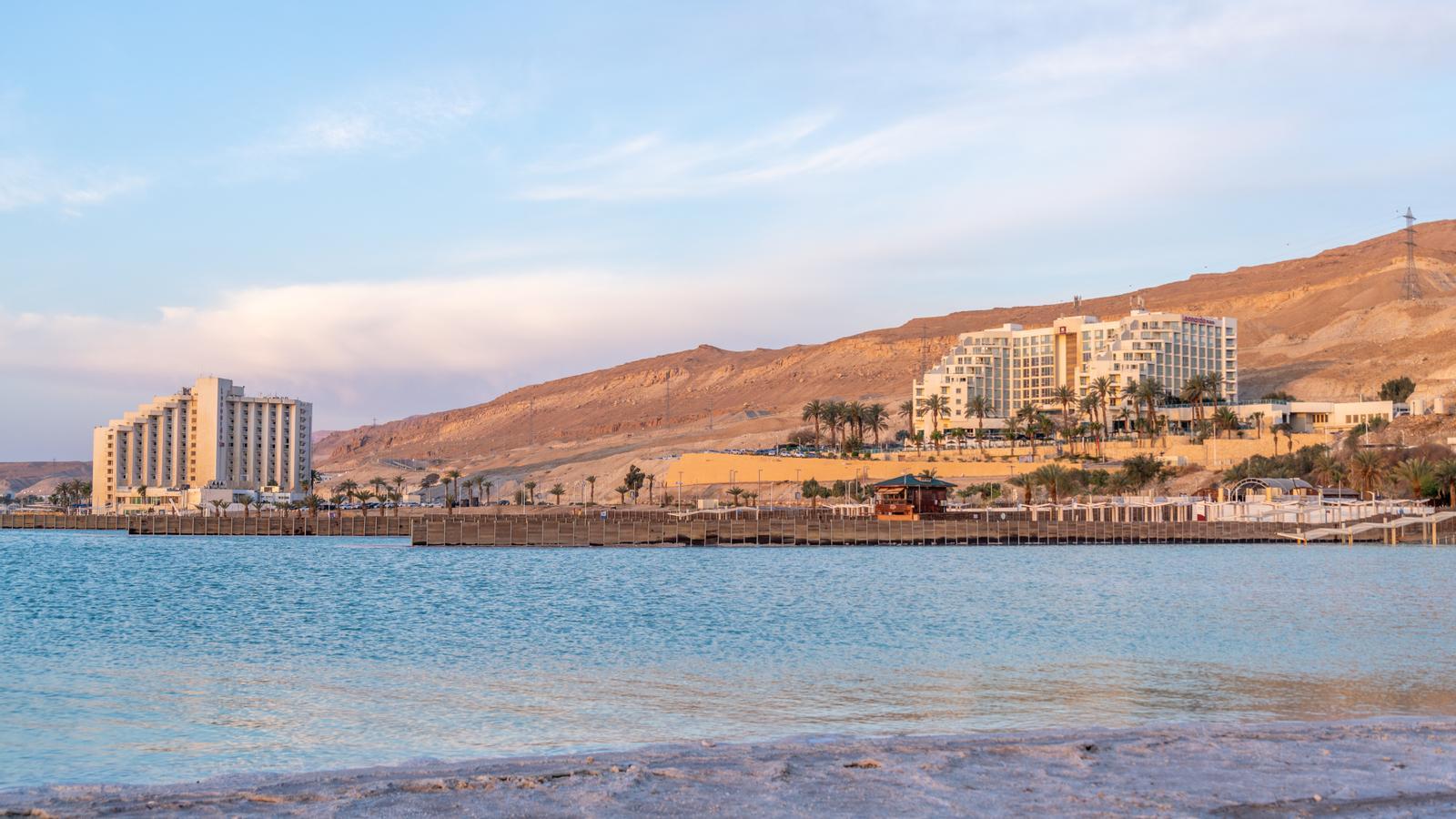

JerusalemAt ten in the morning, when the sun is already warming the sand, the Dead Sea seems indifferent to the noise of the country. The still water reflects the mountains of Jordan, the first visitors enter the beach with their skin covered in mud, and the hotels on the coast reopen terraces overlooking one of the most unique landscapes on the planet.
For decades, this has been one of Israel's biggest tourist attractions: a place associated with well-being, health, and nature. But this summer the postcard shows cracks: the beaches appear half empty, the terraces barely have any customers, and, on the paths leading to the water, only a dozen tourists descend each day.
"A few years ago it was normal to see full coaches every day. Now we celebrate every group that arrives as a small victory," explains Avi, a local hotelier. "The problem isn't just having empty rooms. When tourists don't come, guides, drivers, restaurants, and shops also stop working.
"
The recovery of tourism has become one of Israel's major economic challenges. Almost three years after of the Hamas attacks of October 7, 2023, the country continues immersed in a scenario of instability. This summer, the open fronts of recent years have been added another escalation with Iran, a situation that continues to condition the international perception of the country.
Before the Gaza war, tourism was experiencing one of its best moments in Israel. Until September 2023, Jerusalem, Tel Aviv, and other major cities in the country were strongly regaining the pace lost during the pandemic. But October 7 changed everything. Cancellations multiplied, many airlines suspended connections with the country, and organized groups postponed visits.
Dust accumulates in the shops
According to the Organisation for Economic Co-operation and Development (OECD), the impact on the sector was immediate: an almost total drop in international arrivals, a sharp reduction in hotel revenues, and a decline in tourism-related employment. Although technology and the defense industry continue to be the country's main economic engines, before the 2023 attacks, tourism represented nearly 1.9% of the gross domestic product (GDP) and generated more than 135,000 direct jobs.
"The international tourist doesn't just pay for a room," explains Andrei, owner of a small shop by the sea. "They buy souvenirs, eat at restaurants, book excursions. Look at the shelves: they are full of products that used to sell every day and now gather dust."
2024 was the worst recent year for the sector. International arrivals fell to around one million visitors, far from the more than three million registered in 2023. Many hotels remained open because they hosted Israeli families evacuated from communities near Gaza and from the north of the country, but this occupancy did not compensate for the lost tourist activity.
The worst OECD data
The recovery began tentatively in 2025. According to Israel's Central Bureau of Statistics, the country received 1.34 million visitors due to the progressive reopening of air routes and the improvement of the situation in Gaza after the ceasefire in October. This year, data confirms that the recovery remains fragile. The latest OECD report from last July places Israel among the countries with the worst tourism recovery among those analyzed.
Nevertheless, the Israeli government maintains confidence in the progressive growth of the tourism sector. The tourism strategy until 2030 foresees expanding markets, strengthening religious tourism, boosting domestic tourism, and improving the visitor experience. In fact, the 2025 budgets allocated 148.7 million euros to the sector, of which 37 million were reserved for tourism infrastructure.
"The problem isn't that people have forgotten Israel. The problem is that now many people only think of Israel as a conflict zone," summarizes Avi while pointing to the half-empty reception of his hotel. "Many people still ask us if it's safe to come."
This is a palpable concern among the few visitors who have decided to return to the Dead Sea. "Our family asked us if it was safe to come, but when you arrive here, you see a very different reality from what appears in the news," explains one of the visitors. "The landscape allows you to disconnect, but you can't help thinking that the country continues to be in a complicated situation," says Avi.
The Dead Sea concentrates this contradiction. The landscape remains intact: the salt water, the desert mountains, and the hotels are ready to receive visitors. But what has changed is confidence. This summer, barely a dozen tourists go down to the water daily. For the Israeli tourism sector, the challenge is not to sell a place that has lost its appeal, but to convince a world that associates Israel with conflict that, beyond this reality, it remains an attractive place to travel.
