The EU responds to Trump with the broadest battery of sanctions it has launched against Russia
Brussels incorporates nearly 1,600 names linked to the Russian military-industrial complex and urges Washington to harden measures against Putin

-
CAT -
CAST
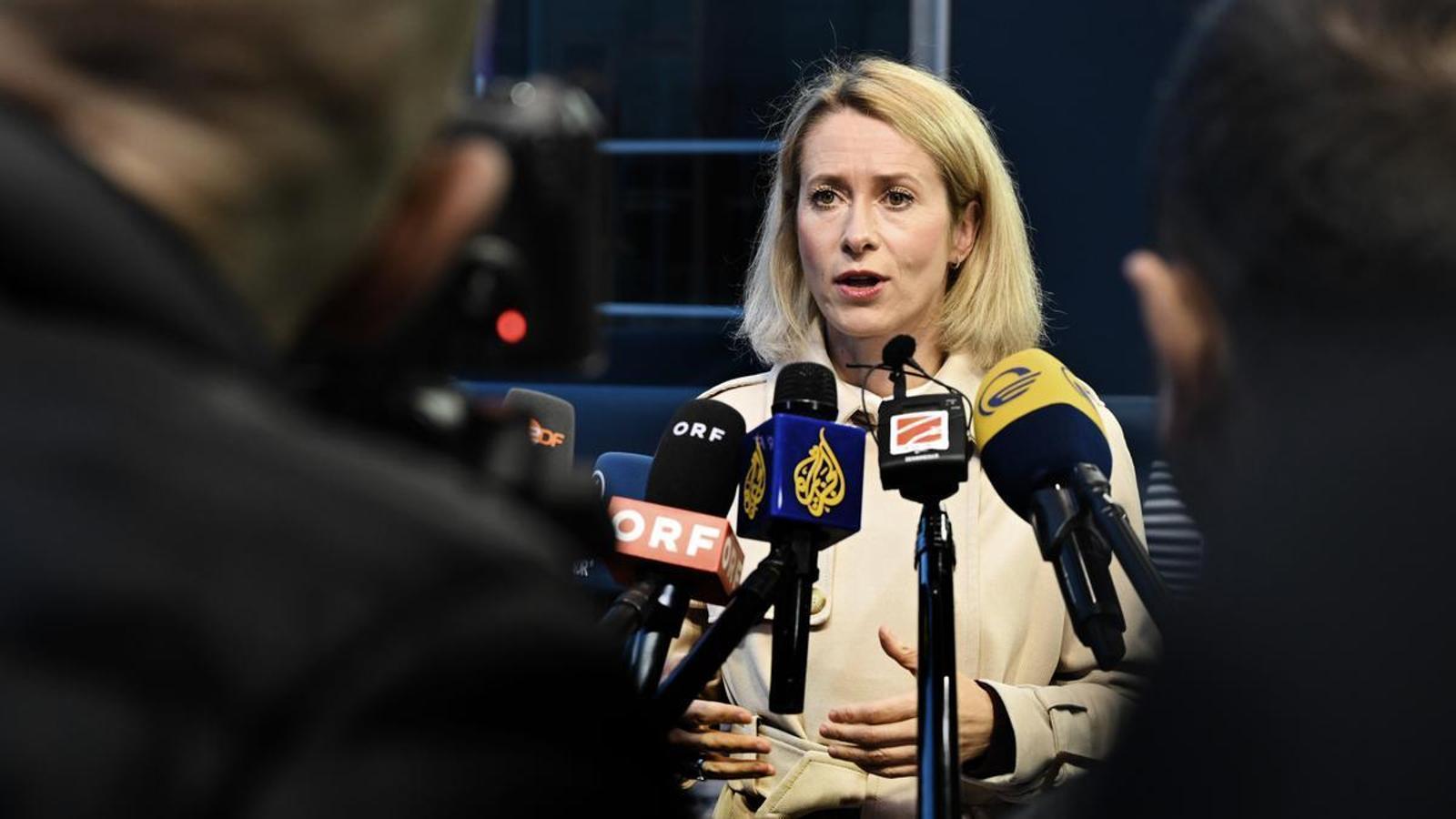
BrusselsWhile Donald Trump eases the pressure on Vladimir Putin with a deal to put millions of barrels of Russian diesel on the market and demands that Volodymyr Zelensky call elections in Ukraine, the European Union reaffirms its support for Kyiv and urges Washington to do the same. The head of European diplomacy, Kaja Kallas, announced this Monday the broadest sanctions package deployed so far against the Kremlin. The EU is incorporating nearly 1,600 names linked to the Russian military-industrial complex into the list of sanctioned individuals and entities.
"Today we have demonstrated unity in the approval of these lists, but, of course, we would be stronger if we acted hand-in-hand with the United States," stated Kallas, who sent a direct message to Donald Trump's administration: "Only pressure works with Russia," she highlighted. In this sense, the Estonian leader questioned Washington's concessions and remarked that yielding to Moscow "does not work," because deals or the relaxation of measures end up translating into "more attacks and more escalation."
Kallas celebrated "the largest expansion of the sanctions list since Russia began its war," on social media after the Twenty-seven adopted the decision during the Foreign Affairs Council, meeting in Luxembourg. The goal of the measures is to create obstacles so that the Kremlin continues to manufacture weapons to attack Ukraine. "We are making it significantly more difficult, slower, and more expensive for Russia to produce the weapons it uses to kill Ukrainians," she added.
The decision comes hours after the United States president announced an energy truce in Ukraine, during which Kyiv and Moscow would, theoretically, stop attacking the opposing side's energy infrastructure. Putin, however, did not take long to break it. As Kyiv has reported, Russian forces bombed the Kharkiv power plant "immediately after" the ceasefire announcement.
Brussels' measures contrast with Washington's loosening of restrictions on Moscow and with Trump's demands on Kyiv. According to the Financial Times, the American administration has threatened to suspend the PURL mechanism, through which NATO allies finance the purchase of American weaponry for Ukraine, if the Ukrainian government does not stop attacks against Russian energy infrastructure.
Given this scenario, the Twenty-seven have reaffirmed their commitment to Ukraine and have urged the United States to toughen measures against the Kremlin. "We would ask the United States to impose sanctions to be able to end the war," said Kallas at the meeting of ministers, who also questioned Moscow's ability to maintain the commitment and called for a more ambitious truce that includes "that no one else be killed."
Kallas has reiterated her support for the Ukrainian president, who has recently been in Trump's crosshairs. The community representative argued that it is not feasible to hold elections while the country remains immersed in a war. "Almost all Constitutions have provisions that establish that, when there is a war, elections cannot be held," she pointed out, and recalled that Zelensky has shown willingness to submit to elections if a total ceasefire is achieved.
Some controversial exceptions
The new sanctioned individuals are added to the 3,000 people and entities linked to the Kremlin already sanctioned since the start of the war in Ukraine. The agreement includes 743 individuals and 826 entities accused of supporting the Russian invasion of Ukraine, and also 77 legislators involved in the Russian elections in September in the territories occupied by Russia.
The sanctions involve travel bans, asset freezes, and a prohibition on providing funding. The targets are especially mid-level suppliers that represent the "core" of the Russian military industry, as detailed by the Council in a statement. It estimates that they generate an annual turnover of at least 20 billion euros and employ more than 250,000 people.
The EU wanted to appear firm against the Kremlin after last month's controversy, when it left off the list two Russian billionaires close to the Kremlin, Alisher Usmanov and Mikhail Fridman, due to pressure from France and Luxembourg.
