Amnesty, a period and a continuation
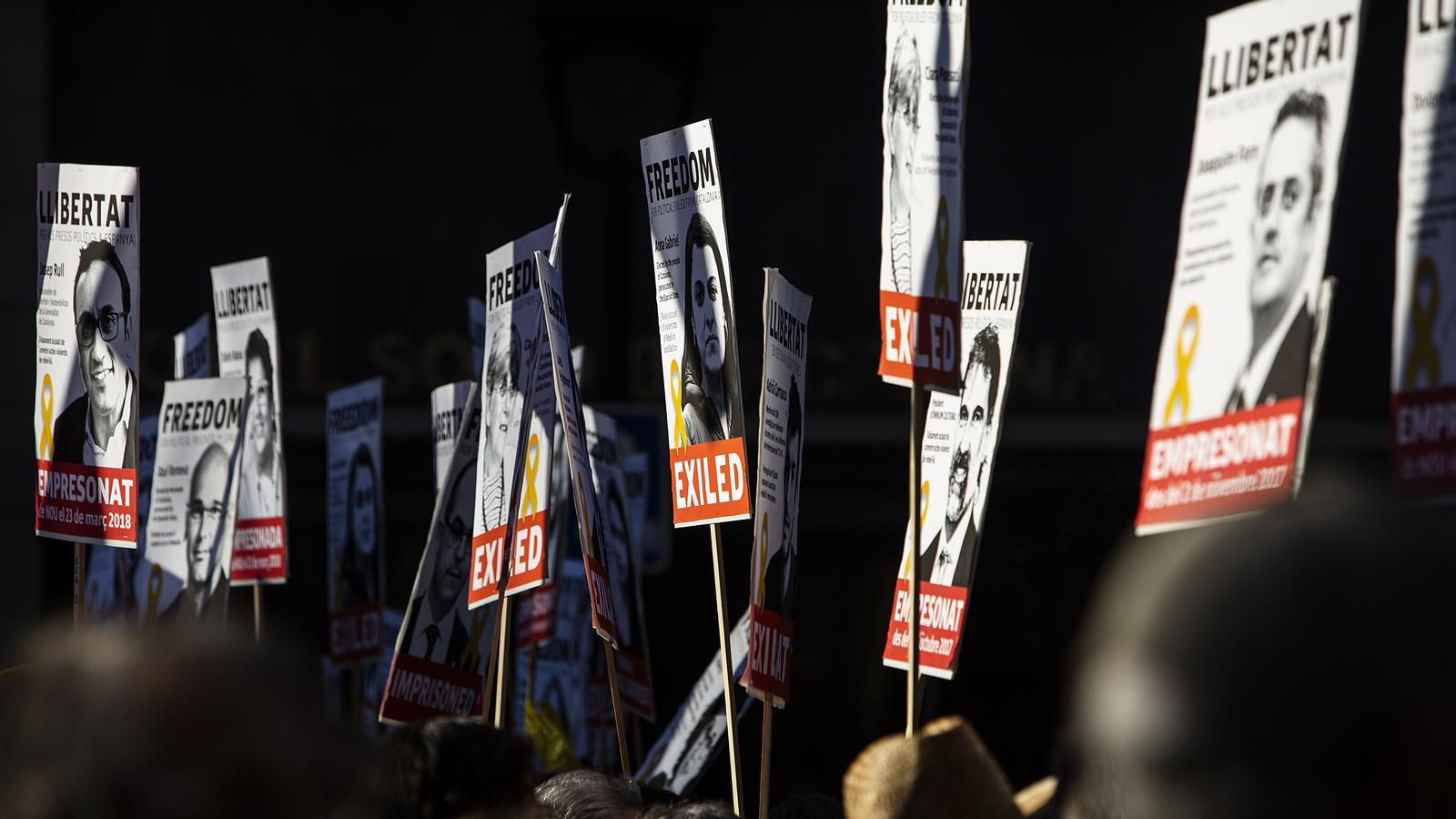

The amnesty is now a reality. The members of the October 1st Government who were still dragging along criminal and administrative cases and sentences for having set up the ballot boxes no longer have any, those who have lived through almost nine years of exile can finally return home, and their civil and political rights are finally recovered, guaranteeing the ability to run in elections, be appointed to a public responsibility, or even recover their previous work as public employees, as is the case for those who are university professors. It is great news, and we must celebrate it with the only reservation of waiting for the cases that our colleagues Josep Maria Jové and Lluís Salvadó still have open to also be dropped.
We have conquered a new impossible, even though doing so has not been easy. When we sat down for the first time at the negotiation table in February 2020, few believed in it. We were coming from a sentence against political prisoners, from exile, and from hundreds of prosecuted individuals. Many called us naive, but we persisted, because negotiation is the only way to address a political conflict.
First, the State had to acknowledge that the conflict existed and that it was political. Afterwards, it had to be removed from the courts. We did it step by step: the pardons, the repeal of sedition, the reform of embezzlement, and, finally, the amnesty law in June 2024. The Government that I presided over led this negotiation, and I am proud of it. But the amnesty is a collective victory. It belongs to the negotiating teams, to the groups that defended it in Congress, to the jurists who made it solid, and to the organized civil society that never stopped demanding it. It belongs to the victims of repression and their families, who have endured years of uncertainty. And it belongs to a mobilized citizenry that made it inevitable.
The law itself proves us right. The explanatory memorandum it offers recognizes that applying legality is necessary, but that it is not always enough to resolve a political conflict. It reminds us that the law must be at the service of society, and not the other way around. And it concludes that a political conflict must be addressed through politics. That which we were denied for years is today the law.
Nor has it been a quick process: it was necessary to overcome the Constitutional Court, European justice, and the resistance of a part of the judiciary, which tried to exclude those who had exposed themselves the most. This resistance is the best proof that the amnesty was necessary.
These weeks I have thought about President Puigdemont, Lluís Puig, and Toni Comín, and the fact that they can once again embrace their loved ones at home, without fear of being arrested. I think about the families, who have lived with their lives torn apart. And of the thousands of anonymous people who also suffered repression. We said it from the first day: the amnesty could not leave anyone behind.
But the end of repression does not mean the end of the conflict. The underlying causes remain intact: the lack of national recognition, the deficit of sovereignty, the refusal to let us vote. The amnesty closes a wound, but it does not resolve the underlying issue. Now we will be able to negotiate on more equal terms, and that is not a small thing.
And we must do it with our eyes wide open. The Spanish elections could bring the PP and Vox to the Moncloa, with a program that aims to recentralize, cut rights, and return to the path of repression. When fundamental rights are threatened, it is necessary to rally forces. We need everyone clean, without judicial mortgages, to defend what we have won and prepare ourselves for what is to come. That is why today we are in a position to state that the amnesty is not the end of anything. It is a stepping stone, and proof that when one works thoroughly, one can win even in the most adverse contexts. The solution remains the same: an agreed and recognized referendum. Referendum and independence and persisting until we achieve it.
