Who are the Russian oligarchs that the EU has removed from the blacklist due to pressure from France?
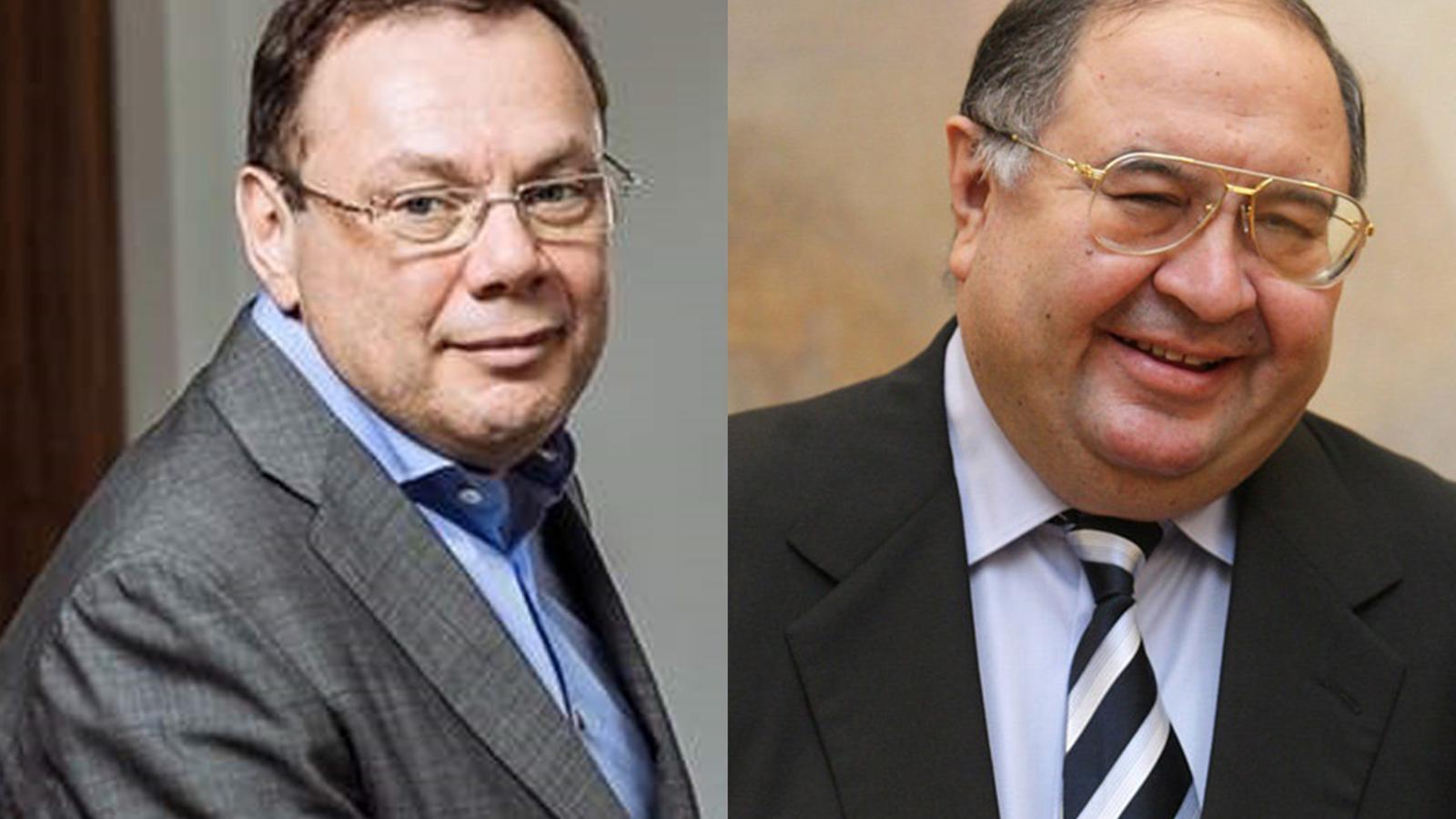
France pressures Brussels to 'forgive' Alisher Usmanov and Mikhail Fridman, two of the richest men in Russia and close to Putin

-
CAT -
CAST
BrusselsAfter a tough negotiation, representatives of the European Union member states managed to approve new sanctions against Russia this Tuesday evening. The agreement, which until now was renewed every six months, includes sanctions against 3,000 Russian citizens and will be extended for the next three years. However, it leaves off the list two Russian billionaires close to the Kremlin, Alisher Usmanov and Mikhail Fridman.
The agreement comes after two days of heated discussions, in which the President of Ukraine himself, Volodymyr Zelenskyy, tried to influence against the tycoons. The main driver in excluding the oligarchs was France, which, together with Slovakia, pressured its partners to withdraw the sanctions on Usmanov, citing "a specific national security issue." However, the British newspaper Financial Times revealed that the exclusion of the Uzbek tycoon could be part of an agreement under which Azerbaijan would release detained French citizens. For its part, Luxembourg pushed to also exempt Fridman, who has filed a $16 billion claim against the country for the freezing of his assets.
Latvia derailed the pact on Monday, and warned that it was not the time to ease pressure on Moscow. But finally, as diplomatic sources explained to ARA, it relented this Tuesday and opted to abstain. This allowed the package to be approved, which required the unanimity of the partners. Minutes after the decision became known, in a thinly veiled quid pro quo, Latvia announced that it had opened talks with Paris to join its nuclear deterrence program. It also assured that it would impose sanctions on the tycoons individually.
The oligarchs excluded from the sanctions are Alisher Usmanov and Mikhail Fridman, two of the richest men in Russia and close to its president, Vladimir Putin. Usmanov, born in present-day Uzbekistan, is the founder of a business holding company that owns Russia's largest metallurgical company and the telecommunications giant Megafon, in addition to other digital assets. Furthermore, he was a shareholder in major tech companies such as Facebook, Alibaba, or Xiaomi. His fortune, of 14.1 billion dollars according to Forbes, is equivalent to the GDP of countries like Senegal or Armenia.
He was one of the largest shareholders of the English football club Arsenal F.C. until 2018 and has presided over the International Fencing Federation, a sport he practiced for many years. Known for his closeness to the Kremlin, Usmanov was included in the international sanctions lists of the European Union, the USA, and the United Kingdom in 2022 following the Russian invasion of Ukraine.
Former owner of the Dia supermarkets
His political associate, the tycoon with dual Russian and Israeli nationality Mikhail Fridman, founded Alfa-Bank, one of the largest private banks in Russia, in the 90s, and subsequently sold his shares to co-found the international investment company Letter One. He is especially well-known in Southern Europe because Letter One is the majority owner of the supermarket chain Dia. However, Fridman resigned as a director of Letter One in 2022, when the EU sanctioned him.
The sanctions on Fridman had already been partially lifted. The Court of Justice of the European Union annulled in April 2024 the freezing of assets and the ban on entering community territory, due to a lack of evidence regarding his direct involvement in financing the war.
The oligarch, born in the Ukrainian city of Lviv, was the second richest person in Russia from 2013 to 2023, when he dropped to ninth position, according to the magazine Forbes. Described as one of the most influential men in the country, Fridman has been a member of numerous public bodies, such as the Russian Union of Industrialists and Entrepreneurs, the Civic Chamber of the Russian Federation, and the Council on Foreign Relations.

