The failure of COP31 leaves an urgent question: will it ever be possible to agree on the end of fossil fuels?
The weight of the fossil fuel industry lobbyists has been felt more than ever at the climate summit in Turkey

-
CAT -
CAST
Barcelona“The lack of an agreement should not be considered a failure, but rather a successful defense of the integrity of the UN climate agency in the face of a coordinated attack by a few countries radically opposed to action against climate change,” said the director of Climate Analytics, Bill Hare, who argued: “Countries committed to a safer future drew a red line and refused to sign a document that did not include any reference to the phase-out of fossil fuels, but that, instead, proposed a large-scale carbon capture and storage goal. This was clearly unacceptable, and the countries that refused to accept it were right to do so.”
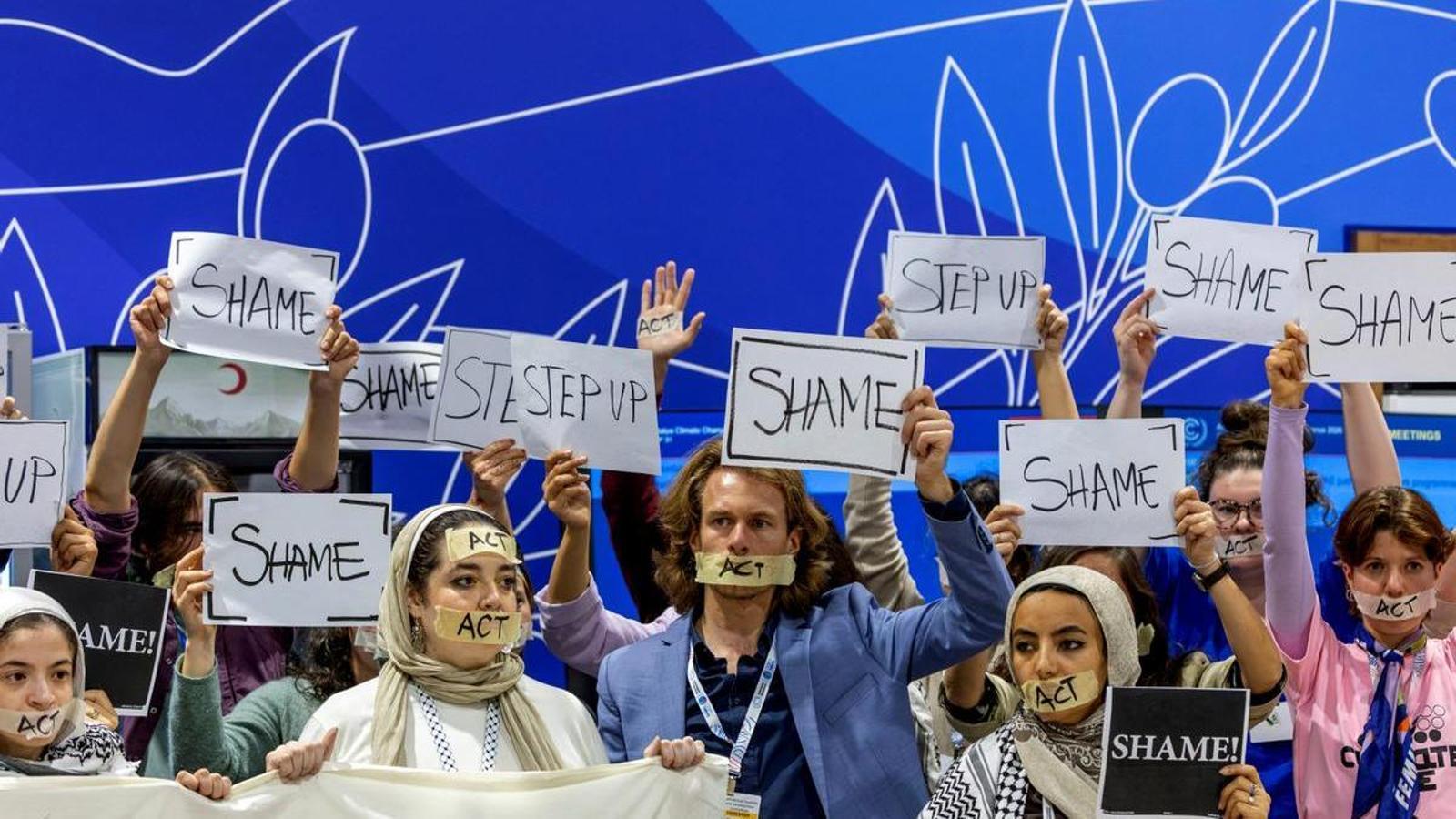
In the end, it was approximately 130 countries, including the entire European Union, the entire group of African countries, the Pacific Islands, and many others, that took a stand and vetoed the final agreement text of COP31 in Antalya (Turkey), blowing up the international climate negotiations. Christiana Figueres, who led this UN agency during the signing of the Paris Agreement, also praised the “act of courage” of the countries that refused to sign an agreement which, she says, would have placed countries vulnerable to the climate crisis “even more at risk for their survival.”
How can it be that in 31 years of summits, only once has an official text managed to mention the main cause of the climate crisis, “fossil fuels”? Only the COP28 agreement in Dubai included a tepid commitment to a “transition away from fossil fuels,” and it was achieved precisely because the leader of those negotiations was an oil-producing country, the United Arab Emirates, which did not want to end up like Turkey, with a resounding failure on the international stage.
“This is explained by the major economic interests behind these attempts to block agreements to abandon fossil fuels. The summits are attended by what we call petrostates, large oil producers, and the entire lobby of the world’s major oil and gas corporations is also present. We think that in the last three months, the 9 largest oil and gas companies in the world have earned 95 billion dollars, that is, one billion dollars a day,” explains Martí Orta to ARA, head of the EXIT Research Group at the UB, which studies planetary health and in particular fossil fuel industries, and who has participated as an observer at COP31 in Turkey.
“It is evident that this conflict of interest, for which oil corporations should be excluded from negotiations, makes progress at these summits very weak,” points out Orta. Many experts and NGOs, in fact, argue that until the entry of fossil fuel industry representatives into negotiations is banned, no progress will be made.
The inclusion in the final text of the agreement of a push for large-scale carbon capture was, in fact, interpreted by everyone as a victory for the fossil lobby, because it could mean a blank check to continue emitting CO₂. “This is a technology that will surely have to be used in the future as a complement and for the most difficult emissions to abate, such as the cement industry, but the prominence it acquired in the text was too risky” because “it was a loophole for deniers,” confirmed Iñaki Gili, from the Catalan Office for Climate Change, to this newspaper. Gili also considered that the countries that blocked the agreement had done the right thing, although he admitted that other important pacts had fallen by the wayside. “Very strong diplomatic work will have to be done to rebuild bridges from now on,” said this veteran of climate summits.
In the Turkey negotiations, Gili explains, three groups of countries had formed: those that wanted to accelerate the energy transition, those that sell fossil fuels, and the most impoverished countries that need money to face climate impacts. The first and third groups blocked the agreement, because in terms of financing for adaptation it was also very disappointing: it did not set specific figures or formulas. China did support the text, in addition to the oil-producing countries, Russia, and a certain ambiguity from India. “The problem is that we do not have leadership, we have seen in this summit that China does not want to take over from the United States in climate leadership, and in the latest G-7 or G-20 meetings the issue of climate change has disappeared from the priorities,” Gili warned.
Reproaches to the European Union
Another veteran of the summits, Olga Alcaraz, from the UPC, on the other hand, was more critical of the European Union, which was the first to present a formal objection to the text in the COP31 plenary and gave rise to everyone else doing the same, because she considers that to have been "a staging". Alcaraz reproaches the EU that it is also not doing its homework in the climate fight, and, on the other hand, blowing up the UN negotiation carries the risk "of dismantling multilateralism, and that is serious because it can give arguments to denialists who say that these summits are useless, when they actually have been useful".
For his part, Orta is convinced that humanity will stop burning coal, gas, and oil to generate energy: "Just as we went from the Bronze Age to the Iron Age, we will stop burning fossil fuels, that is certain". "The issue is that this abandonment must be accelerated because what is at stake in terms of impact on human life is too great", he says. And in this sense, he remarks that these international negotiations "are not just climate-related". "These summits are also about health: this summer in Europe there were 35,000 deaths due to climate change (deaths from extreme heat), and they are also summits about jobs and immigration: scientific forecasts say that due to climate change in the coming decades there will be migrations of between 1,000 and 3,000 million people". "That is why this is an essential summit for the future of humanity as we know it".
Most climate NGOs and think tanks specializing in the field have already come out to lament the failure of COP31, which leaves the poorest and most vulnerable countries to the climate crisis in the lurch, while also admitting that the proposed agreement was not acceptable. “The outcome of COP31 is a chilling paralysis when action is needed most, and it is very humiliating for those who are already suffering from the climate crisis,” said Eva Saldaña, director of Greenpeace Spain, who also criticized the European Union for its lack of commitment regarding climate financing for the poorest. From Amnesty International, Ann Harrison described the veto by dozens of countries on an agreement that was “a betrayal by the Turkish and Australian presidencies of COP31” as “an important act of resistance,” but also criticized the “responsibility of rich countries” for the poor results of the text regarding financing. “We attribute the failure of the summit to the blockade by oil-producing countries, the European Union's lack of funding commitment, and the presidency's priorities,” summarized Javier Andaluz, of Ecologists in Action, although he admitted that approving the agreement proposed would have been “much worse.” And everyone called for restarting the dialogue to try to recover the climate negotiation. The world has a lot at stake.
