Trump breaks with Zelensky: "It is time for Ukraine to have another president"
The Kremlin rebuilds bridges with the White House without committing to a truce and outrages the Ukrainian president

-
CAT -
CAST
MoscowUnited States President Donald Trump is escalating his tone against his Ukrainian counterpart, Volodymyr Zelensky. "It is time for Ukraine to have a new president," Trump said, following Ukrainian attacks against a Russian oil export terminal. "We told him he could do whatever he wanted with Russia, but no attacks on the refineries because it is causing a global problem," the United States President asserted, in reference to the increase in diesel prices.
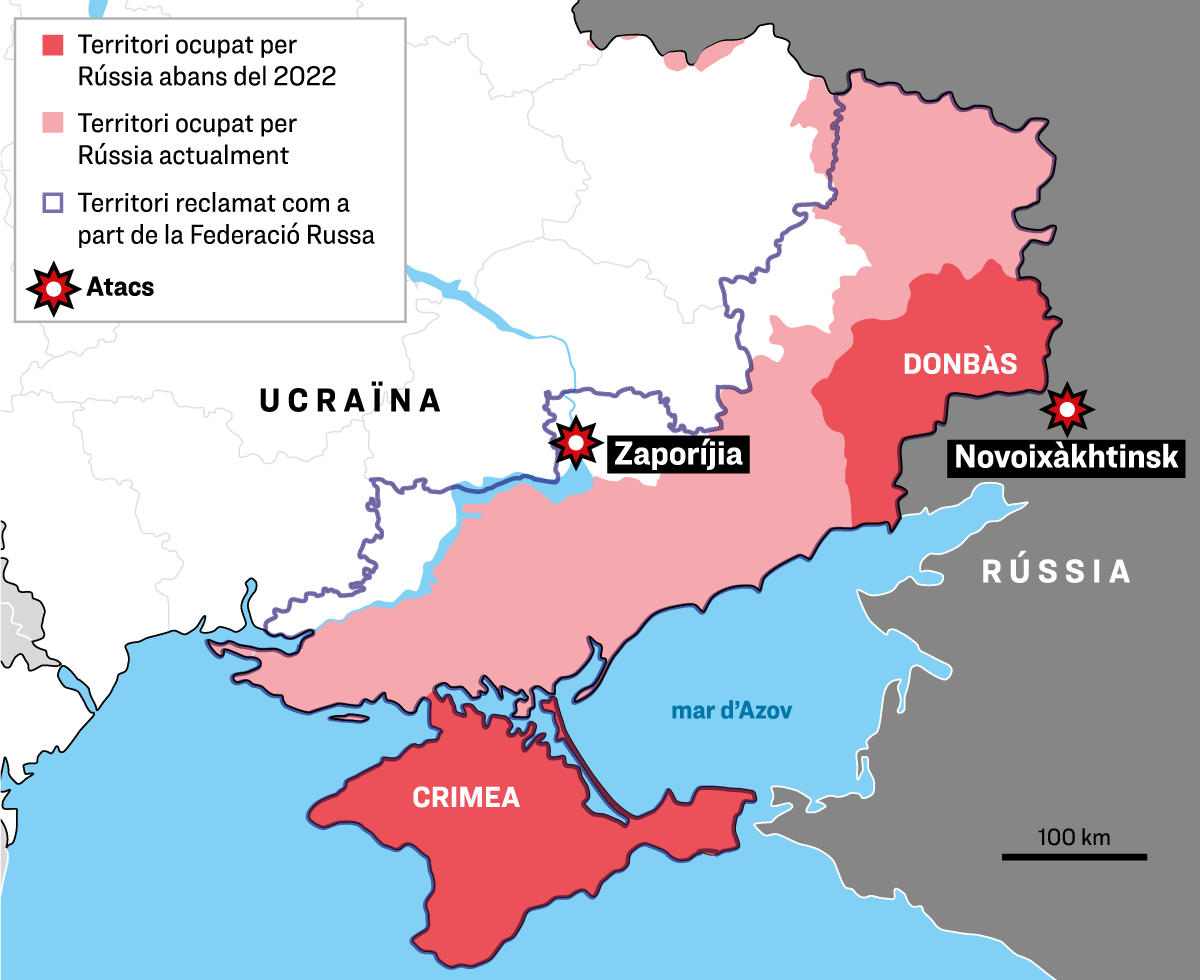
The New York tycoon is thus distancing himself further from Zelensky after drawing closer to the Kremlin with the deal for Russia to immediately put 300,000 tons of diesel on the market. Zelensky has read the reward to Moscow as a betrayal, and Ukraine responded this Saturday with a new attack against an oil export terminal. Meanwhile, the Russian army has bombed the city of Zaporizhzhia and killed at least 17 people, three of whom were children.
Among the criticisms of Zelensky, made outside the White House, Trump accused him of not wanting to reach any agreement to end the war, a conflict he considered began "due to the incompetence" of Zelensky. This is why he suggested that replacing the Ukrainian president could facilitate a possible agreement. Furthermore, Trump's statements—and the announcement of the deal with Moscow—do not come at just any time.
Trump's suggestion to replace Zelensky adds more fuel to the fire than his announcement of a deal with Vladimir Putin for Russia to immediately put 300,000 tons of diesel on the market. Volodymyr Zelensky, feeling betrayed by this reward to the Kremlin, has launched a new attack against an oil export terminal. And on the same day, the Russian army bombed the city of Zaporizhzhia to make it clear that business with the White House does not imply any concessions on the part of Moscow.
Kyiv's drones have attacked the oil facilities in Novoshakhtinsk, in Rostov-on-Don, near the Ukrainian border, and wounded six people. This plant supplies the Russian troops fighting in Donetsk and is an important crude oil export hub, which moves about three and a half million tons of fuel each year. Zelensky wanted to let Washington know that he will not back down. "Ukraine will not set fire to Russian oil refineries if Russia does not destroy our energy infrastructure," he warned.
Territory occupied by Russia before 2022
Territory occupied by Russia currently
Territory claimed as part of the Russian Federation
Attacks
UKRAINE
Sea of Azov
100 km
Territory occupied by Russia before 2022
Territory occupied by Russia currently
Territory claimed as part of the Russian Federation
Attacks
UKRAINE
RUSSIA
Sea of Azov
100 km
The pact between Trump and Putin has outraged the Ukrainian president, who has described it as “dishonest”, “unfair” and “unbecoming of an ally”, especially considering that, at the time of the call between the two world leaders, Ukrainian envoys were in Miami with American negotiators discussing proposals to stop the conflict. Specifically, they were debating the possibility of Kyiv putting an end to attacks against Russian refineries – a demand that the White House has been making for weeks – in exchange for Moscow stopping the bombardment of Ukrainian electrical infrastructure. For this reason, Zelensky sees this gesture by Trump as a “gift” to the Russians and warns that Russia “interprets any easing of pressure as an opportunity to continue dropping bombs on cities”.
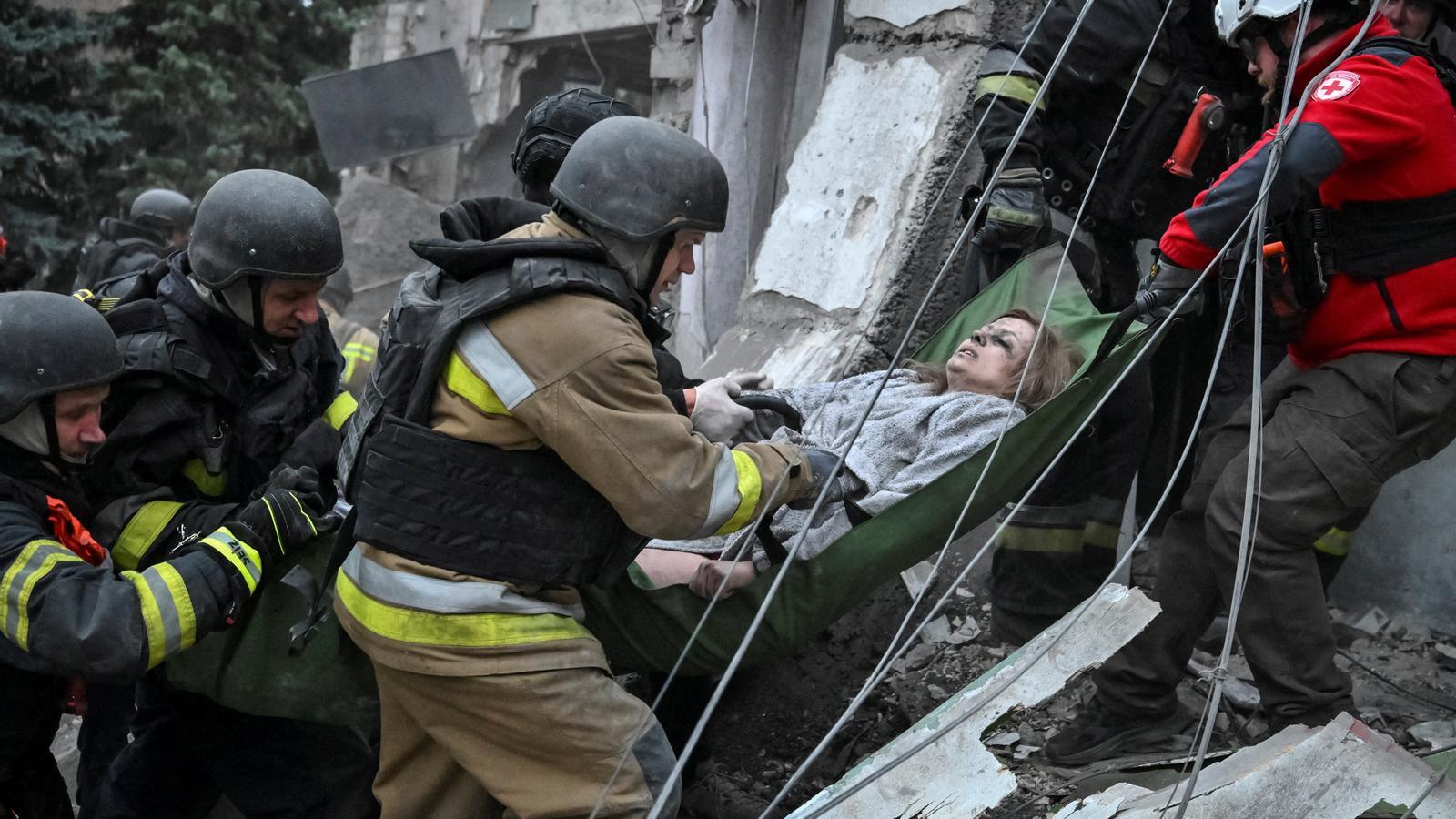
And so it was. A few hours after the agreement, five Russian glide bombs exploded in residential neighborhoods of the city of Zaporizhzhia and have raised the number of civilians killed in Ukraine since Wednesday to more than 80. Two explosives impacted against some homes, partially collapsing them and leaving several people trapped under the rubble. In the early afternoon, ballistic missiles also struck Kyiv and wounded at least five people.

Putin's move
For Putin, the scenario is very beneficial. Since Trump returned to the presidency, Russia has been striving to resume economic cooperation with the United States without the need to commit beforehand to a ceasefire in Ukraine. Until now, the White House had refused, but the Republicans' electoral urgency has served the opportunity on a silver platter to the Kremlin. After the telephone conversation between the leaders, Russian presidential advisor Yuri Ushakov added that they had also discussed other major joint projects alongside the diesel deliveries. Furthermore, unlike in the spring, when the American government partially lifted sanctions on Russian oil for one-month periods to combat the price hikes caused by the conflict in the Middle East, the relief is now for almost seven months.
In this way, Putin not only offers Trump a medal to pin on himself when he needs it most, but also presents Zelensky as the villain of the movie, as the obstinate partner who refuses to stop bombing the Russian industry no matter how much the American leader demands it. From now on, therefore, the Kremlin will be able to argue that any Ukrainian attack against Russian refineries is, in reality, an attack against the national interests of the United States, with the hope of stirring up discord between the two allies again and that, possibly, Trump will abandon Zelensky to his fate.
Economically, however, the move does not seem free of risks for Moscow. Although Russian authorities claim they have diesel to spare, experts doubt it. The fires at the refineries are hurting Russia's capacity to produce fuel for the domestic market and, therefore, it is not clear that it can satisfy the delivery volumes it has committed to with Washington. In addition to the initial 300,000 tons, the Deputy Prime Minister of the Russian government, Alexander Novak, has promised 500,000 more tons in November, one million in December, and three million monthly starting in 2027. Quantities that, in any case, are unlikely to succeed in reducing global diesel prices, according to economists like Stanimir Dobrev or Malek Dudakov.
Russia, in fact, has hastily lifted the ban on diesel exports approved on August 1st, in the midst of a fuel crisis in the country, with gas stations closed and kilometer-long queues to fill up the tank. Any shipment sent to the United States this month will harm buyers in the country and, especially, farmers, who are in the middle of the sowing season. The measure has not been well received by this sector, which does not understand why the Kremlin is coming to the rescue of the United States at a time when there is no diesel surplus in Russia.
