Alberto Garcia Demestres: "I am alive and I will make music: I thought I would not be able to say it anymore"
Composer

-
CAT -
CAST

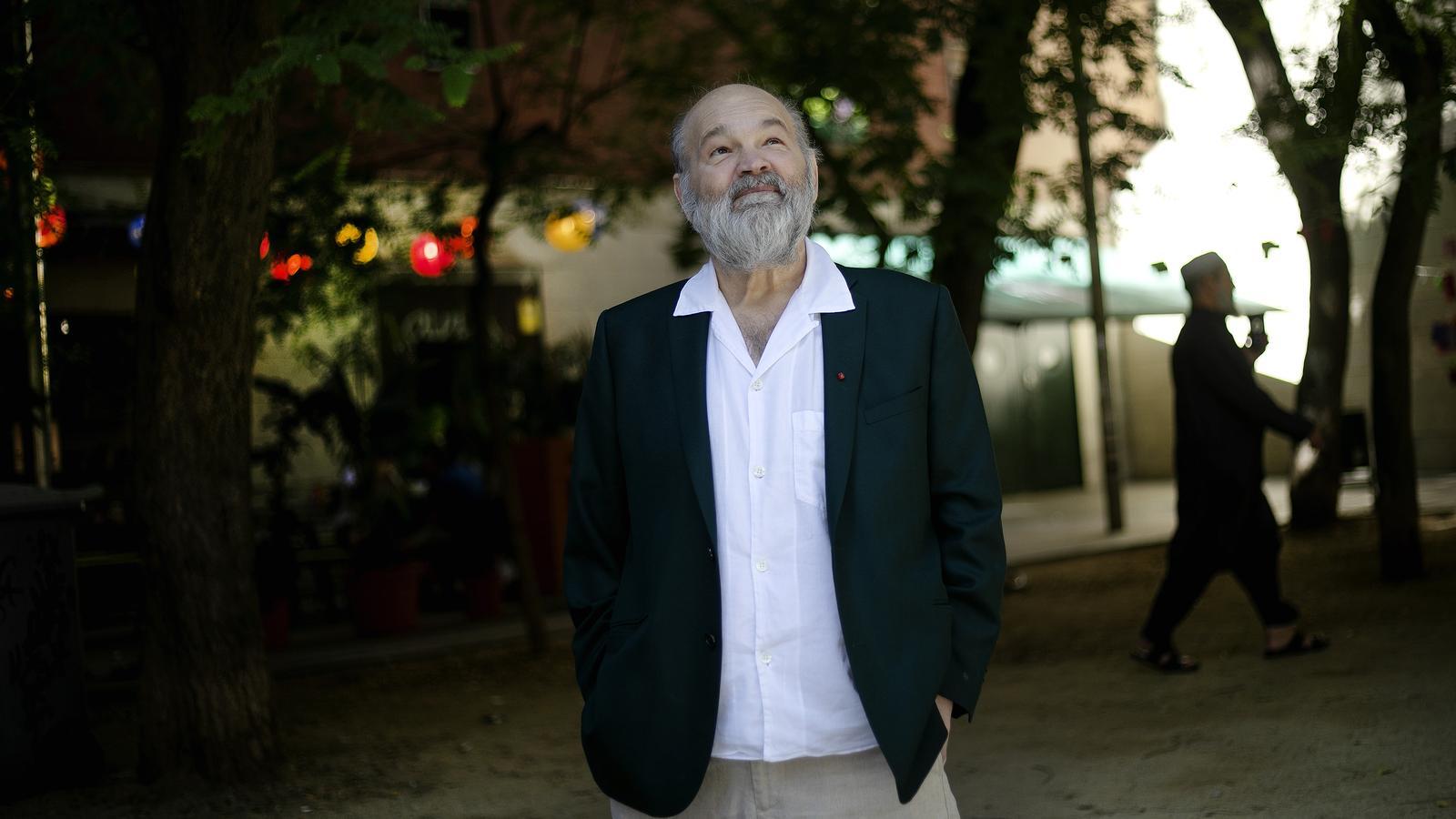
Every detail counts. In the photo on his mobile phone, from a concert in Sant Celoni, he is wearing the tailcoat that Luciano Pavarotti gave him and is making the same embrace that the tenor used to throw to the whole audience. The t-shirt is from his association, Poudemestres, which brings “super good musicians at super popular prices” to Sant Esteve and Santa Maria de Palautordera. On December 20th, his latest composition,Diario di una madre, which he premiered at the Peralada Festival.
What do you think about when you get up every morning?
— I am alive and I will make music. I thought I wouldn't be able to say it anymore.
Do you feel like you are living on borrowed time?
— Completely. I thought I would die at 50, I had been clear about it since I was a child. But no. I kept living, enjoying myself, doing operas and being happy. I have been very lucky in life. Until at 61 years old, things started to go wrong.
What happened?
— Many things. They gave me defibrillators, I had a bone infection... My heart was getting worse and worse. On July 26th two years ago, I had a heart and kidney transplant. Before the operation, I was in the ICU for quite a long time, which is a terrible place, because you see people leaving feet first. And I thought: maybe tomorrow it will be you. But I created a fantastic world for myself, and I kept composing, I was happy, people came to see me. For me, composing is living. I can do it anywhere.
I always think about the call on the day of the transplant. What was it like?
— I did not have to wait long. I had been at home for fifteen days. They gave me a first warning: “In an hour, it is likely that we will call you. Get ready”. I told my brother to come and take me. Upon the second call it is: “Come down immediately, as fast as you can”. And they warn you that perhaps you go for nothing, because first they have to run tests on you. If they go well, you go to the operating room. Four cardiac surgeons enter and then four surgeons for the kidney.
When you entered the operating room, what music was playing in your head?
— I have entered the operating room quite a few times and I try to have silence. I did not want to hear anything. Concentration. I have been meditating since I was 17 and it is a wonderful tool. From silence, music emerges.
A composer, does he compose every day?
— Totally. If I'm not writing, it's because I have it in my head. I don't do as Juan Ramón Jiménez did, who would write and then change everything. I think about it, not too much, and I write it down. And I feel that it comes from somewhere. It's not God, because I don't believe in Him, but I have the certainty that it is right.
Does a near-death experience not make you rethink your faith?
— No. For me, music is my lifeline. I don't have to wait for music; it won't betray me. I make music so it can reach out, to express something that others can feel. With Diario di una madre I have taken a very big step as a thinker and composer. And it is not because I have a new heart, because I never stopped composing. I have been very sensitive all my life.
You talk about the lives of women, of mothers, from beginning to end. Has the key been to open yourselves up completely?
— I was with my brother on a tour of Italy playing music for silent films when I got a call: "They just told us that Mom has a hard-to-cure cancer, she has six months left." We cancelled the tour. I was with my mother almost all the time. I went to Naples to look for a doctor who at that time was being pursued by the justice system, but who had shown that with his method he had cured cancers. We went to knock on his door. The man even came here three or four times without charging, but it was already too late. At least my mother did not suffer.
Do these life-changing experiences change your music?
— When my mother died I composed the music for the Bigas Luna film Volavérunt. My mother is everywhere. Then I started to have diabetes. They called it affective diabetes. Yesterday would have been her 91st birthday and I bought myself a cream cake to pay tribute to her.
Wow, then you'll have to make up for it, won't you...
— Yes, diabetes is a real bitch, but I'm managing it very well now. I once weighed 135 kilos and now I'm at 74.
Wow, we are talking about sixty kilos.
— Yes, with a lot of time. I have never been on a diet. When I studied with Pavarotti we ate a lot, a lot, and when I returned I started losing weight. For the last two years I have been controlling what I eat and I don't do silly things. Before I didn't do that.
Optimism and humor are part of your character and your work. Can they prevail in a world as competitive as classical music?
— It is very difficult. I am banned here. There are not many composers who have premiered twelve operas like me, and they will not program me at the Liceu, not even in jest. And that seems fine to me: they owe me nothing. I go my own way. But I have premiered in many places and I have had success everywhere. If it is not a question of quality, is it that they do not like my personality? Look, I already say publicly that if they commission me something, I will say no. I do not want to know anything about the Liceu.
You have made music, poetry, you have had an art gallery, you have done radio and been a model for Antoni Miró... Is the goal not to get bored?
— My motto has been: if someone proposes something to you, do it.
What music bores you? Do you listen to pop music? Reggaeton? Rosalía?
— I do not listen to all that. It surprises me a lot that great intellectuals and knowledgeable people, when they talk about literature, speak of a fantastic author; when they talk about art, it is real art; when they talk about cinema, they speak of Bardem and not some minor actor, and when they talk about music, they speak of entertainment. Go to hell! Contemporary music does not end with Philip Glass. Reggaeton is not intellectual. They earn money, sell many records, and in two years it will be over. The Beatles did interesting things. Rosalía pretending to sing opera? Go to hell! I am delighted that she earns millions and is invited to parties, it is wonderful, but leave us alone!
You are sorry that contemporary music is not part of the cultural debate.
— We have had a bad era, in which contemporary music was just experiments. I have made them too, eh? But to go somewhere else. I am one of those who want people to get emotional, to want to listen to us three times, for people to leave with something and not saying "what a bore, I didn't understand anything, these are just noises".
You encourage people to come back, wow.
— Let them come and they will enjoy it. They will leave crying. La Traviata we have already seen it thirty times!
I see that you don't have an ounce of desire to retire.
— The day I die, I hope they find me setting up some lane markers.
