Strange European silence about Greenland
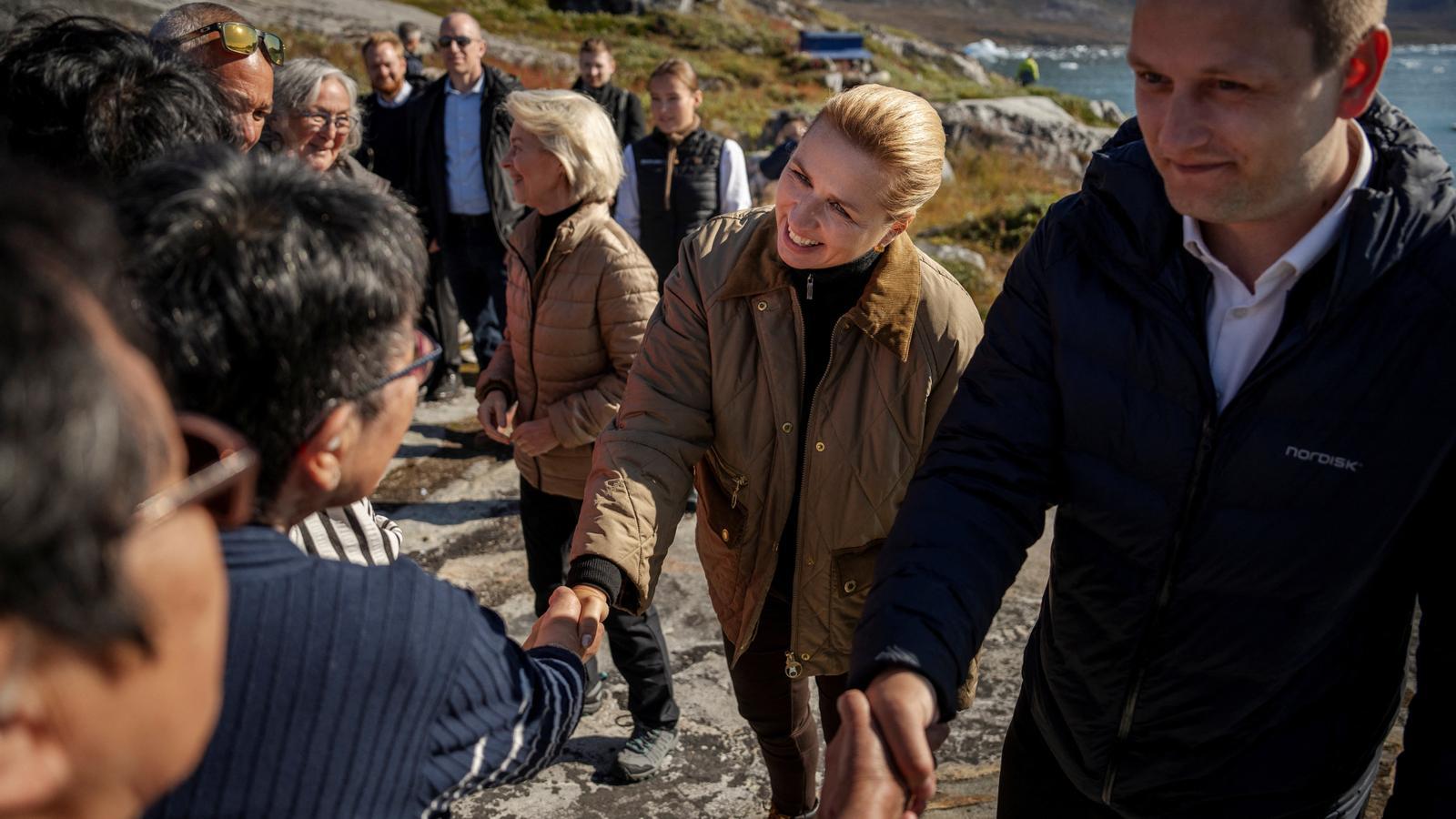

There has been, above all, silence –a silence unusual in the age of tweets– this weekend in European capitals. On Friday at midnight, Donald Trump made a surprising announcement of major impact for Europe: the White House had reached an agreement with Denmark to assume the security of Greenland indefinitely. The headline is big, decisive, unexpected. Copenhagen and Nuuk confirmed an agreement to "improve security in the Arctic and North Atlantic," which symbolically expands Washington's bond with the future of the continent. NATO, led by the Trumpist Mark Rutte, celebrated it. In the European Union, silence abounded and still abounds, a suspicious gesture. Only the Frenchman Emmanuel Macron –ambushed by the press– has limited himself to saying that the pact "is positive" because it "calms things down" and "respects Danish sovereignty." In early September, on a trip to Greenland, Ursula von der Leyen said: "The Greenlanders have chosen and choose the European Union."
"We will not make any comments." This is the response that various European official sources consulted for this article have relayed. Neither in Brussels nor in the capitals do they want to make an assessment of the agreement for now. They are probably waiting for this Tuesday, when Americans, Danes, and Greenlanders are scheduled to sign the alliance in New York, in the framework of the UN General Assembly. European voices insinuate that the announcement caught many partners by surprise. The latter would not leave the Danish Prime Minister, the Social Democrat Mette Frederiksen, in a good position, but it is not unusual in Europe either: some community capitals did not know that Von der Leyen would propose to Canada to be the first associate member of the EU –a formula which, by the way, no one knows what it means.
Trump's announcement was, indeed, Trumpian: grandiloquent and lacking in details. The key to the analysis lies in these details yet to be discovered. And in a big doubt: knowing whether the new agreement differs much from the 1951 bilateral treaty, which already grants the US a certain military authority on the island, or if it is just a new discursive framework, without major changes on the ground, that Copenhagen and Nuuk are gifting to Trump to calm him down and so he can sell a success before the midterms.
Whether it is A or B or both at the same time, the move is another dose of stark reality for the European Union. The road towards the famous strategic autonomy is in such an early stage that Europe continues to need to take shelter under the security umbrella of the unpredictable Trump. And, meanwhile, European politics has no alternative but to show itself subordinate to the diplomatic and military pressures of the White House. Nothing we didn't already know. But the Danish pact with the Americans over Greenland sends four messages. First: Trump finds a reward after having threatened to take a territory of the EU and NATO by force. Second: that the alliance with Trump is an oxymoron with the pact with Canada, which seeks, precisely, to counteract dependence on Washington. Third: paradoxically, the American protection in Greenland deepens Europe's political and strategic vulnerability. Fourth: these formulas end up being paid for dearly in the long term, and if not, remember Angela Merkel's Russian joys.
Torrey Taussig, former director of European Affairs at the White House National Security Council, wrote this Monday that American and Danish diplomacy had been working in the shadows to "lower the temperature" and reach a diplomatic agreement. It has transpired, in fact, that the meetings have been continuous since the first Trumpist threats.
Amidst so much silence, another reading can be extracted: that the Danes and, therefore, the Europeans, had taken Trump seriously and considered him capable of taking Greenland by force. This sends even many more messages of urgency to the Europeans.
