Russia violates the truce announced by Trump and attacks energy infrastructures of Ukraine
The Kremlin has attacked six infrastructures, and Trump does not admit it: "there is an agreement because I have said so"
-
CAT -
CAST
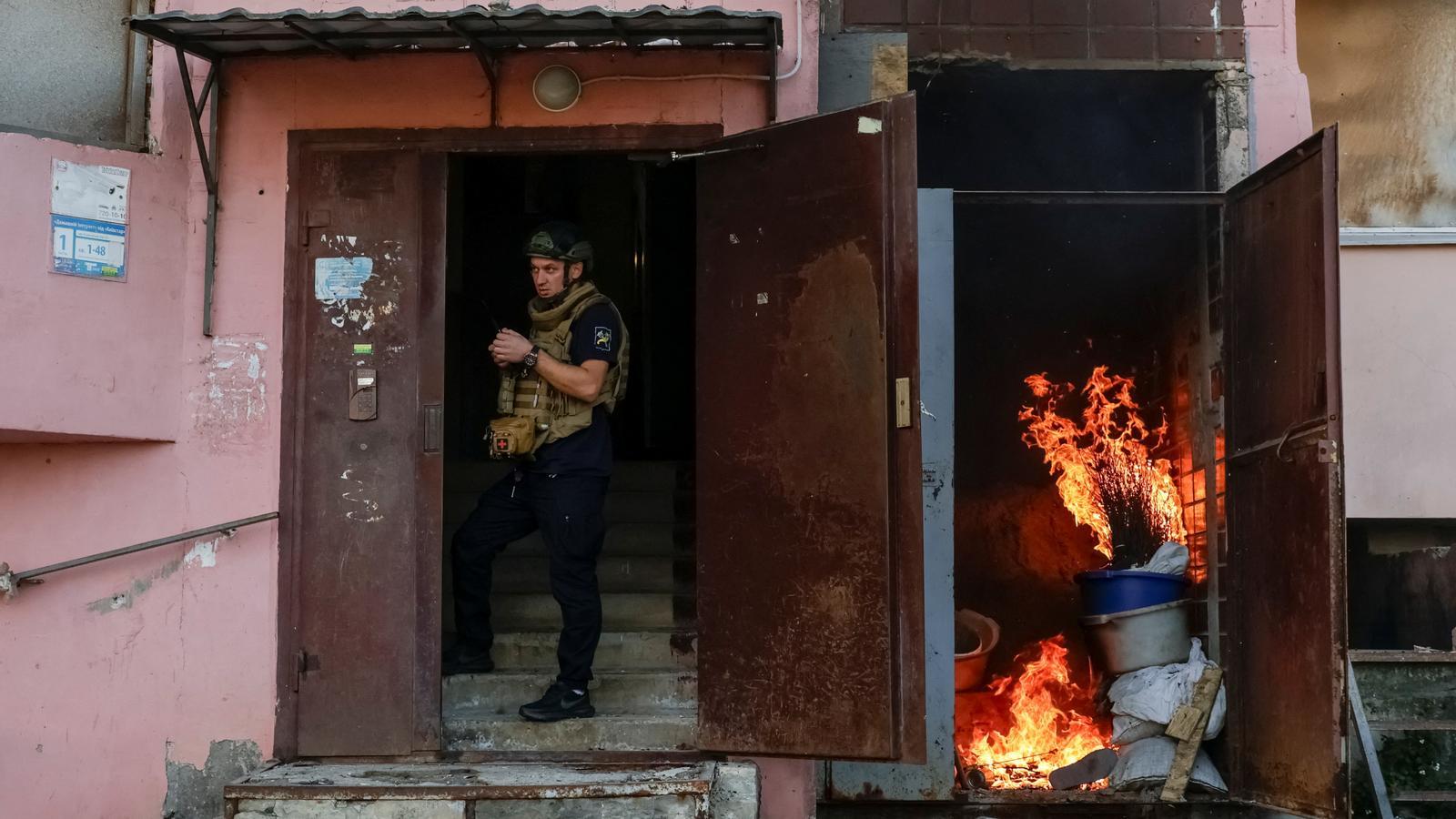
BarcelonaUnited States President Donald Trump announced on Sunday an “energy ceasefire” between Russia and Ukraine “of an immediate nature”. That is to say, both countries would stop attacking, without further delay, each other's energy infrastructure. For the moment, however, there is no ceasefire underway, despite it having been supposed to be immediate. A few hours after the announcement, Ukrainian President Volodymyr Zelenskyy reported six Russian attacks on energy infrastructure, which have left 33 people injured: "we have not attacked, and this is Putin's response to President Trump," he asserted. The city of Izium has been left without electricity after a Russian attack destroyed the power grid, according to the Ukrainian state news agency Ukrinform. During the night, energy and railway infrastructure in western Ukraine were also attacked.
For his part, Trump does not admit the failure of the truce: "there is an agreement, because I said there is an agreement," he asserted early this Tuesday morning. Asked about the possibility that Russia had violated the truce, the Republican said he had no knowledge of it. "The only thing I know is that Zelenskyy and Putin must meet to put an end to this ridiculous war," he stated. Trump has once again pressured the Ukrainian president, asserting that Putin "wants to reach an agreement and we must ensure that Zelenskyy wants it too".
“It is evident that Putin does not read social media,” asserted Ukrainian President Volodymyr Zelenskyy this Monday, in an intervention via videoconference at the Warsaw Security Forum, referring sarcastically to Trump's truce. The American president announced the ceasefire through a statement on his social network, Truth Social.

The announcement caught Zelensky by surprise, who initially claimed he had no knowledge of the supposed agreement. However, on Sunday night the Ukrainian president showed himself willing to respect it, and he reiterated this on Monday: "We are ready to respect an energy ceasefire if Russia is ready to do the same. We agree if they agree," he said.
The Kremlin, however, continues to throw a spanner in the works and has not yet confirmed that it accepts the energy truce. "Contacts are continuing, so when we have something to say about this we will inform you without fail," declared Dmitry Peskov, the presidential spokesman, in a press conference this Monday. "We do not want a truce, we want a lasting peace, and we are willing to do everything possible to achieve it –he added–. We are looking for truly effective measures and responsible decisions that pave the way for a peaceful solution." Likewise, he assured that Russia "is grateful" to Washington for the diplomatic efforts to achieve a resolution to the conflict.
For his part, the Russian Foreign Minister, Sergey Lavrov, has shown himself clearly against the ceasefire: "I do not think he [Zelensky] deserves a break. I do not think we will fall back into the trap of guarantees and promises," he stated, implying that Kyiv wants a truce to "regain strength" and have time for its European allies to supply it with more weaponry "to continue the war".
Skepticism about the agreement
In light of these statements and following the Russian attacks on Sunday night, French President Emmanuel Macron has shown skepticism regarding Trump's announcement. "The facts show that the Russians have continued to bomb energy infrastructure," he said this Monday, and insisted that any diplomatic progress must be based on facts on the ground, which do not exist at the moment.
Trump announced the supposed energy truce after having relaxed sanctions on Russia on Friday to allow the sale of Russian diesel to the United States and international markets. Zelensky denounced at the time that Trump's decision will allow the Russian president, Vladimir Putin, to earn billions of dollars to be able to continue financing the war against Ukraine.

The American president, however, turned a deaf ear to Zelensky's pleas and demanded that his Ukrainian counterpart stop attacking Russian refineries due to the alleged impact these bombings have on the stability of the oil market, and consequently, on the pockets of American consumers. For its part, Ukraine has made it clear that it will continue attacking Russian refineries unless the Kremlin orders an end to the attacks on the Ukrainian energy system. Shortly after, Trump announced the alleged energy truce.
According to Ukrainian analysts, Trump wants to use Zelensky as a "scapegoat" ahead of the US midterm elections, which will be held on November 3rd. That is, he intends to present him as the cause of the global rise in fuel prices, even though the main reason is the US war against Iran and the closure of the Strait of Hormuz.
Russian experts also consider that the Russian diesel supply agreement announced on Friday by Trump will only benefit Moscow politically and economically, as it is a drop in the ocean of the needs of Americans.
