The key to Lula's triumph: the WhatsApp "army" that has mobilized 10 million followers
The veteran leader has based his re-election on digital communication that has counteracted pro-far-right algorithms, street mobilizations and the recovery of nationalism in the face of interference.

-
CAT -
CAST
São PauloLula da Silva has emerged as the wall against the expansion of Trumpism in Latin America with a historic electoral comeback, improbable and unprecedented. The victory, which will allow him to begin his fourth presidential term in Brazil on January 5th, is laden with symbolism: it is a rebellion of the popular grassroots, in which women have once again played a key role, in defense of democracy and sovereignty against the threat of an institutional coup d'état embodied by the candidacy of Jair Bolsonaro's son.
The scenario was entirely unfavorable for Lula. Externally, the ultra-conservative tsunami in Latin America had just totted up seven consecutive victories in presidential elections, sweeping away progressive candidates and painting the region with governments absolutely aligned with the interests of Trumpism. And internally, the desire for change among the lower-middle-class electorate, which suffers most from the rising cost of living and debt, was joined by the alliance of the financial market; exporters of agricultural, livestock, and mineral raw materials, and the large business conglomerates –including media groups–, which had aligned themselves with the far right, enthusiastic about the fiscal adjustment promised by Flávio Bolsonaro. This spending cut, the consequences of which the poorest would pay, could have reached 40 billion euros.
Lula, however, has demonstrated why he is the most influential Latin American politician in contemporary history. He has been capable of adding 10 million new votes compared to the first round –in which he was defeated–, reducing abstention, and obtaining the support of three out of every four new voters. His triumph cannot be understood without the process of reinvention and modernization that he has spearheaded, and which he now promises to transfer to his new government.
A politician of the old guard, with five decades of public life and who turned 81 this Tuesday, analog, who until a week ago didn't even have a mobile phone, and organic, with the Workers' Party (PT) under his control, has adopted a successful formula, exportable to other countries, mainly those in the region with a similar social pyramid.
For the first time, the Brazilian left has been able to articulate itself digitally, finally counteracting the ecosystem of bots bolsonaristas, which has been operating effectively since the 2018 presidential elections, promoting fake news and disinformation every day. The deputy from Minas Gerais, André Janones, organized the WhatsApp channel Exército de Lula, which the Brazilian electoral justice system canceled twice and which has ended up gathering 10.7 million followers, from where he has directed all the slogans on social networks in a very unfavorable digital environment, in which both Meta and X have had to provide explanations for their bias.
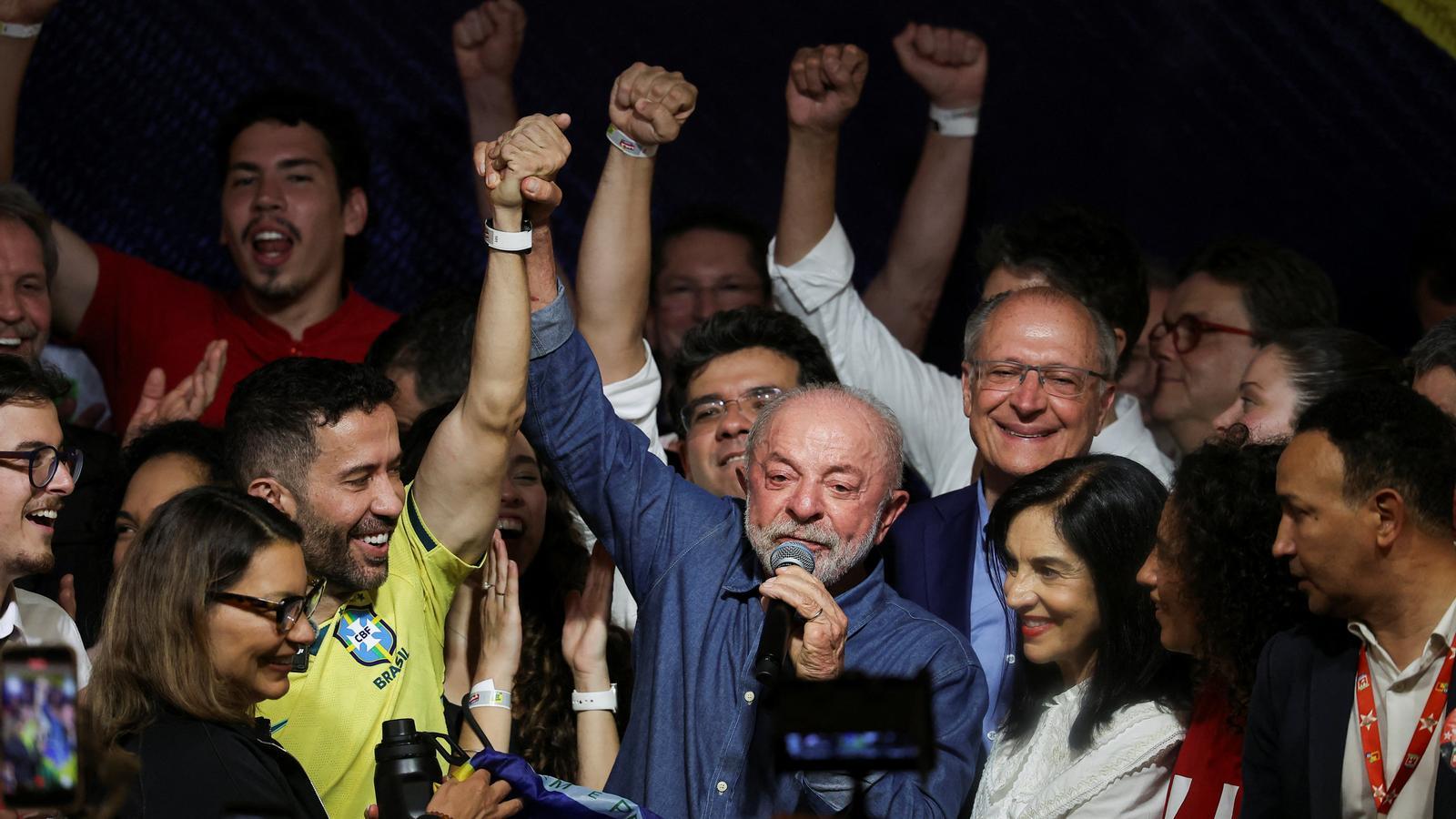
"I want to thank our comrade Janones, our general, who has played an exponential role in this campaign, for lifting the morale of our people every day," said Lula on Sunday in his victory celebration speech, while the public shouted: "Janones, warrior of the Brazilian people!" By his side, the digital "general" of the Brazilian left-wing movement was moved.
The massive street mobilizations of the left in recent weeks, which have recalled those of 1992, when the impeachment of Fernando Collor de Mello was demanded, have been called through social networks, without the coordination of the PT, with a massive presence of young people.
"I have understood the message, these elections have taught me many lessons: I will change the way of governing, we will make the people participate more and digital communication will gain a very large space", assured Lula, who is already working on the formation of the new executive, which will face a very organized and combative far-right opposition in the Senate and Congress.
Recovery of national symbols
The popular mobilization has been accompanied by the recovery, by the left, of national symbols, which extremists and coup plotters had appropriated for a decade: the flag itself and the green and yellow jerseys of the Brazilian national football team. The new Lulist nationalism is based on the defense of sovereignty. Firstly, from a territorial point of view, due to the threat posed by the United States having designated this year the two large Brazilian drug trafficking organizations, the PCC (Primeiro Comando da Capital) and the CV (Comando Vermelho), as "terrorist organizations," which could lead to military interventions. And secondly, regarding the exploitation of natural resources, including rare earths, which are a priority for Donald Trump's family.
Lula's victory represents a defeat for Washington, as the Republican administration had pulled strings to facilitate the return of the far right to power. The day after the elections, Donald Trump did not consider the offensive closed, even after Bolsonaro's electoral defeat, and cast doubt on the fairness of the polls, which he described as "fraudulent," without providing any evidence. Trump's statements are the latest episode of an interference attempt that began with two "tariff hikes" on Brazilian imports to economically punish Lula's government. Afterwards, it continued with diplomatic tensions, which led to the revocation of the Brazilian ambassador's visa in Washington, and with support for the Bolsonarista candidacy. Added to all this is the role of the big tech companies, questioned for having favored the dissemination of far-right messages to the detriment of content supporting the candidate for re-election.
Javier Milei, who is the extension of the Republican administration in South America, has remained silent and is the only president in the region who has not recognized the left's victory. The Argentine president seriously insulted Lula at the convention where Flávio Bolsonaro was chosen as the Liberal Party's candidate, a fact that caused the Brazilian executive to recall the Argentine ambassador for consultations.
The Brasília - Mexico City axis
In contrast, the check on Bolsonarism and Trumpism has been celebrated with intensity from Mexico, which is the other great democracy in the region with a progressive government. "We are happy and pleased with Lula's triumph, we congratulate all the Brazilian people, it is a breath of fresh air for Latin America and the Caribbean," said Mexican President Claudia Sheinbaum effusively, who will end her six-year term in September 2030 with no possibility of reelection.
Brasilia and Mexico City, which maintain a tense relationship with Washington, are consolidating themselves as the two main poles of progressive resistance to Trumpism on the continent. The two largest economies in the region defend national sovereignty and multilateralism in the face of the American offensive to re-establish its continental hegemony and impose a policy of zones of influence. However, Mexico's deep economic dependence on the United States forces Sheinbaum to maintain a more pragmatic relationship with the White House, while in the face of "tariff hikes" Brazil has opted to open new markets.
