The new proposal for aid to Ukraine confronts Merz with four European partners
The European Commission proposes a new loan of 45 billion euros backed by common debt

-
CAT -
CAST
BrusselsUkraine faces a “very hard winter,” to echo the words repeated by various defense officials this week in Brussels. The withdrawal of funding from Washington has left a gap of nearly 70 billion euros—according to Volodimir Zelensky's estimates—to cover its defense against Russian aggression in 2027.
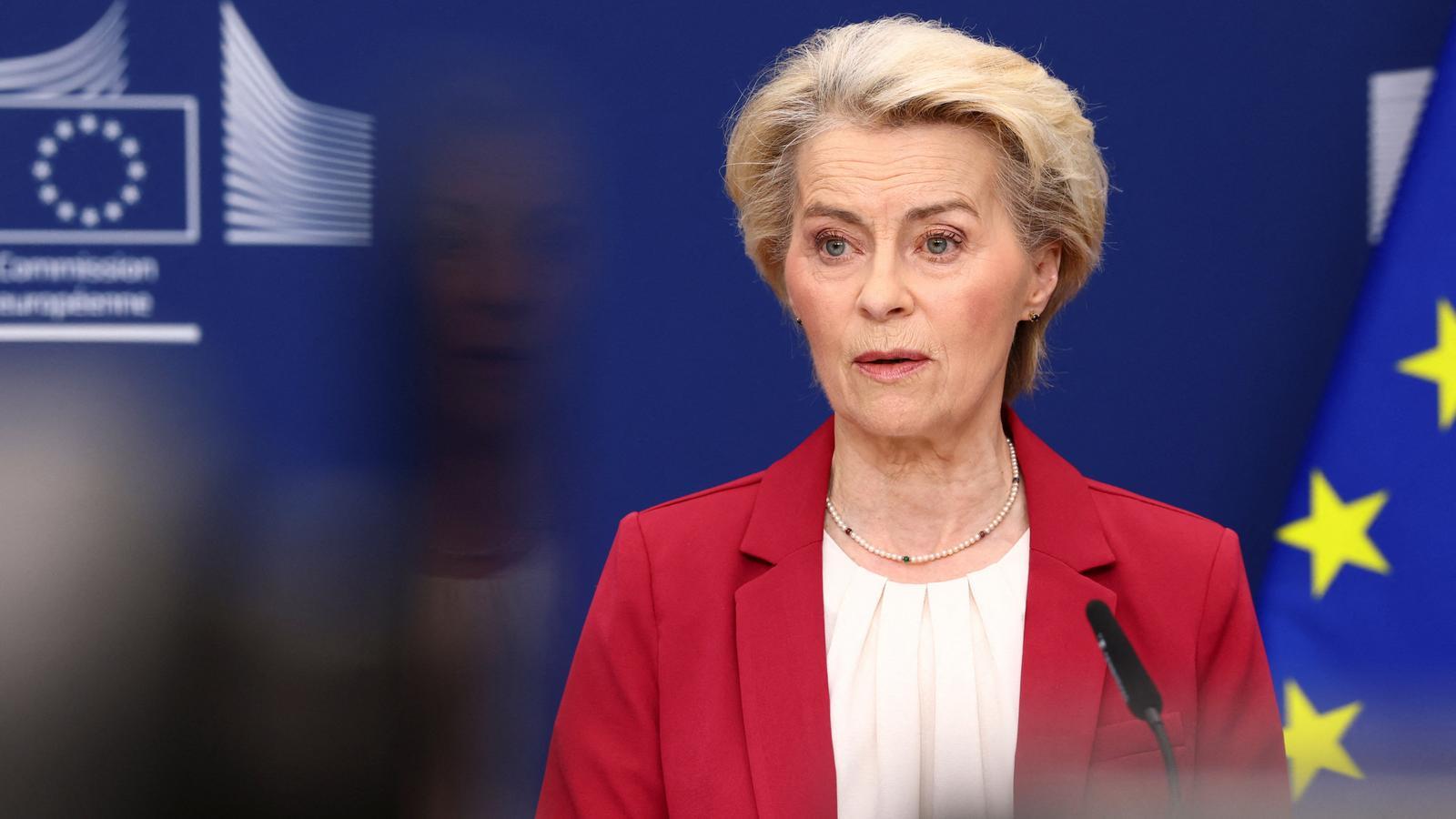
To support its ally and sustain its military efforts, Brussels pledged to cover two-thirds of this deficit, and this Wednesday the European Commission presented its loan proposal. The credit, of up to 45 billion euros, will be financed by a new issuance of joint EU debt, which must be backed by all member states. “We believe this is the best way for Ukraine to arrive at the negotiating table with a strong position,” the President of the European Commission, Ursula von der Leyen, argued this Wednesday.
The proposal includes mechanisms to lighten the bill for Ukraine. On one hand, Kyiv will not have to repay the loan until Russia has paid war reparations. And on the other, it contemplates that future profits generated by frozen Russian assets will be used to reimburse this new credit and the 90 billion one approved last year, once the previous loan has been paid off.
The move, however, comes amid a head-on collision between the German Chancellor, Friedrich Merz, and four Eastern European partners: Slovakia, Hungary, Bulgaria, and the Czech Republic. The budgetary modification required for the loan needs the unanimity of the Twenty-seven to be approved, but these four countries have already warned that they want to remain on the sidelines, whether due to ideological affinity with the Kremlin—as is the case with Slovakian Robert Fico—or internal political pressures.
At the other extreme, Merz, leader of the main net contributor to the community budget, demands that the financial burden be shared in a spirit of solidarity among all partners. “It is essential that everyone, without exception, commits to contributing equitably to cover this deficit,” the German leader wrote in a letter addressed to the President of the European Council, Antonio Costa.
The precedent of the exemption
In the previous 90 billion loan, Hungary, Slovakia, and the Czech Republic agreed not to veto the deal in exchange for being exempt from assuming any financial cost. This time, however, the German chancellor wants to prevent new exceptions and has linked the negotiation to the next budgetary framework (2028-2034). He argues that if they want to receive European funds in the coming years, these countries—all of them net recipients—will have to contribute to the support for Ukraine whether they like it or not.
But from the east of the continent, they do not see it with the same eyes. Slovak Prime Minister Robert Fico has described Berlin's ultimatum as "blackmail" and has claimed that his country has the same right of veto as Germany. Alongside him, Czech Prime Minister Andrej Babiš has rejected the "threats between member states" and has justified that the draft of the next community budget already reserves 100 billion for Ukraine (although this money would not be issued until 2028).
Merz's proposal also generates reservations among Ukraine's firmest allies, but for opposite reasons. Finland and Estonia fear that linking the European budget to aid for Kyiv will end up delaying the arrival of the loan at a time when they need urgent help. In this regard, Estonia's Minister of Finance, Jürgen Ligi, reminded Merz that the Nordics and the Baltics contribute much more to Ukraine in proportion to their GDP: "Those who speak the loudest are not necessarily those who offer the most," he said.
Be that as it may, the EU's proposal will be insufficient to cover all the needs of the Ukrainian front. That is why Brussels has urged other allies from outside the bloc, such as Canada, the United Kingdom, Japan, or Australia, to assume the remaining 25 billion euros. To achieve this, the community executive has designed an incentive for these states: if they grant new loans to Kyiv, they will also be able to benefit from the future returns on frozen Russian assets.
