From equilibrium to tension: the new Gulf dilemma with Iran
The governments of the Persian Gulf face the dilemma of how far to involve themselves in a confrontation that threatens to redefine the regional balance

-
CAT -
CAST
BeirutThe escalation between the United States and Iran enters a new phase. Attacks continue on Iranian territory while Tehran maintains its response against targets linked to Washington in various Gulf countries. The most significant change in this new stage is not occurring in the Strait of Hormuz, but in the region's capitals, where governments that for years tried to maintain a prudent distance from the rivalry between Washington and Tehran now face a difficult choice.
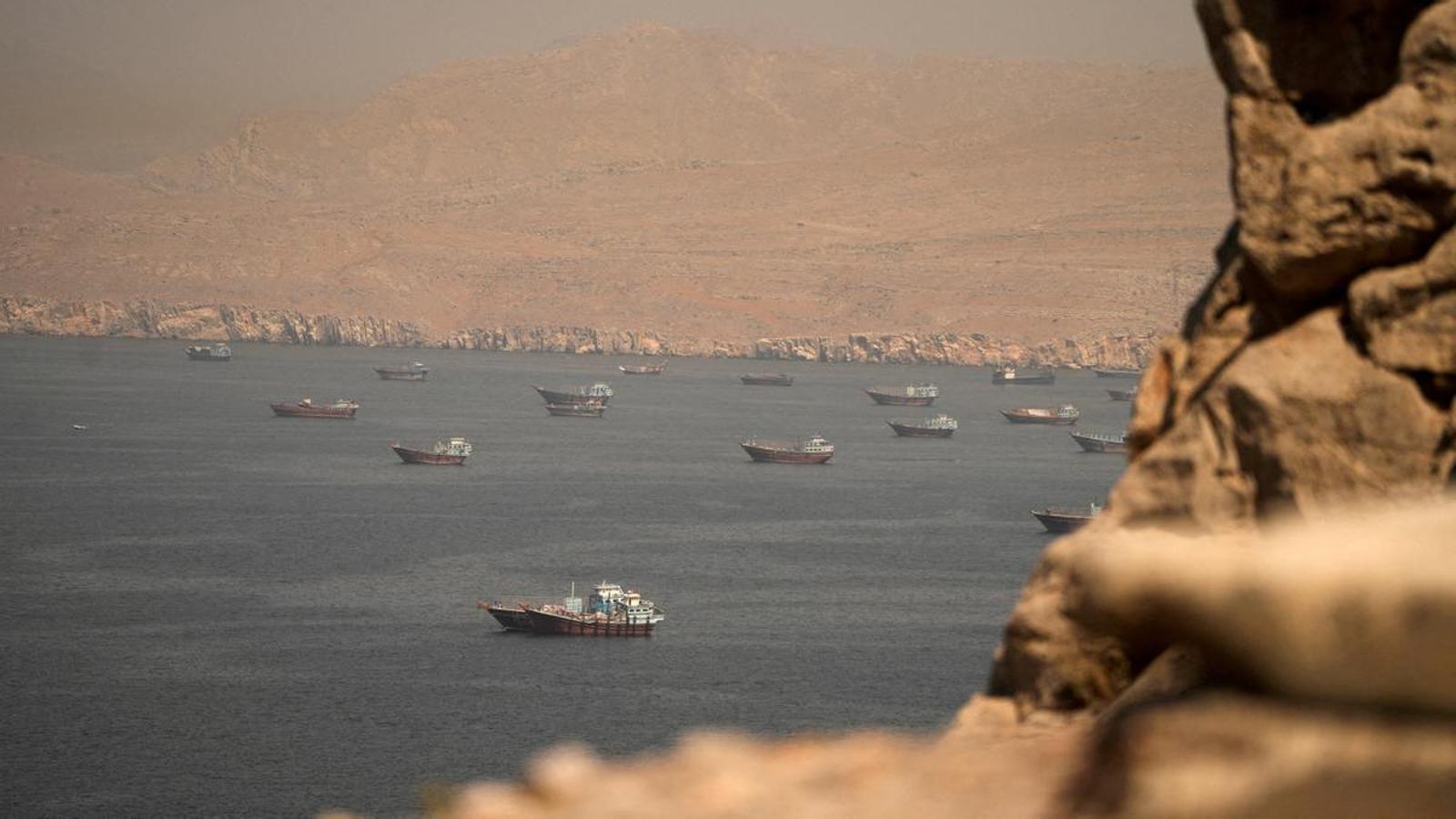
What began as a confrontation between the United States and Iran threatens to become a limited regional conflict, but with a much broader geography than the initial battlefields. The war is no longer measured solely by attacks on Iranian territory and Tehran's counterattacks on its neighbors, but also by the impact on trade routes, energy infrastructures, American military bases, and Middle Eastern airspace.
Tehran is hardening its rhetoric again and has warned that any logistical support provided by Gulf countries to American forces will be considered an act of war. Washington is also redoubling its pressure on Iran, although it does so with an erratic strategy regarding Hormuz, which is once again at the center of the dispute. And the current confrontation goes beyond navigation.
On Monday, Trump assured that the United States would charge a toll to cross the strait. In other words, a kind of toll like the one Iran wants to impose, which is one of the main reasons for disagreement between Washington and Tehran and which the White House has widely criticized. But hours later, as he has done on multiple occasions, the American president backed down and opted for trade agreements with the Gulf countries that would allow the United States to recover part of the expenses incurred by its actions in the region in an entrenched conflict.
The European Union Aviation Safety Agency (EASA) extended its warning to airlines on Tuesday and recommended avoiding the airspace of Bahrain, Kuwait, Qatar, the United Arab Emirates, and the Gulf of Oman until the end of July. The decision reflects the extent to which the crisis has stopped affecting only the directly attacked areas and is beginning to disrupt civilian activity throughout the region.
Goodbye to neutrality
Meanwhile, the Gulf countries find themselves in an increasingly complicated position. In recent years, Saudi Arabia, the Emirates, Qatar, Oman, and Bahrain had tried to maintain a policy of balance: strategic allies of the United States, but also interested in reducing tensions with Iran. The reconciliation between Riyadh and Tehran in 2023 was a sign of this new era of dialogue.
But this strategy has been hit by the expansion of the conflict. Iranian attacks on facilities and positions linked to the United States in the Gulf have forced these governments to rethink their position. The American bases deployed in the region – such as Al-Udeid in Qatar or Al-Dhafra in the Emirates – have served for years as operational and support centers for Washington's forces in the Middle East and have now also become targets for Tehran.
In this context, the Israeli newspaper Israel Hayom published exclusive information pointing to a possible shift in the position of the Gulf countries. According to the outlet, citing two Gulf diplomats, several states in the region have conveyed to Washington their support for resuming attacks against Iran, and some have participated in a limited way in offensive operations over the last two days. The article points out that Qatar has changed its position after Iranian attacks on its territory and energy facilities. Doha, which until now had played a central role as mediator between Washington and Tehran, has reportedly stopped opposing a joint Gulf response and has also abandoned its efforts to facilitate the release of frozen Iranian funds.
If this information is confirmed, it would represent a significant change in the regional dynamic, where countries that for years tried to maintain a balanced relationship with Iran would be taking a more active role alongside the United States in the confrontation. A shift that would alter the alliances in the Middle East and that some analysts compare to the regional reconfiguration driven by Donald Trump's Abraham Accords, which seek the normalization of relations between Israel and Arab countries.
The truce in Yemen is broken
Saudi Arabia also offers a glimpse of how the confrontation with Iran is extending its effects beyond the Gulf. After the truce reached in May 2025 between the United States and the Houthis, which had slowed down the American military campaign in Yemen, Riyadh had avoided reopening a front that had been bleeding the region for years. But the new escalation is changing calculations. On Monday, an attack on Sana'a airport, controlled by the Houthis, once again pitted Saudi Arabia against Tehran's allied movement. The Houthis responded with missiles against Saudi territory, breaking the relative calm that had been maintained since the truce.
The episode illustrates how the war between the United States and Iran is also reactivating the battle against their regional allies. The possible prior coordination of the attack between Riyadh and Washington, revealed by the media Axios, would reinforce this interpretation.
The result is a more complex scenario than a simple bilateral conflict. The United States and Iran continue to be the main protagonists, although the conflict is beginning to draw in a network of actors who for years tried to stay on the sidelines.
The paradox is that the war that was supposed to force Tehran back to the negotiating table may be causing the opposite effect: the creation of a new regional dynamic in which the Gulf countries are being pushed to abandon their ambiguity and align themselves more clearly with Washington. Between the need to protect their territories, their economic interests, and their strategic alliances, the Gulf governments must decide how far to involve themselves in a confrontation that threatens to redefine the regional balance.
