Iran closes Hormuz and attacks the Gulf after being bombed by the US
While Tehran claims control of the strait, Washington interprets that it must be open to navigation

-
CAT -
CAST
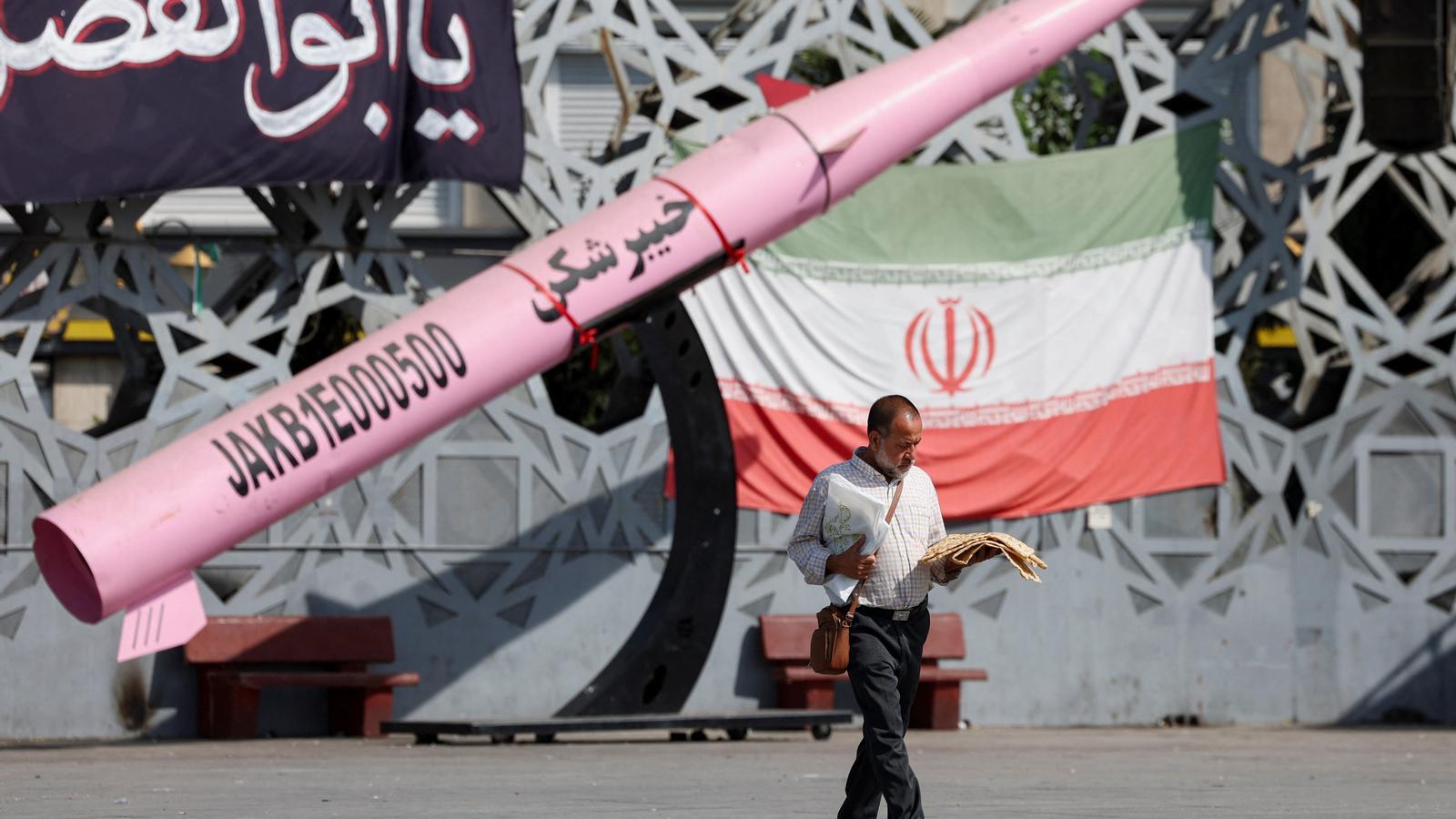
BeirutThe sirens have sounded again this Sunday in several Gulf countries as the United States and Iran have taken a new step in an escalation that threatens to squander the fragile memorandum of understanding signed just a few weeks ago between Washington and Tehran. After a third wave of American bombings against more than 140 Iranian military targets in recent hours, Tehran has responded with a coordinated offensive against American military installations in the Gulf. It has attacked with missiles and drones in Qatar, Bahrain, Kuwait, Oman, and Jordan, and has announced the closure of the Strait of Hormuz, the artery through which around 20% of the oil and liquefied natural gas traded in the world passes.
The exchanges began when Washington launched a wave of attacks against Iranian territory, which the United States Central Command (Centcom) justified as a measure to "degrade Iran's capability," after Tehran bombed a Cyprus-flagged container ship sailing through an unauthorized route in the Strait of Hormuz. Iranian media have reported explosions in several parts of the country, including cities in the province of Bushehr (southwest), where there is a nuclear power plant, and also several localities near Hormuz.
Iran was quick to respond and struck at the regional network of bases and infrastructures that sustain Washington's military presence in the Gulf. Tehran has claimed attacks against logistics centers and military support platforms in Oman, American defense systems and radars in Kuwait and Bahrain, and Prince Hassan Air Base in Jordan. In Qatar, the missiles targeted Al-Udeid Air Base, one of the largest American military facilities in the region. Doha claims to have intercepted the projectiles, although three people were injured by fragments.
Pending confirmation from American authorities, in the middle of Sunday afternoon, Iranian media reported several explosions in what appears to be a new wave of US attacks. Detonations have been registered around the port of Bandar Abbas, where there are military facilities that allow Iran to maneuver near the strait, and on the island of Qeshm, also close to Hormuz.
The Islamic Republic has announced the closure of the Strait of Hormuz, key to world trade, until "the end of US interference in this region". But Washington assures that the strait is still open and that its forces are prepared to guarantee freedom of navigation. The Joint Maritime Information Centre has confirmed that the southern maritime corridor remains operational, although it has raised the threat level to "severe" due to the risk to ships.
A memorandum of misunderstandings
The immediate trigger for this new escalation has been the Iranian attacks on several commercial ships sailing through the Strait of Hormuz and the subsequent military response from the United States. But the origin of the crisis goes back further. It dates back to the memorandum of understanding signed in June, a document that was to open a sixty-day negotiation to end the war, limit Iran's nuclear program, and reduce tensions on all fronts in the region.
The Iranian position was summarized this Sunday by the President of Parliament and one of the main negotiators of the agreement, Mohammad Bagher Ghalibaf. "The era of unilateral agreements is over. We told them to keep their word or they would pay the price," he wrote along with an image of Article 5 of the memorandum with the following phrase: "The Islamic Republic of Iran will take the necessary measures." It was not a casual reference. It was a way of pointing to the specific point on which, according to Tehran, the entire current crisis rests.
Article 5 stipulated the reopening of the Strait of Hormuz and committed Iran to ensuring navigation safety during the negotiation period. For the United States, this commitment meant restoring freedom of navigation and preventing any interference on a route through which a fifth of the world's energy passes. Iran, on the other hand, understood that the text recognized its central role in the management of the strait and that, once the transitional period concluded, any navigation mechanism had to be negotiated with Oman, the other riparian state.
The importance that Iran attaches to this corridor was also summarized by Mohsen Rezaei, military advisor to the supreme leader, when he stated that "the Strait of Hormuz is more important than dozens of atomic bombs." The statement goes beyond rhetoric. It reflects an idea that has been gaining weight within Iranian strategy after months of war: if the Islamic Republic cannot guarantee its own security, it will not allow the rest of the region to enjoy stability as if the conflict did not exist.
More than a dispute over navigation, what is emerging is a power struggle to decide who sets the rules of the game in the Gulf. The United States insists that freedom of navigation cannot be subject to conditions or restrictions. Iran maintains that the security of the strait cannot be managed apart from its interests and claims a decisive role alongside Oman. These are two difficult visions to reconcile, and the memorandum of understanding never managed to resolve them.
On paper, the ceasefire remains in effect. Neither side has officially announced its breach, and the deadline for negotiating a definitive agreement remains open. But the attacks of recent days have exposed contradictions. The waters of Hormuz have reopened to commercial traffic, but the strait remains politically closed. What is blocked is not only a maritime route but also the understanding between Washington and Tehran on the rules that should govern one of the world's most strategic passages.
