Abdul El-Sayed consolidates the leftward wave within the Democratic Party in Michigan primaries
The victory of the progressive candidate in the 'swing state' deepens the crisis experienced by the party's establishment

-
CAT -
CAST
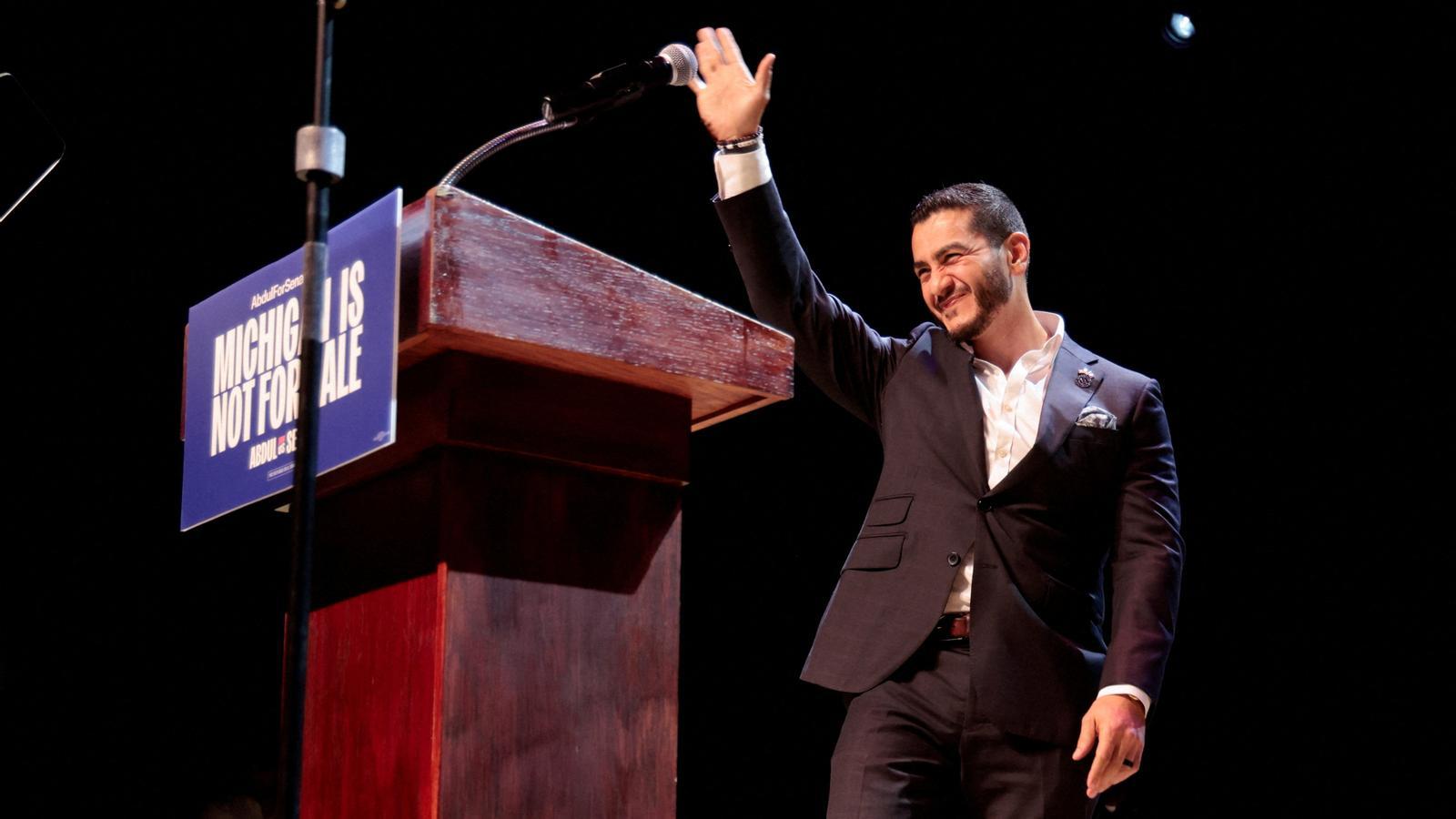
WashingtonAbdul El-Sayed has confirmed that the anti-establishment wave within the Democratic Party is not a cosmopolitan fever. After an agonizing vote count that stretched into Wednesday morning, the progressive candidate has proclaimed himself the winner of the Michigan Senate primaries against congresswoman Haley Stevens. He did so with a difference of 20,000 votes, a narrow margin of 0.9 points with 95% of votes counted. The electoral contest in this Midwestern state has been one of the most expensive due to the amount of money that the pro-Israeli lobby AIPAC injected into Stevens' candidacy in an attempt, ultimately unsuccessful, to unseat El-Sayed.
Muslim, doctor, and son of Egyptian immigrants, El-Sayed is the latest progressive and outsider who has managed to unseat candidates backed by the Democratic Party establishment. His victory joins that of the Democratic Socialists of America (DSA) in the Colorado and New York primaries for the November legislative elections. El-Sayed's case, however, carries more weight because it calls into question the criticism that has been leveled until now against the rise of the progressive wing: that it can only work in strongly Democratic states.
Michigan is a swing state where in 2024 Donald Trump defeated Kamala Harris by a difference of only 80,000 points. With more than 10 million inhabitants, it is the tenth most populous state in the country, making it a prime laboratory for how a more left-leaning and markedly populist agenda can work in the rest of the US. The final test, however, will be on November 3, when he faces Republican candidate Mike Rogers for a Senate seat that could be crucial for Democrats to regain the upper house.
El-Sayed has advocated for public healthcare ("Medicare for All"), has openly spoken out against AIPAC, and has denounced the genocide in Gaza. Nevertheless, the 41-year-old progressive has rejected the label of "socialist" and shied away from the left-right spectrum, instead talking more about "a movement for the people." "Whether you supported me or not, whether you voted for Vice President Harris in 2024 or you voted for Donald Trump; if, like me, you believe you should be able to afford groceries; if, like me, you believe you should be able to afford housing; if, like me, you believe your taxes should be invested in you and not sent elsewhere; if, like me, you believe that a government of the people, by the people, and for the people is a birthright in this country [...] I hope you will join this movement," El-Sayed argued this Wednesday morning in a press conference following the confirmation of the results.
El-Sayed's triumph sends a clear message to the party leadership about the grassroots' discontent and the need to seek a new narrative that appeals to voters' material needs. "What we have shown is that if you are willing to build a movement brick by brick, if you are willing to travel your entire state and have conversations in large and small rooms, starting when people are not even focused on elections, but on the price of gas, food, housing, and healthcare, then you can build a conversation that ends up becoming a movement capable of defeating Goliath," he celebrated.
Populist turn in the Democratic Party
The populist turn that the Democratic Party is experiencing is driven by the growing polarization process that American society has been undergoing for years. On the other side of the conservative spectrum, this process has been consolidated for years since Trump turned the Republican Party into his own party.
El-Sayed's victory sends warning signals not only to the Democratic leadership, but also to AIPAC. The group has spent over $30 million on Stevens' candidacy, who lost despite having one of the most expensive campaigns in the lobby's history. "They spent an unprecedented amount of money to defeat us: attack ad after attack ad after attack ad after attack ad, a constant advertising campaign. But it turns out that ads are the part of the television program that most people don't want to see," El-Sayed said today.
It is also noteworthy that the progressive's victory occurs in the second country with the largest Arab population. In 2024, support for Israel and reluctance to discuss the genocide in Gaza took a toll on Harris. In this new cycle, El-Sayed is one of the many figures in the progressive orbit who has corrected this position, openly criticizing AIPAC and denouncing the massacre in Palestine.
In recent months, the negative view of Israel and its Prime Minister, Benjamin Netanyahu, has been growing among American citizens. A poll published by Gallup in February already indicated that, for the first time since the early 2000s, Americans feel more sympathy for Palestinians than for Israelis: a 41% compared to 36%. Until last year the trend was the reverse.
