Deportation flights and halt to regularization: Kast reverses Boric's migration policy
The ultraconservative executive begins to implement a plan to close borders and persecute and expel immigrants
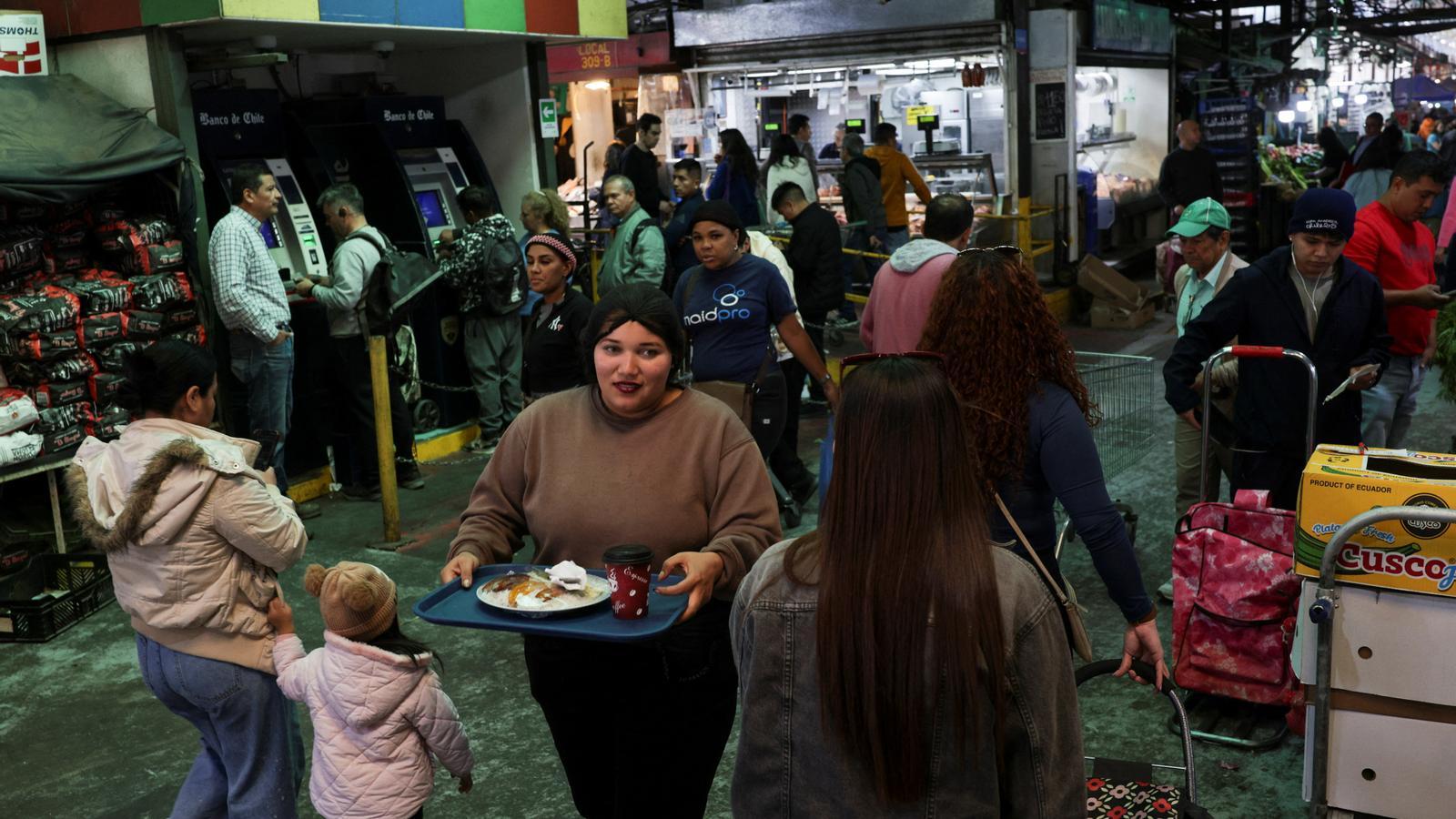
BarcelonaChile's political shift towards its most conservative era since the time of Pinochet is beginning to materialize. José Antonio Kast, an admirer of the dictator and winner of the autumn elections, has already begun to implement one of his main electoral promises: to expel all immigrants in administrative irregularity, whom he links to a supposed increase in crime in the country. This is one of the latest episodes in which a correlation is established between origin and crime – which experts repeatedly deny – and it occurs in a country where the perception of insecurity is higher compared to other countries in the region, despite having one of the lowest crime indicators on the continent.
In his first speech to the nation this April, Kast presented as one of his "first milestones" having "begun to close" the country by installing ditches, walls, and surveillance technology at the borders, where he boasted of having deployed numerous army and police personnel within the framework of what he has dubbed Operation Border Shield. In the same address, the Chilean president announced a first deportation flight of irregular immigrants: on April 16, 40 people were expelled.
The far-right executive has stated that 44,000 immigrants already have orders for deportation, and that their shipment to their countries of origin will occur soon. But Kast's zeal goes further. In his election campaign, he promised to expel 337,000 irregular immigrants, all those in Chile, according to official data. However, to carry out deportation flights, the approval of the receiving country is needed, and here Kast may encounter a significant obstacle when implementing his promise.
According to estimates by the Chilean National Migration Service, 75% of residents in an irregular administrative situation in Chile are Venezuelan. Until now, the Andean country's diplomatic relations with Caracas were broken, but Venezuela's diplomatic opening following the intervention and tutelage of the US – to whom Kast is subservient – may facilitate an understanding. In fact, the Minister of Foreign Affairs, Francisco Pérez Mackenna, has already indicated in public statements that he is working to re-establish consular relations and facilitate the departure of Venezuelans from the country.
Brake on regularization
During the four years of the legislature, Gabriel Boric's left-wing government maintained some deportation flights, especially of irregular immigrants who had committed crimes. At the same time, however, it promoted a registration process for people who had entered the country unofficially. In statements to ARA, the director of the center for migratory studies at the University of Santiago de Chile, Adriana Palomera, points out that it was not a regularization comparable to the one recently approved by the Spanish government. In the Chilean case, it was a call to register all people in an irregular administrative situation, with the aim of identifying them, counting them, and, at the same time, giving them access to basic services.
In an increasingly hostile political and social climate towards immigrants, Boric's executive balanced to decouple immigration from crime and, at the same time, warned that anyone who did not adhere to the registration – presented as voluntary – would be expelled from the country. Finally, about 180,000 people registered, and although the measure did not grant immediate access to any work or residence permit, it was a first step towards obtaining one in the future. The same executive studied a mechanism that would allow the transition from the registration process to regularization, but the legislature ended without a concrete proposal.

Now, Kast has made it clear that he will not take any further steps in this regard, even though social and human rights organizations, such as Amnesty International, have repeatedly urged to complete the process initiated with voluntary registration. In an opposite direction to this, the new tenant of the Moncloa Palace has repeatedly accused the immigrant population of being responsible for a supposed increase in crime in the country.
The paradox of insecurity
In the last decade, Chile has seen the immigrant population come to represent almost 10% of the population, when for many years it was only 2%, explains Palomera, who adds that in the last two years the figure has stabilized. "There are more immigrants participating in crimes because there are more immigrants in the country, but there has not been a percentage increase," she details. Academic research and data presented by official organizations in Chile deny the direct relationship established by the far-right executive between immigration and crime.
Furthermore, crime rates remain stable for most offenses in the country. Nevertheless, according to an Ipsos survey, 49% of Chileans point to crime and violence as one of their main concerns – and in recent years the percentage has risen punctually to 65% – placing Chile as one of the countries in the world with the most population worried about this issue. However, if we look at the most serious crime related to crime and violence, the Andean country has a rate of 5.4 homicides per 100,000 inhabitants, one of the lowest on the continent. Only Argentina, El Salvador, and Canada are below, and the country is also at the bottom in most criminality indicators.
How, then, can it be explained that Chileans are so concerned about this issue? Historically, the dissonance between reality and perception in the country has already been high, but Palomera points to two factors that have accentuated it in recent years. On the one hand, it is true that Chile has experienced an increase in some violent crimes, such as kidnappings. Murders, on the other hand, fell by 10% in 2025, according to InSight Crime. "On this issue, we must fight transnational organized crime, but an entire social group cannot be held responsible," recalls Palomera, who adds that less than 5.3% of the immigrant population is convicted of any crime. On the other hand, in the country, as around the world, the discourse against immigrants has been normalized, "deliberately impacting a negative perception of immigration and disregarding the positive contribution, with a constant appearance in the media and networks of this type of contrary discourse," portrays the expert.
This mix of factors, added to the breeding ground of growing social and economic inequalities in the country and around the world, has favored the rise of the far-right in the country, which has managed to spread the idea that the insecurity felt by Chileans is due to the immigrant population. Kast's party, further boosted at the polls by the frustration generated after the failure of the constitutional reform process, now has four years to unfold its xenophobic agenda. And it has already laid the first stone on the path.

