Ukraine responds to Russian bombings with its largest attack on Moscow since the start of the war
The 556 drones have caused three deaths and at least 17 injuries in a new escalation of the conflict

-
CAT -
CAST
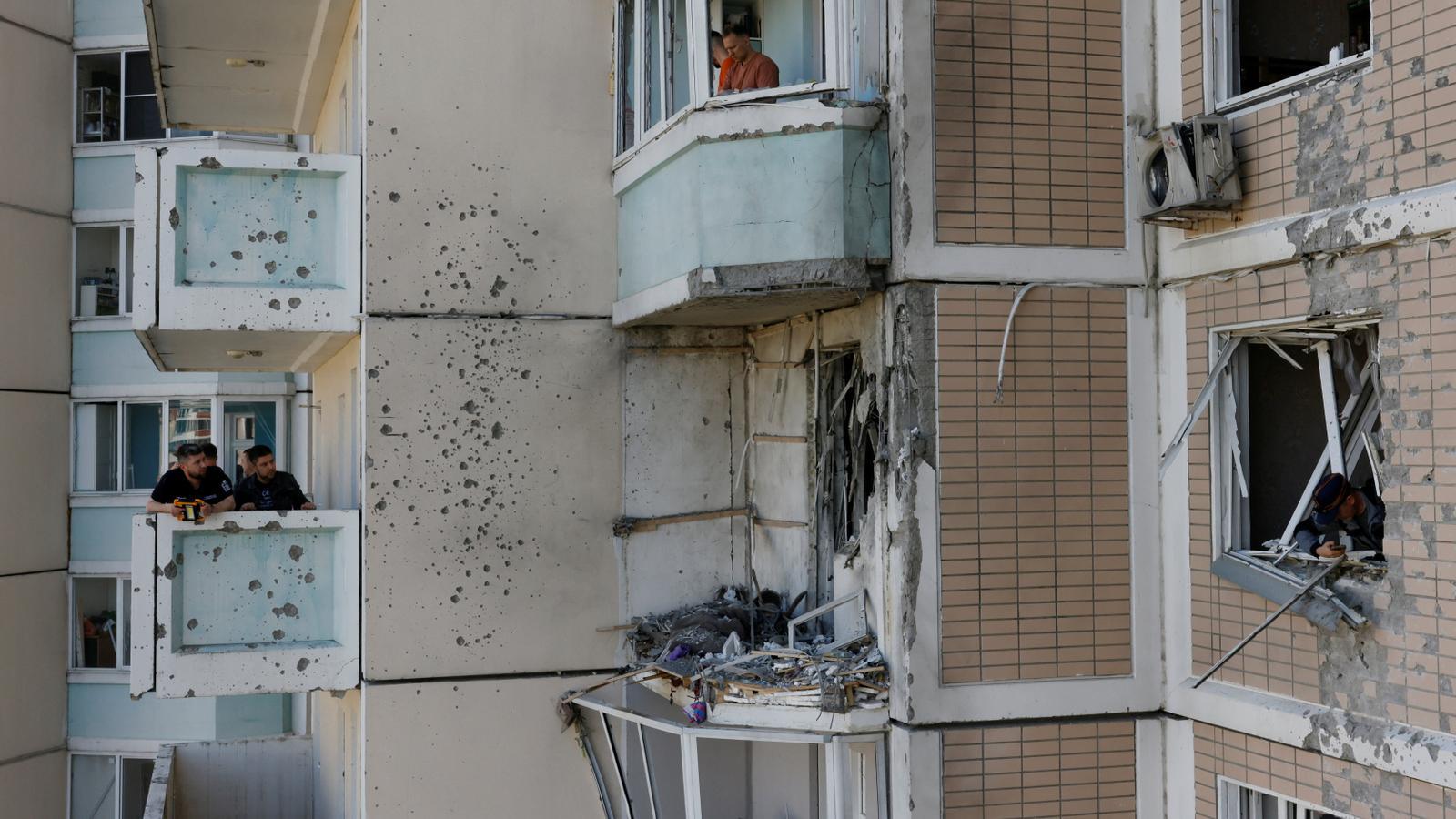
MoscowIf the Soviet Victory Day truce against Nazi Germany in 2025 led to the first round of direct talks between Russia and Ukraine in three years, this year's ceasefire has led to an escalation of the conflict. Volodymyr Zelensky promised on Thursday that he would respond "fairly" to the large-scale Russian bombing with more than 1,600 drones and missiles, which ravaged Kyiv, leaving 24 dead and around fifty injured. And this Sunday he has responded. Russian air defenses detected 556 Ukrainian drones during the early hours of the morning, 120 of which were heading towards Moscow, in the largest attack on the capital since the start of the war, now more than four years ago.
Around the city, three people have died and at least 17 have been injured. Two of the victims were two men who were in a building under construction in the village of Pogorelki, north of the capital, while the other was a woman who was sleeping in her home when the remains of a device impacted there, in Khimki, to the northeast. The drones have also hit an industrial area near these municipalities where a refinery, an oil depot, and a microelectronics factory are located. Furthermore, the remains of another unmanned vehicle have crashed onto the grounds of one of the city's four main airports, Sheremetyevo. There were no damages or injuries, but more than 275 flights had to be canceled or delayed and operations at all four facilities were halted.
Zelensky has denounced that during the week the Russian army has fired more than 3,170 long-range drones, more than 1,300 glide bombs, and 74 missiles. The attacks have killed 52 people and injured 346, including 22 children. This morning, Russia fired 287 devices, but caused no casualties. Following the latest strikes against Kyiv, the Ukrainian president insisted that the strategy of bombing military and energy targets within the country was "totally justified".
This increase in attacks by both sides takes place after a three-day truce, which expired last Tuesday at midnight. Donald Trump presented the initiative as "the beginning of the end of a very long, deadly and hard war" and opened the door for it to be prolonged. However, a few hours after it expired, Vladimir Putin, who had threatened a devastating bombardment if Zelenski dared to violate the ceasefire, decided to carry out one of the largest combined attacks since the beginning of the invasion, despite Ukraine having respected it. The Ukrainian response was a matter of time, although it has been less lethal and not on such a large scale.
Stalled negotiations
The contrast with the situation a year ago, when US pressure led Putin to pull a negotiation offer out of his hat after May 9, shows the extent to which the peace process is stalled. With the United States bogged down in the Middle East, the trilateral format of talks is suspended and with little prospect of resuming, even if Trump's mediation is reactivated. The Kremlin does not want to discuss any conditions or talk about a serious ceasefire as long as Zelensky does not order his soldiers to abandon all of Donbas, a demand that Ukraine is not willing to accept.
At the same time, the Ukrainian leader is aware that attacks on Russian energy infrastructure are particularly sensitive for the Kremlin, as they bring the consequences of the war closer to its citizens. This morning's impact on an oil refinery also marks a milestone: it is the first in a facility of this type within the Moscow region, where protection against Ukrainian drones is maximum, far superior to the rest of the country.
