Why in Barcelona we can't stop talking about the place where we live

BarcelonaI'm writing this column while listening to a hellish noise. In my building, two renovations are happening at the same time, one on the first floor and the other on the third. I live on the second. I work while imagining I'm the filling in a construction sandwich, and indeed, the din often forces me to hang out in bars or libraries. Today, however, I'm staying home, because the noise of drills and hammers, or the shrill whistle of the bricklayer who comes and goes from the building and sings dubious tunes on the stairs, is most suitable for the book I've been reading for a few days: Un metro cuadrado, by Llucia Ramis (Anagrama, 2026).
Housing is a topic of conversation that spans so many fields (political, economic, sociodemographic…), and contains such ugly words (like “real estate agent”, “subletting”, and others), that we sometimes forget the humanity it shelters. Right from the start of Un metro cuadrado, Ramis places us in the technical framework and quotes articles from the Constitution that refer to citizens' rights regarding private property and decent housing. But once she introduces her writing, the author represents property as a human and sensitive space. One of the first images she evokes is very beautiful: the memory of when we were children and played tag, and we called the safe place where no one could disqualify us “home”.
The book constantly moves between these two poles, structural and emotional reality. Ramis presents the apartments she has lived in with a touch of data (the years she rented them, the address, the year of construction, the square meters, and the price she paid) and then recounts her own story. She draws on personal memories, seeks out the people with whom she shared the daily space, and in some cases, also manages to get the current tenants of the apartment to let her in so she can compare past and present. This more personal part is combined with a historical review of housing policies, from architectural plans to changes in laws. She also intersperses interviews and data. From time to time, it makes me think of Francesc Candel and how he described apartments, building materials, and the movement of people. On one occasion, Ramis quotes him directly, and it makes sense, because both, when describing the city, start from housing as an essential base from which we process the world.
With Llucia Ramis's book, I couldn't stop talking. Accompanied by the incessant and uniform sound of a drill that occasionally met a too-solid wall and made a sharp screech, I read and my mind conversed with the author: “This has happened to me too,” “current students must no longer be able to do this” (go on vacation without having planned which apartment they will live in in September), etc. It's such a common conversation, the one about housing! For a few years now, it has occupied hours and hours of chat among friends and family. We talk in apartments, cafes, restaurants, and terraces, while we look around us and wonder how others manage to live there. Everything the writer explains feels familiar, and I enjoy it most when she talks about herself, because that's when life takes precedence over structure.
The places where we live mark our lives
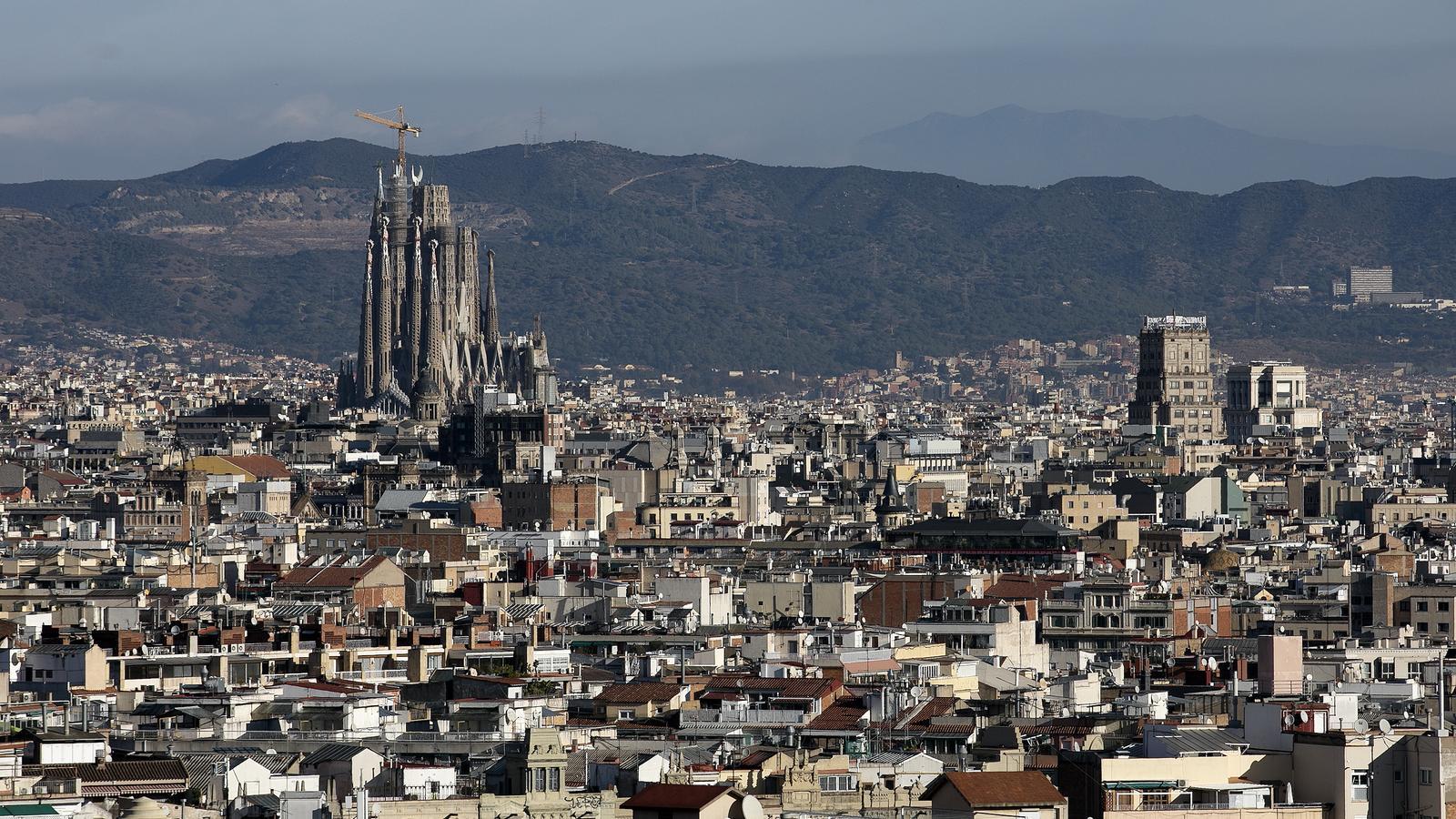
For me, the whole city is a home. At eighteen (technically, seventeen) I left l'Anoia to come study in Barcelona. I entered the capital through Paral·lel, and since then, my apartments have gradually moved further from the sea until I settled very far from the center. Each move has meant a resizing of the capital. When you live at the foot of the Collserola mountain, as is my case now, Barcelona is repositioned and, instead of seeming bigger, it still seems smaller. If I go up a hill, I see it almost entirely and, on the other hand, to go down to the sea, it only takes me an hour and a half walking.
Alone, yes! When I lived in the village I begged my parents to take me to my grandparents' house by car, please, because they lived so far away, on the other side of town! Over time I realized that from my parents' house to my grandparents' house I only had to walk fifteen minutes. Fifteen minutes and I was there to give Grandpa and Grandma a kiss. But it seemed like an abyss to me, an eternity, perhaps because I had shorter legs or perhaps because I hadn't inhabited any dimension other than that one, and everyone knows that distances don't always measure the same. Now it happens that when my parents come up to Barcelona and I make them walk, they say to me: "Oh, you see everything nearby!" And if I push them too much, they return to the village exhausted. The city is bottlenecked between the sea and the mountain, and as I look at it from further and further away, in the end it presents itself to me as an alien body. But it's a lie. We all inhabit Barcelona, and with our bustling it takes shape.
One of the reflections I like most fromA Square Meter is when the author talks about Palma and explains: “I got used to dimensions and a light that, while not decisive in building an identity, perhaps were in creating a state of mind –and she continues–: I spent weekends and holidays surrounded by nature, which may sound cheesy or like a luxury, but which in any case shaped my sensibility”. The places where we live mark our lives. They are not a whim, as those who find it natural for citizens to leave their neighborhoods want us to believe. Llucia Ramis's book, in its argumentative part, but above all, in its personal part, reminds us of this. No rational argument she presents is a revelation, but, on the other hand, each layer of sensitive truth comforts us.
