The Association of Colony Houses and Hostels of Catalonia (Accac), the Catalan Association of Leisure, Education and Culture Companies (Acellec), and Pimec Turisme warn that the 'no' to the Catalan pre-agreement "extends the uncertainty about the development of school trips and excursions". In a statement, the three entities affirm that the conflict "has resulted in cancellations of reservations" and in the approval, by more than 1,200 educational centers, of measures that provide for not carrying out colony trips or school excursions.All of this, warn the entities, "can compromise the continuity of projects, the activity of many companies and entities in the sector, and the jobs that depend directly on school trips". For this reason, they consider it "essential" that Education integrates colony trips and school excursions within the educational system, with the necessary recognition, guarantees, and resources.
Teachers reject agreement with Education and will call strikes next week
More than 39,500 teachers and professors have voted against the pact
-
CAT -
CAST
BarcelonaThe day has arrived. After 72 hours of voting, teachers revealed this midday that they reject the preliminary agreement of the majority unions and Education. They did so in a consultation in which more than 60,000 teachers participated (approximately 60% of the teachers and professors in the public education system). Of these, 65.1% rejected the agreement and, therefore, have committed to continuing to mobilize. In contrast, those who viewed the preliminary agreement favorably remained at 34.9%.
With these results, the general strike called for this Friday in all schools and institutes in the country by USTEC, the CGT, and La Intersindical is maintained. Also the demonstration in Barcelona, which is scheduled to start at 12 noon at Arc de Triomf and will have three columns departing at 10 am, simultaneously, from the Renfe station in Sant Adrià de Besòs, from the metro station Foc (L10 Sud), and at the Venetian Towers of Plaça d'Espanya (metro exit L1). Now, however, it will be necessary to see how the next protests materialize, as the teachers who voted against the agreement have committed "to carry out the necessary strikes until the end of the school year".
The final results of the consultation show that 39,502 teachers are against the preliminary agreement with Education, almost double those who would support the agreement (21,184). Despite this majority "no" from the teachers, the Minister of Education, Esther Niubó, explained that the Government will move forward with the agreement, as there are three unions that will sign it. Niubó said this after an emergency meeting with President Salvador Illa.
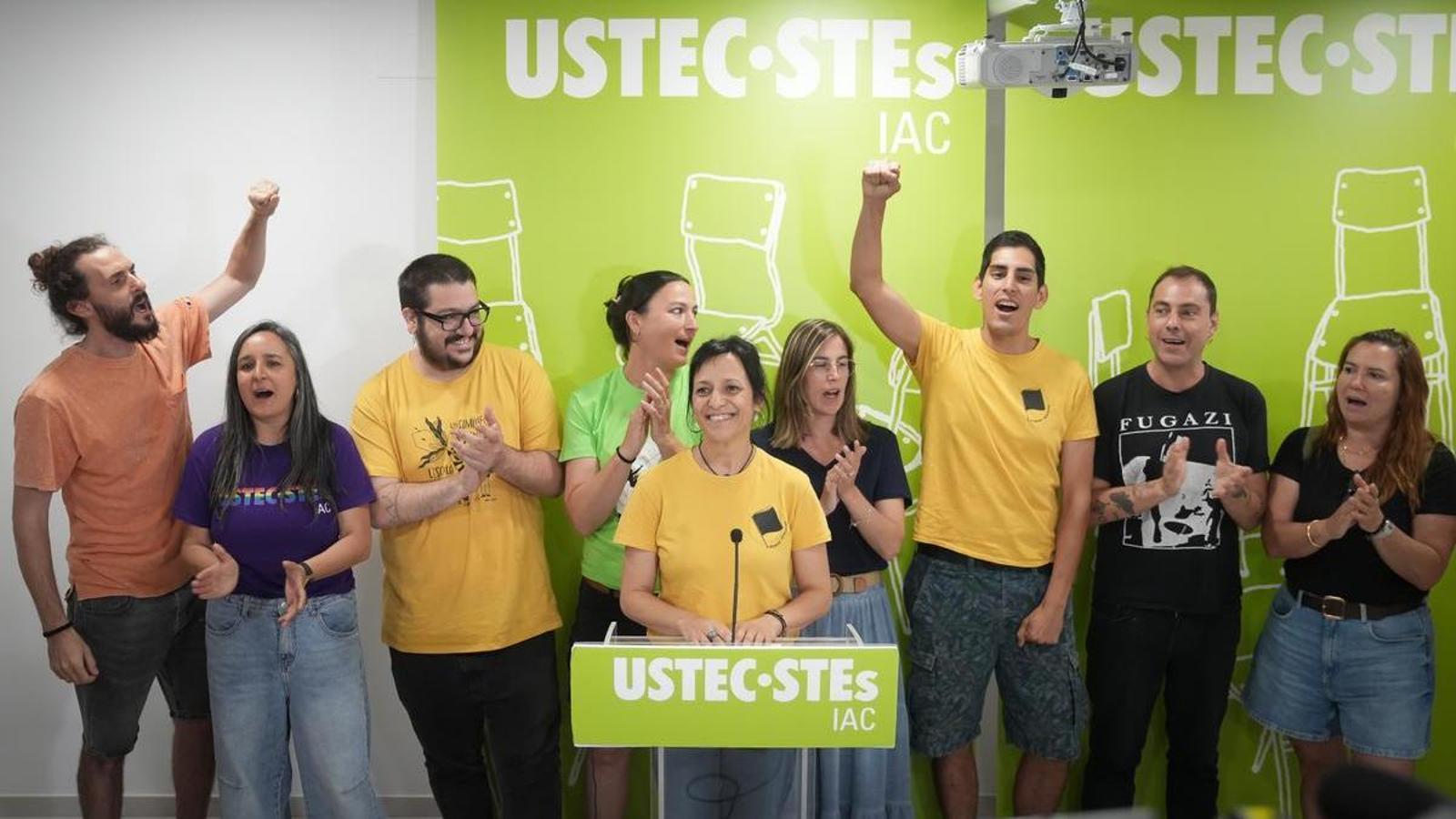
Half an hour after learning the results of the consultation, the spokesperson for USTEC, Iolanda Segura, appeared, stating that next week there will be new strike days, coinciding with the Pope's visit to Catalonia and the university entrance exams (PAU). "We want to send a very clear message: we have listened to the voice of the collective. The last few days have been very intense and for the first time a preliminary agreement has been put to a vote to improve working conditions. The teachers have said no and USTEC accepts the challenge," she argued. Faced with the possibility of an indefinite strike, the spokesperson said they believe it is necessary to "intensify" the mobilizations, but that they will decide with the unions as a whole what form these new protests will take.
Segura has assured that the "broad no" indicates that the negotiation framework must be changed and that the agreement of March should no longer be the basis. On the other hand, the union representative also admitted that "with 15 days left in the course" it is very difficult to reach a new agreement and has taken for granted that the conflict may continue at the beginning of next course.
While initially Segura had asked for the counselor to convene them this Friday and Niubó picked up the glove, summoning them at 10 a.m., USTEC sources explained in the afternoon that, due to the mobilizations planned throughout the morning, it would be "better" to do so next week and they refused the meeting.
The USTEC spokesperson also made self-criticism, assuring that "perhaps" they "rushed" with the preliminary agreement, but justified that there was also a context of "a lot of pressure." Segura explained that now the union will consult its bases to know the teachers' "priorities" and how the new mobilizations should be. "We call everyone to tomorrow's strike," concluded the USTEC spokesperson.
The first reaction to the consultation, however, came from the CGT, the union that withdrew from the union table to reject the agreement last week. "It is a totally resounding no; therefore, we continue in the streets. Before, however, we ask for the resignation of counselor Niubó. She has tried twice and has not succeeded," defended Laura Gené, general secretary of CGT Ensenyament.
Secondary Teachers sign
The Secondary Teachers' union is the one that will sign the preliminary agreement. The union explained in a statement that its members validated the preliminary agreement signed with Education by 63% of the votes. "Never before had an educational strike in Catalonia achieved so much," they claimed in the document, in which they also admit that the preliminary agreement "does not resolve, by far," all the problems of the educational system. Nevertheless, they argue that they have "achieved important progress for the teaching staff that needs to be consolidated"; therefore, they will sign the pact.

6,400 grants and 4,500 euros
The pre-agreement that last Friday the unions USTEC, Professors of Secondary Education, CCOO and UGT reached with the Minister of Education, Esther Niubó —and which CGT, Intersindical and COS rejected, who have maintained protests this week—, had two key points: a salary increase and an increase in resources, especially to strengthen inclusive education.
Regarding salary, it has been agreed that in the next four years, teachers will earn 600 euros gross per month more (about 170 correspond to a state increase and the rest depend on Catalan investment). In fact, the increase of 50 euros in this offer was the main breakthrough to reach an agreement last week. Still regarding the remuneration aspect, they also agreed to the compensation of the debt of the stages, an almost historical demand from the unions and which will mean an investment of about 300 million euros.
Regarding resources —the "more staff" that teachers have not tired of demanding in the streets—, the Government and unions agreed to introduce 6,400 new resources into the system in the next four years. These reinforcements will be mainly aimed at profiles such as integration specialists and social educators, specialists in special education or speech therapists.
On the other hand, the agreement also included a call for 5,000 secondary professorship positions between the years 2027 and 2028.
