Jordi Pascual: From outside enter up to 100,000 tons of olive oil, coming from Tunisia and Morocco; and the thread is lost of where they end up
National head of olive oil of Unió de Pagesos

-
CAT -
CAST
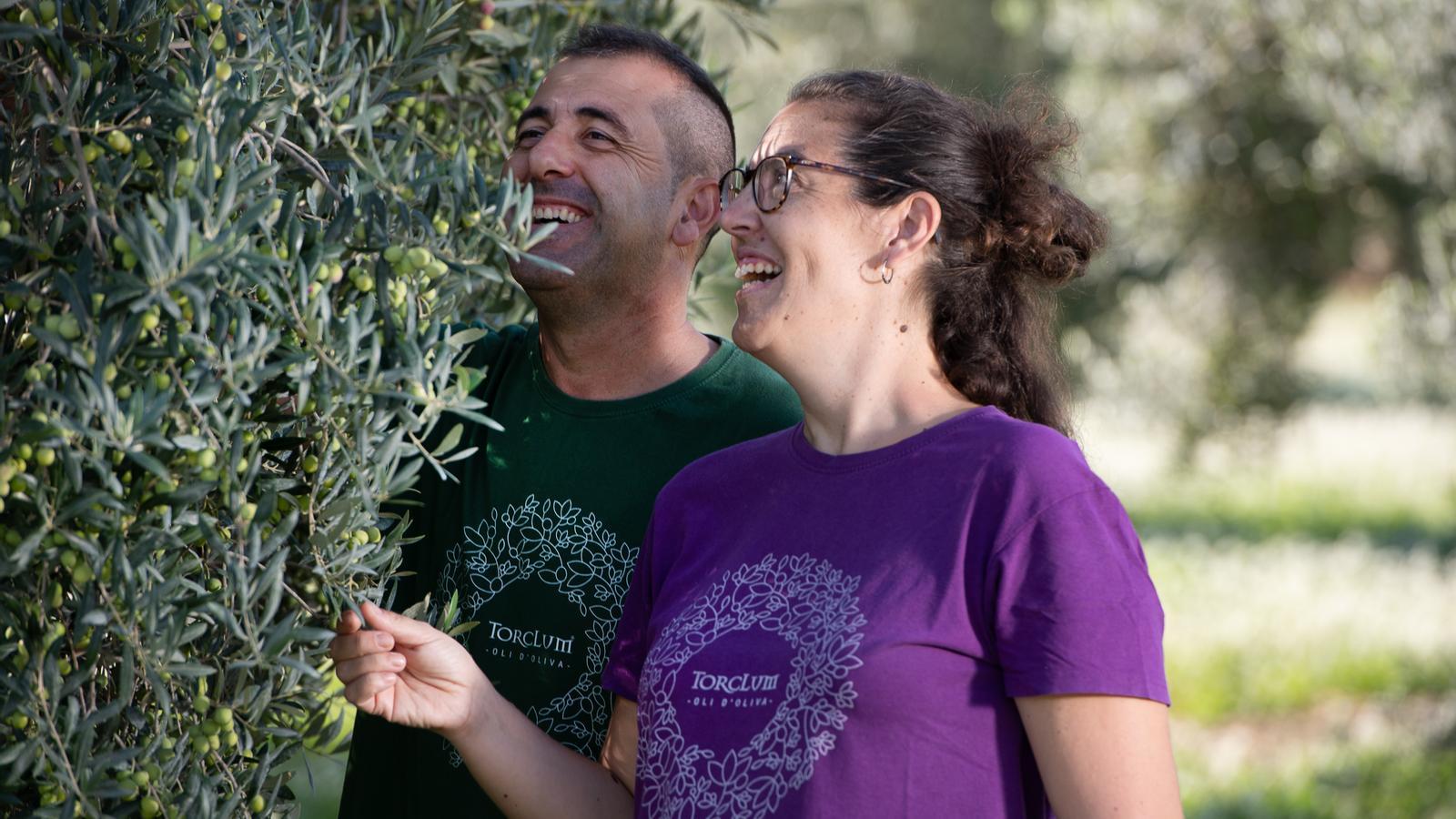
The Bisbal del PenedèsI interview Jordi Pascual at the headquarters of Torclum, his olive oil production mill, during a break in the olive harvest, which began days ago. The first oil, the filtered green one, is already bottled and ready for sale. It is a bottle that is green on the outside and inside, half a liter, which they sell for twenty euros. They will be able to save this year's olive harvest because of the rains that fell in the area at the end of August, but there are other regions, also dryland, that have suffered more. We talk about prices, the harvest, and above all about the oil that enters the Spanish state from other places, especially from Turkey and Tunisia, and which, according to Jordi Pascual, is sold without indicating that it is made outside the European Union.

Is the green oil you just showed me the same as the fresh-pressed green oil?
— No, they are different. "Oli del raig" (freshly pressed oil) is an unfiltered oil, which has a short consumption time, a month and a half. On the other hand, green oil, the one we make ourselves with the harvest we started at the end of September, is filtered, and for this reason it does not have to be consumed quickly: it lasts a good two years. "Oli del raig" is cloudy, it carries sediments, which are the olive pulp. If we take a long time to consume it, it will ferment and may have a somewhat rancid taste. The olive is composed of water and oil; if we harvest it when it is green, we have all the nutritional components, but we need more to make oil because the olive contains more water. Conversely, a January olive, wrinkled, withered, has lost its water, and therefore yields a greater quantity of oil. Hence the different prices. To make a liter of green oil, we have needed a greater quantity of olives. Then we have packaged it in this green bottle, which has a cost, on its own, of four euros.
Therefore, from what you explain, should an unfiltered oil be more economical than a filtered one?
— It should be, yes, because the producer saves on filtering and many subsequent steps. Despite this, I know that sometimes it is sold more expensive than the filtered one, and it is like that because it has a very good acceptance in the market.
Green oil, like the one you already have on sale in October, is one of the great revolutions in current oils.
— Here, at Torclum, an old man came to us and told us that he used to start harvesting olives on February 2nd. The man who told us this is almost one hundred years old. We started this year on September 28th. Before, it was done that way because the olives yielded more. They also used to collect the olives that had fallen to the ground. It doesn't even cross our minds to pick up an olive that has fallen to the ground. We use a kind of vibrating umbrella that surrounds the branches, we shake the tree, and we harvest all the olives. Everything is mechanized. The olives go from the umbrella to the trailer, and from the trailer to the mill, and then home.
Let's talk about prices. Andalusia, the world's leading producer of olive oil, sets the prices for a liter of olive oil, and has said that it will be between three and four euros.
— There is a lot of olive oil, but there is not as much quality olive oil. Catalonia has four protected designations of origin, which are among the top ten in the world. We ourselves have a way of working in which we seek maximum quality: as soon as the olives arrive, we put them in the mill. We do not keep them accumulated in sacks for days. Not us, because we seek maximum excellence, which means extra virgin olive oil. Andalusia, which is the world's oil cruet, sets prices based on its abundant production, like the one it has this year, but we, in Catalonia, are in deficit in olive oil production. And we, as consumers, must know what oil we are consuming. We know that up to 100,000 tons of olive oil, coming from Tunisia and Morocco, enter the State from outside. And when they enter, the trail of where they end up is lost.
The consumer can know this from the bottle label, which indicates whether it comes from the European Union or from outside.
— No, it won't say it. The only advice I can give is that if people want to know what oil they are consuming, they have to go buy it from cooperatives or small producers. If you don't buy it in those two places, then you have to be careful because I wouldn't put my hand in the fire for many oils sold in large supermarkets. News about the brands that commit the most labeling fraud should come out every day, because we consume oil every day, and that way we would know.
What kind of fraud is there with oil?
— They call it extra virgin, and it is a refined one, for example.
Let's remember what a refined oil is.
— Oil has four categories: extra virgin, virgin, lampante, and refined. Extra virgin is the highest category; virgin means it has some defect compared to the former; lampante is not suitable for human consumption – made with olives gathered from the ground or in poor condition – and refined is an oil that comes from an oil that was not suitable for human consumption and had to be refined to become suitable. Refined oil goes through a chemical process and a small proportion of olive oil is added to it. If they add 3%, it becomes a mild olive oil; if they add 7%, it will be an intense olive oil. So, mild and intense olive oils come from lampante, that is, from very poor quality oils that have gone through chemical steps so they can be consumed.
How will the olive production be this year?
— 75% of olive trees are rain-fed, and they are about to lose everything. La Segarra, Baix Ebre, Montsià, and the Terres de l’Ebre are affected. And this fact will be reflected in the price, because there will not be much Catalan olive oil. In fact, we are currently living in a time that does not favor the farmer: if there are many olives, the price of oil drops. If there are few, they still do not win because the entire subsequent process is expensive. For this reason, tomorrow [October 14th] there are tractor protests. We will go in a line to Barcelona to show the unrest that the countryside is experiencing. Production costs have increased by 70%, but the prices of what we earn are the same as forty years ago. How can this imbalance be fixed? Our olive trees act as firebreaks, they keep a green agricultural mosaic, they act as cultural monuments, they create oleotourism: and all of this hangs by a thread.
Will 25% of the olive trees that are irrigated have a good production?
— Yes, but as you can see, it is a small percentage. Therefore, it will be impossible for the price to be low. If producing a liter of olive oil costs five euros, it cannot be that they sell it to us for two. The consumer must know that for less than ten euros, they can never buy a liter of extra virgin olive oil.
As the national head of olive oil for Unió de Pagesos, you must analyze the oils that are on sale.
— Yes, and we detect those that are not correct. We also know which oils are sold with European Union labeling, but are actually oils from outside. The Government also knows which ones they are, but they cannot report it because they are too big, because they provide jobs for many people. If these people were left without work, the Government would have even more problems.
Therefore, do large retailers have more power than the Government, in your opinion?
— Yes, and large retailers bottle oil under their own brand. They must already be buying many liters of oil at a low price to have all future sales prepared; and when they have already made them, prices will increase, but it will not affect them because they will already have everything bought.
Last year, the first oil fair was held in Plaça Catalunya, and it was a success.
— Yes, it went very well. We were there, quite a lot of Catalan oil was sold.
To finish, Jordi, I ask you about the uses of oil in the kitchen. Which one should be used for frying?
— With extra virgin, which stands up well to high temperatures. Refined oil adds nothing positive. A person, in one year, consumes ten liters of olive oil; so let's consume good oil. Doctors also say it: one must always opt for extra virgin. In Catalonia we are eight million inhabitants; 90,000 tons are consumed, and in Catalonia we produce 30,000, therefore, the remaining 60,000 are bought from outside. If it were all from Andalusia, I would be pleased. What the consumer needs to know is that there are oils bought at large supermarkets that come from Turkey and Tunisia even if the labels do not say so.
