From storing blankets to making the best cuisine in the world
Visit to the bowels of the restaurant Disfrutar, located on Villarroel street in Barcelona
-
CAT -
CAST
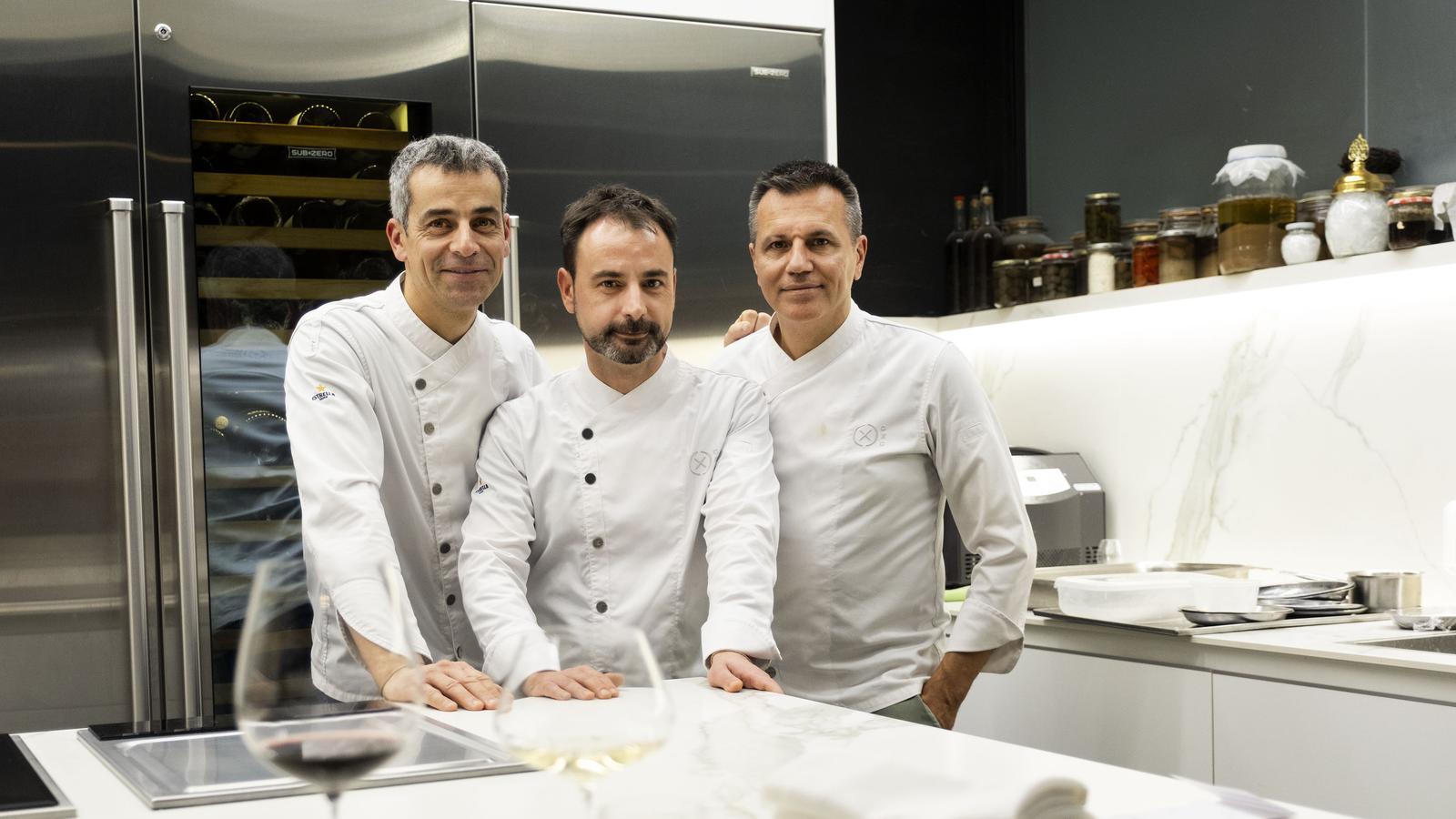
“From the entrance, you can tell this restaurant wasn’t built to be a three-star Michelin”, says Disfrutar’s chef Oriol Castro with his usual honesty, and Eduard Xatruch adds: “We didn’t have a dime or an investment fund behind us, we had to trick the bank and the landlord”, he jokes, because among those listening to him is the owner of the premises, Sandra Mira, who explains that this place – before the restaurant opened in 2014 and forever changed the history of Catalan gastronomy – was a warehouse for La Casa de las Mantas. “Do you know how much space was needed to store duvets, blankets, pillows...?” She quickly saw that the chefs were honest people eager to work, so she rented them the space. Perhaps she believed more in Oriol Castro, Mateu Casañas, and Eduard Xatruch than they did themselves, because in the original design, the bar at the entrance was meant to serve tapas. And in the basement below, they wanted to put a large room “for large groups and communions”, says Xatruch. They ran out of money, and they never built that room. Luckily. Because when they had to expand the cellar and build the kitchen to develop the creative part, they needed that space. “The clients wrapped us up”, they say. They explain that the first part is inspired by Miró’s mosaic; when you cross the kitchen, into the pottery kilns, and once in the large white room, in Cadaqués, where they opened their first restaurant together: Compartir.
I am at Disfrutar because the Catalan Academy of Gastronomy and Nutrition has organized a visit so we can get to know its inner workings. “We must boast that we have the best cuisine in the world”, says the president of the Academy, Joan Font Torrent. Explanations about the working method, and the faces of those who make it possible, follow one another, showing us concept maps on polystyrene panels. Photographs, categorizations, calendars with tasks to do and deadlines. Here everyone is doing their part, but they work tirelessly. Creativity clearly involves more method, constancy, and interdisciplinarity than genius.

“When we opened, in 2014, we were doing modern cuisine, we didn't talk about creativity, which is a big word. They are often confused. New techniques arrived in 2016, like Chinese bread and multispherification,” says Xatruch, who admits that at first they created dishes that they didn't serve until later, because the customer wouldn't have understood them. “First you have to show that you know how to make an omelet. We wouldn't have lasted two days running a creative restaurant overnight. Many are born wanting to do a lot and after four years they are burnt out,” says the chef from Vila-seca. “Here where we are, we put a door as a table and two trestles. And now we are still the same,” he says.
Perhaps they are, but the gaze of others and the stir around them are not the same. “Everything we have achieved is the result of the work we have done. We have been a bit stubborn,” admits Xatruch. The capacity for work is undeniable. “Since day 1, the work method has been the same. Order and be methodical. Creativity must be worked on,” says Xatruch. But Castro goes further: “Disfrutar must improve. What we did yesterday is not valid. We were the best restaurant because someone said so, but we have to improve every day.” Sisyphuses of creativity and excellence.
A very unconventional porrón
There has been much talk about the nature of Disfrutar's cuisine. "Does Disfrutar serve Catalan cuisine? For me, yes," says Oriol Castro. And he gives examples. The menu begins with a porró. One that they have created together with the best design schools in the country. It is not a conventional porró, of course. It has three liquids that end up converging in the mouth. When they unite, the classic Americano cocktail is created. When they present it to you, they also show you other porrons and give you a leaflet explaining what this wonderful and local artifact is. I wonder if they explained what a porró was to the Puerto Rican Bad Bunny, who recently visited the restaurant. On the menu, they have their version of suquet, and of calçotada. And they serve a dish on a hydraulic tile to explain the long tradition there has been in the city of Barcelona.

Disfrutar has 40 employees and serves 40 diners per service. It closes on weekends and all regular holidays, including August. They have a hyper-stable staff, like Vicente Lara, the head of service, who has been there since day one. And 40% of their diners are locals. They have already published three books, cataloging the 800 dishes they have created. And they will create more in a new space they use for research and work teams: an old handbag shop located a few steps from the restaurant. The neighbors didn't understand what these Disfrutar guys would be doing there. Well, working, with order, method, and adventure.
