Can Cabrisas closes: “The recipe for the Cadaqués corks we have well kept in the family, and it will not be lost”
The historic pastry shop of Cadaqués, which opened in 1925, will sell its famous sweets for the last time on Saturday, October 31st

-
CAT -
CAST
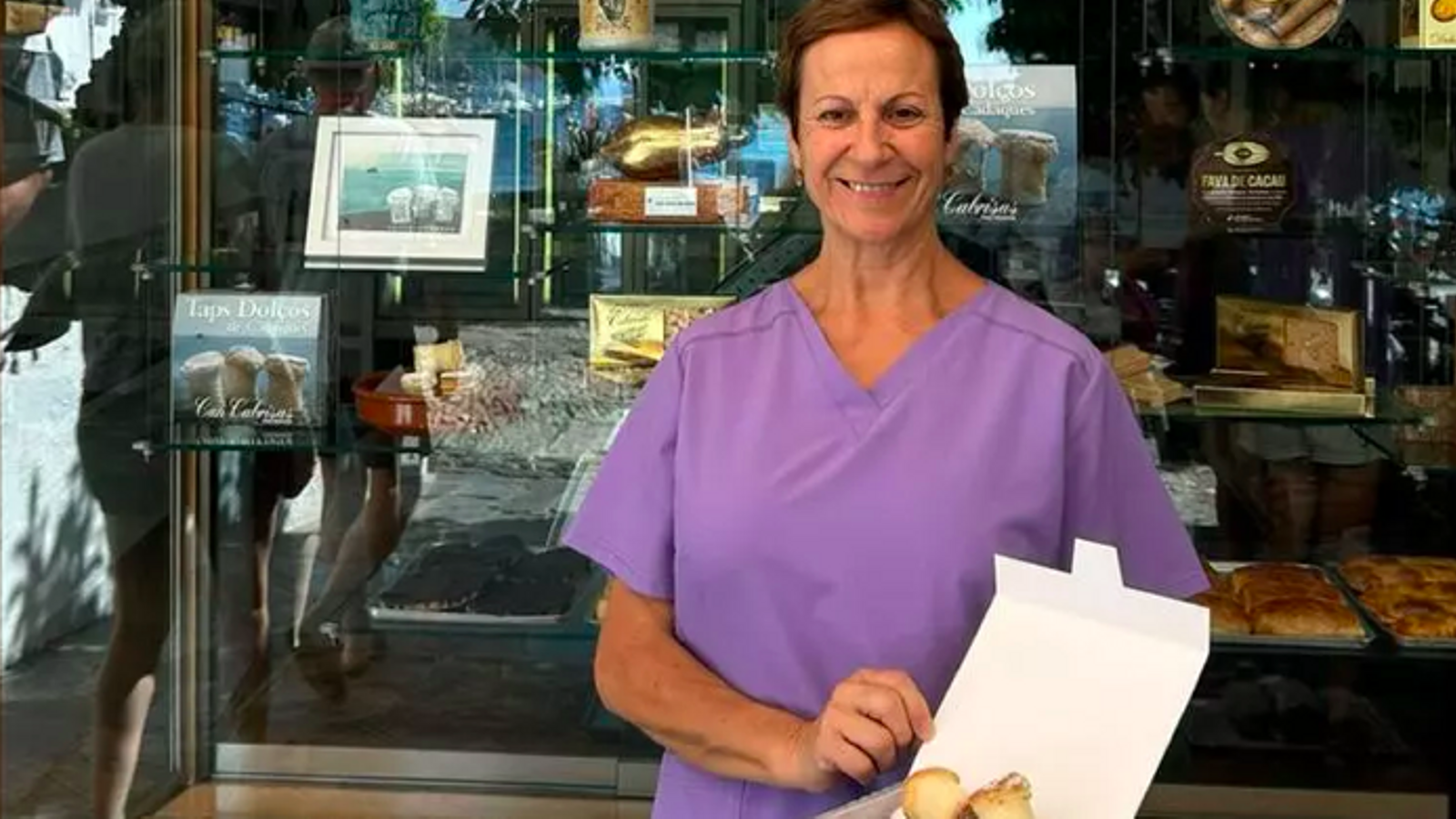
The Can Cabrisas pastry shop in Cadaqués will close forever on October 31st. “We didn't want to tell anyone, but Helena Garcia Melero found out and published the photo with me on her Instagram account, and it has already spread,” explained Mercè Cabrisas. Her tone is one of melancholy, not sadness, because she is looking forward to retiring. The reason they are closing is because they want to retire, to rest. Behind them remain five cousins, three children from Mercè's side, and two from her brother's side, who are the ones who could continue in the future. “The recipe for the taps de Cadaqués is well kept in the family, and it will not be lost,” says Mercè.

The children of the two brothers have the recipe for the 'taps' and also for the croissants –two of the great milestones of the patisseries–, and they could be the ones to open another patisserie in Cadaqués. “It won't be in the same place, because we are going to put Can Cabrisas and the floor above it up for sale,” explains Mercè, who adds that she is sixty-four years old and believes she deserves a rest. “The summers are very intense, but then the summer ends and a new season begins, and so on without stopping.” Anyone who has ever been to Can Cabrisas knows that if you haven't ordered the 'taps' in advance, you won't find any. By mid-afternoon, they are sold out, but they are also sold out by mid-morning, because the daily list of orders is extensive. In one summer, they used to make four thousand, and they dedicated so much effort to the sweet in the shape of a 'tap' that other traditional cakes common in other bakeries were left out. In second place, behind the 'taps', are the croissants, which they sell both to individuals and to establishments in Cadaqués.

The Can Cabrisas 'tap' is a small sponge cake that might remind someone of the French rum baba, which at the Stohrer pastry shop in Paris (Rue Montorgueil, 51) they claim to have invented themselves in the 18th century, a few years after the establishment opened in 1730. In Cadaqués, Mercè Cabrisas comments that they resemble each other in shape, but in taste they have nothing to do with each other, because the Cadaqués 'tap' is not soaked in any liquor. To learn about the origins of the 'tap', one must go back to Mercè's great-grandfather, Sebastià Cabrisas, whom everyone knew as Nenton, who made the sponge cake in the shape of a cork. It must have been around the thirties or forties of the last century.
Theories of the origin of the shape
“Some told us that the sweet had the shape of the stone that used to be at the door and was used to tie up the boats,” says Mercè, who has old photos hanging on the walls of the pastry shop that show what the establishment was like. In one of the photos, you can see the stone that resembles the cork. The stone is no longer in front of Can Cabrisas, although there are still some left in Cadaqués, such as in front of the Meliton bar (Passeig square, s/n). “But no, my grandfather was not inspired by the stone used to tie up the boats; rather, he did tests with sponge cake, and he saw that it turned out in the shape of a cork, and he named it that way,” notes Mercè.

The 'taps' of Cadaqués took off one August more than twenty years ago. Mercè remembers that, from then on, it has been non-stop. Restaurants in the Empordà also bet on them, and that is why at the establishment they keep like a treasure a photo of the chef Josep Mercader, from the Hotel Almadrava in Roses and the Motel Empordà in Figueres, with a tray in his hand. Even today, his son-in-law, Jaume Subirós, has them on the dessert menu and makes them with a coffee cream sauce that he prepares in front of the diners.
With the disappearance of Can Cabrisas, on October 31st, Cadaqués adds another great loss to its gastronomic landscape. One of the latest was the Bar Boia, which still today stands upright with its skeleton and which is a memory of the social and gastronomic agora that it once was.

