Do we know the name of the grape that we eat?
We know it by the generic name, but a Xarel·lo is not the same as a Garnacha or a Malvasia
-
CAT -
CAST
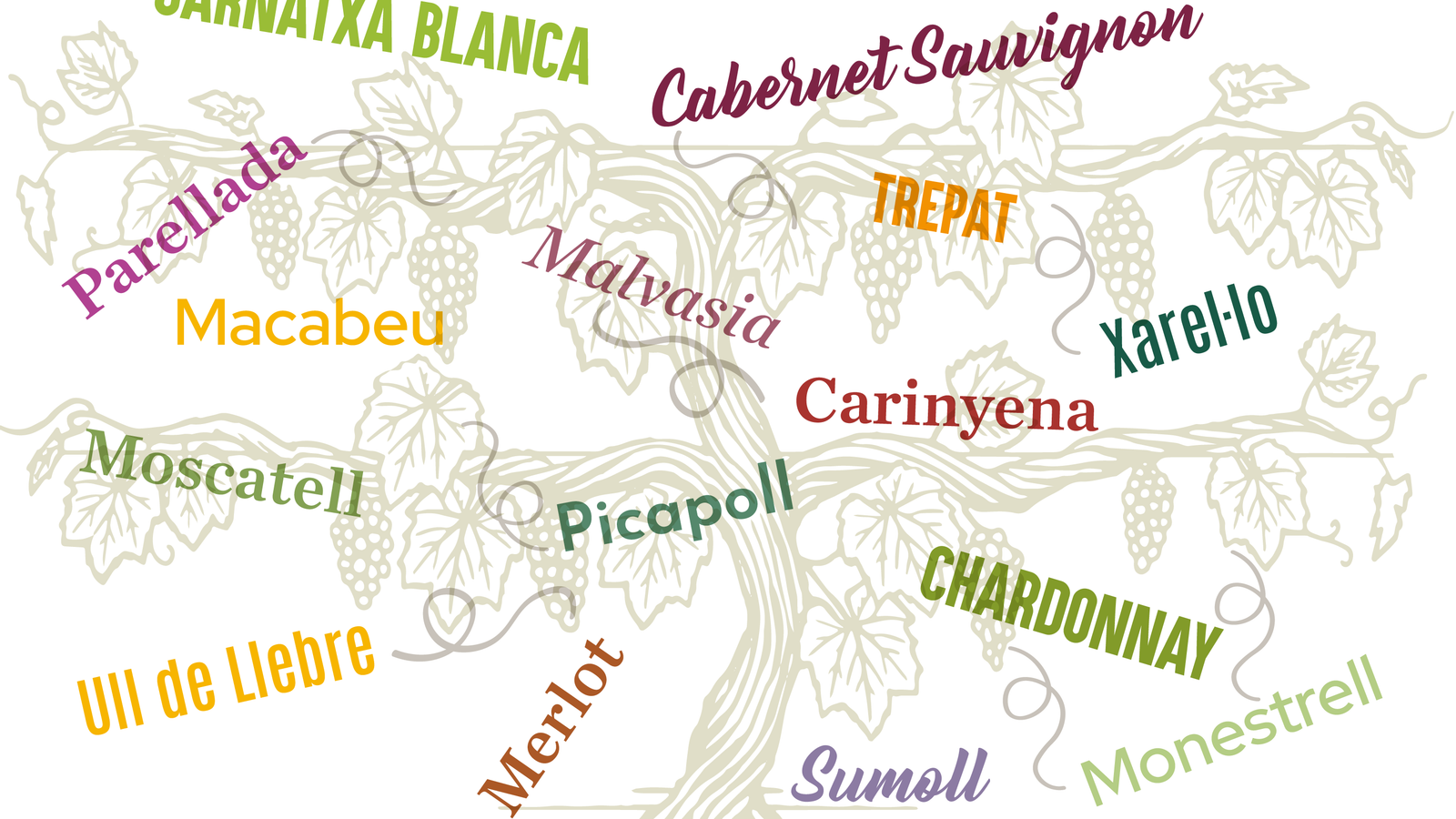
We eat grapes but we don't know which variety. It is an arduous task to distinguish them, but if we have managed to identify olives, why not grapes. The more knowledge, the more appreciation for one of the most traditional fruits of our country.
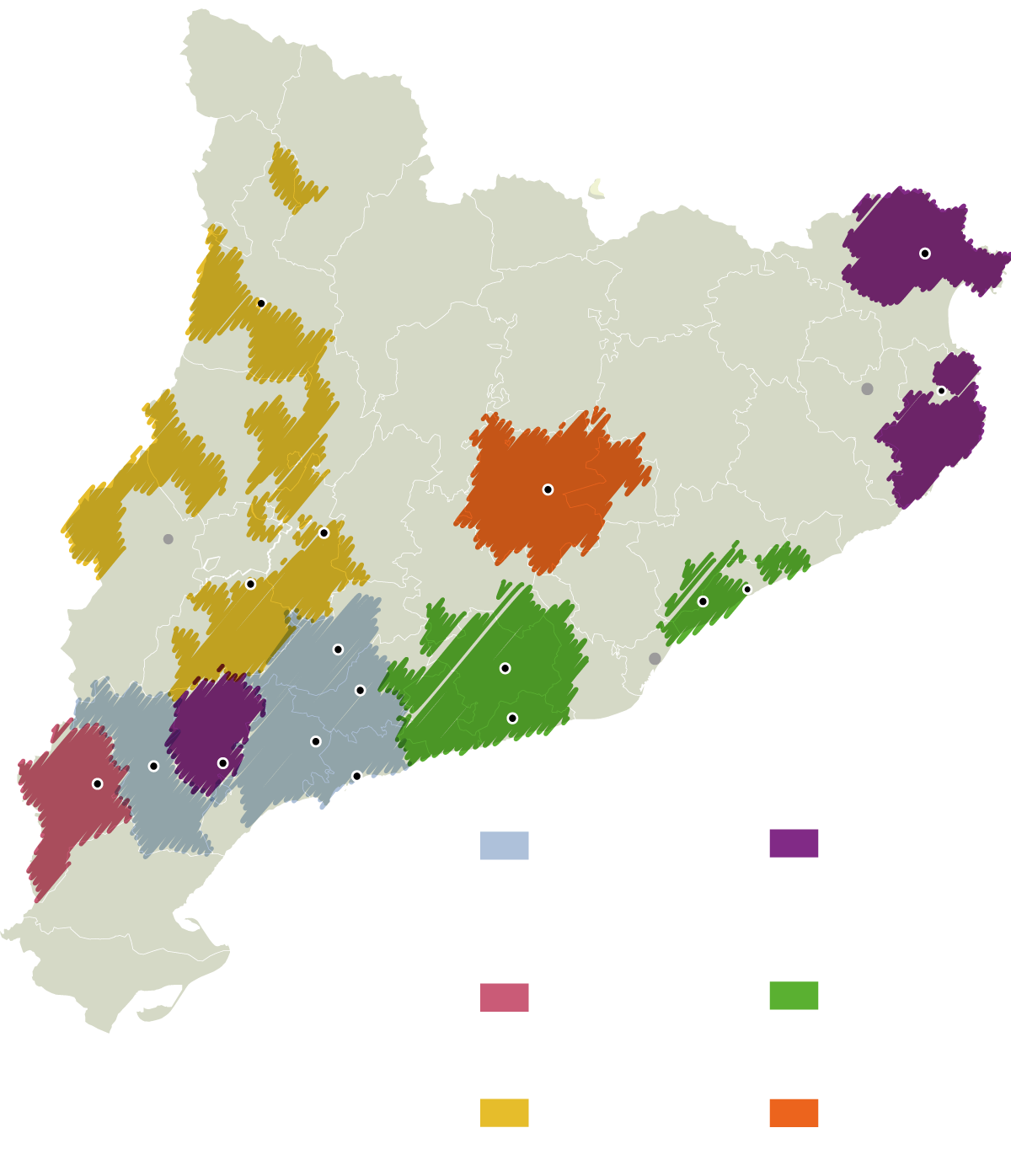
Figueres
Tremp
la Bisbal
Girona
Manresa
Tàrrega
Lleida
les Borges Blanques
Mataró
Alella
Montblanc
Vilafranca
del Penedès
Barcelona
Valls
Reus
Falset
Vilanova i la Geltrú
Gandesa
Móra
d’Ebre
Tarragona
Garnatxa negra
Macabeu
DO Empordà
DO Conca de Barberà
DO Montsant
DO Tarragona
DOP Priorat
DO Catalunya
Xarel·lo
Garnatxa blanca
DO Alella
DO Terra Alta
DO Penedès
Merlot
Chardonnay
DO Pla de Bages
DO Costers del Segre
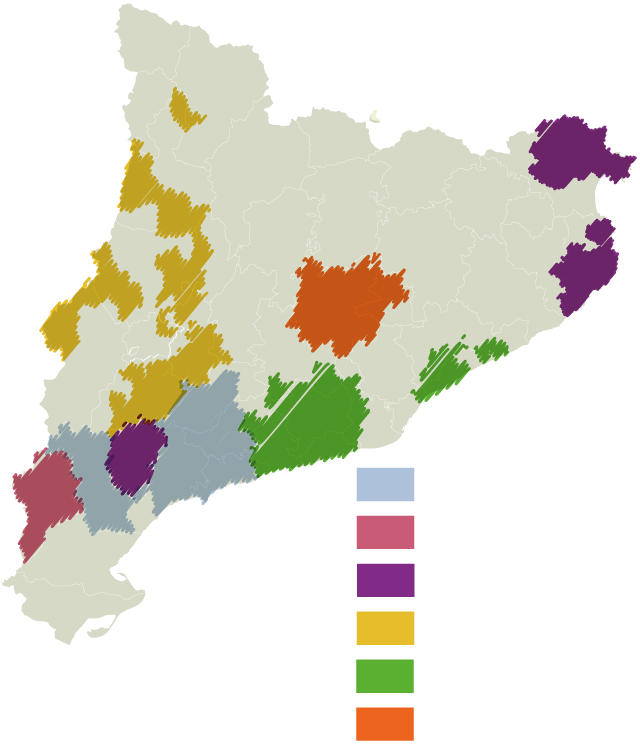
Macabeu
Garnatxa white
Garnatxa black
Chardonnay
Xarel·lo
Merlot
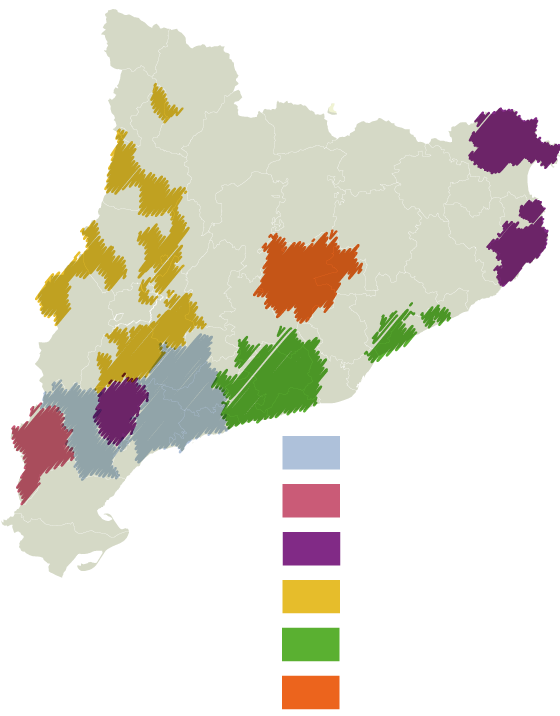
Macabeu
Garnatxa white
Garnatxa black
Chardonnay
Xarel·lo
Merlot
Main white grape varieties
Cultivated especially in the Penedès. Along with Parellada and Xarel·lo, they are the three traditional varieties used to make sparkling wines.

With a thicker skin than the Macabeu and more versatile: it is used for sparkling wines, still wines, or ancestral wines.
Originating from Burgundy, its berries are small and thin-skinned. It adapts well to different terroirs, and reflects them.
With large and compact bunches, yellow in color, it is a mutation of the black Grenache.
Also known as Muscat of large grain, it is traditional throughout the Mediterranean.
Traditional grape from the Bages region. It is late-ripening and has small grapes with thin, tender skin.
Main red grape varieties
It originates from a vine resistant to drought and is late-ripening. In the Empordà region, they call it lledoner.
Originating from Bordeaux, it has thin skin and is sensitive to heat.
Also known as Samsó, its vine is very productive and resistant to high temperatures.
Originating from Bordeaux, this variety is the result of crossing Cabernet Franc and Sauvignon Blanc.
In Spanish, English and French it is Tempranillo. Its grapes have very thick skin.
Originating from the Conca de Barberà, it is late-ripening and has large grapes.
A drought-resistant vine, documented since the 17th century in the Penedès region. It is a very fertile variety.
Also known as hairy lledoner, its grapes are medium-sized, round and grey in color; it has a thick leaf.
Also known as garrut, this vine variety is native to the Empordà region. It has small, purple-colored grapes with thick skin.

