The Ceuta crisis and the dinosaur
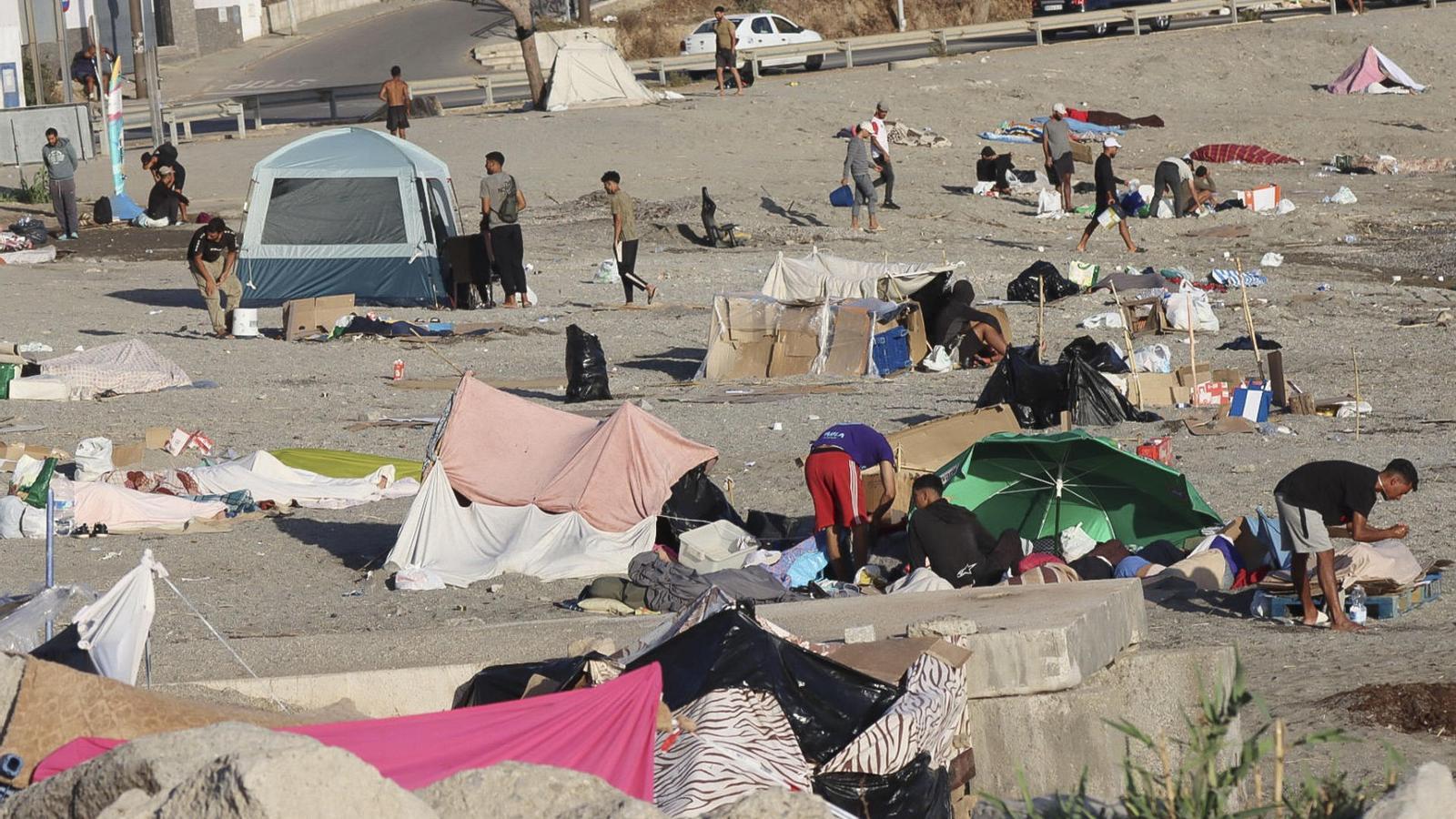

BarcelonaThe crisis in Ceuta increasingly resembles the dinosaur from Augusto Monterroso's famous tale for the Spanish government. Every day they seem to wake up hoping it has been resolved as if by magic; but no, the problem is still there and forces them to make new decisions. This morning the National Security Council will meet for the first time and the single command to manage the crisis will come into effect. The problem is that these are two decisions that would have made perfect sense in the early days of the crisis, if not the first, and not almost a month later.
The massive entry of immigrants into Ceuta on July 30 was described by the Spanish president himself, Pedro Sánchez, as a "violation of Spain's territorial integrity." How is it possible, then, that it has taken a month to convene the highest State body on security matters? The same applies to the decision to implement the single command of the crisis. The Spanish government initially dismissed the request of the president of the autonomous city, and has finally seen that it could not continue postponing the decision. This feeling of being a step behind events has been repeated throughout the crisis. The reaction was late in assessing both the magnitude of the humanitarian tragedy that was occurring and the impact it has had on the daily lives of the citizens of Ceuta. The economic vice-president, Carlos Cuerpo, announced this Monday the extraordinary expansion of the economic plan for the city that was launched in 2022, but as happened with the dana (with all administrations), it will be difficult to alleviate the feeling of helplessness that has been experienced there.
It is true that the opposition has not helped either, quite the opposite. Every visit by a PP leader to the autonomous city has aimed to fan the flames seeking political gain. Alberto Núñez Feijóo's latest whim – asking for the confinement of immigrants – shows that in this crisis the popular party has bought into the far-right's narrative that all newcomers are potential criminals or, even worse, carriers of diseases. Furthermore, as is usual, Feijóo ignores that public health competencies (vaccination and epidemiology) are in the hands of the autonomous city and not the Spanish government, which does manage hospitals and health centers.
In any case, the Spanish government is the main responsible party for managing the Ceuta crisis for several reasons. First, because it is a border crisis, and both the border and international relations are the responsibility of the central executive. And secondly, because local authorities do not have the capacity to assist the thousands of people who are currently still in Ceuta. Action must be taken in many areas at the same time: in health and humanitarian aspects, of course, but it is also necessary to speed up the processing of asylum applications and, whenever possible, the arrangements for returning minors to their families. Because the longer the crisis lasts, the more fuel for hate speech and xenophobia.
