An inexplicable tragedy that must have consequences

-
CAT -
CAST
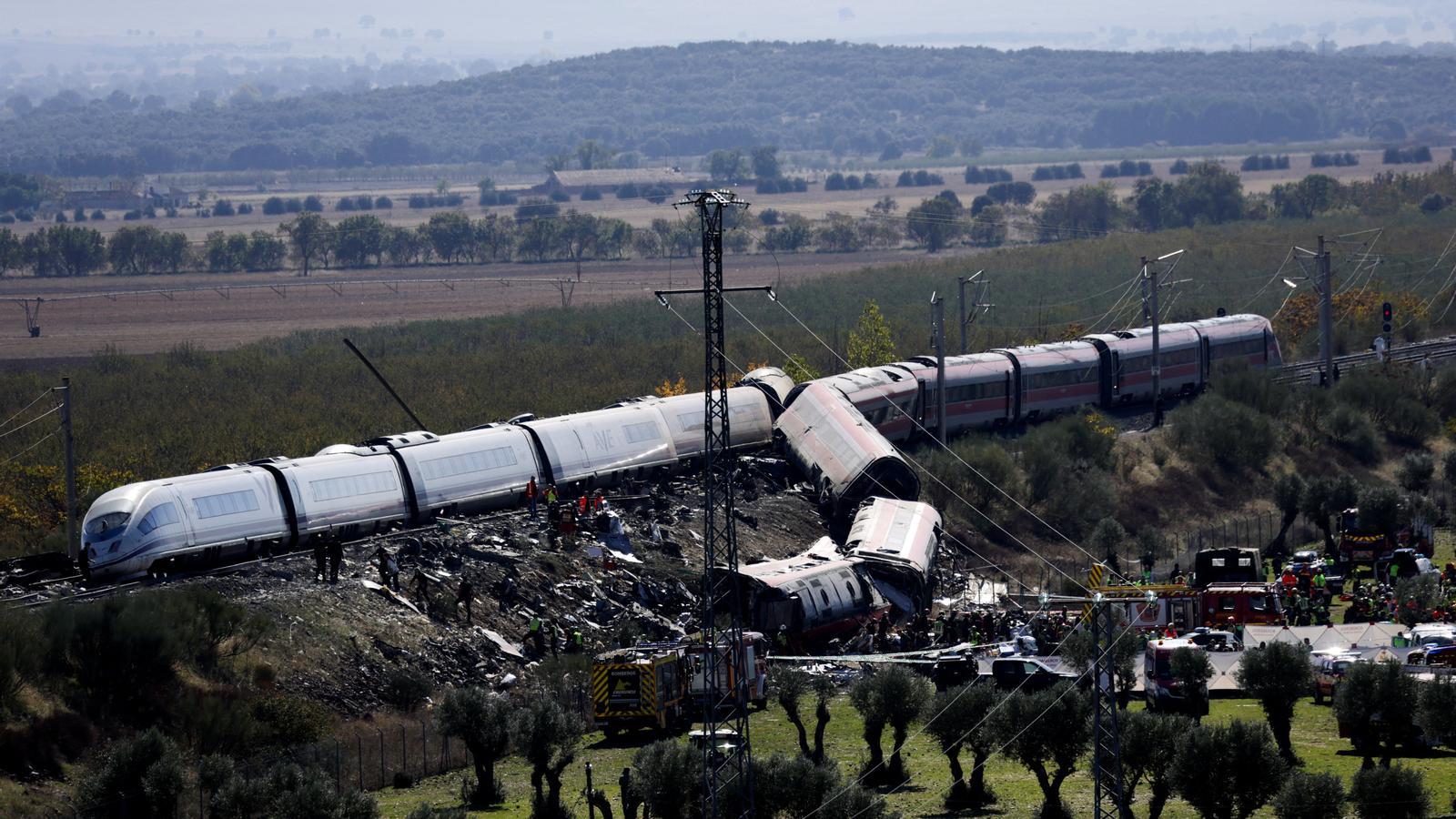
BarcelonaThe high-speed accident in Toledo could be an isolated tragedy, but the fact that it occurred only nine months after another fatal crash, the one in Adamuz, multiplies its impact and makes things really very difficult for the Spanish government to convince public opinion, just over four weeks before the elections, that there is no structural problem of management or resources in the railway system. It is true that, with the information available so far, it seems that the two accidents obey completely different causes. In the first case, the derailment was due to a crack in the track, therefore, to a problem with the road infrastructure. And in the second, the safety system, first, and the traffic management from the control center, later, would have failed.
The Minister of Transport, Óscar Puente, has stated that an "implausible" instruction by an operator at the Atocha control center would have triggered the catastrophe, but the truth is that many unknowns are accumulating. How is it that, once the erroneous instruction was given, no one in the control center was able to detect that a train was heading at high speed towards another that was stopped? What did the room supervisor do? Why did no alarm go off for 17 minutes? Why did the LZB safety system fail at first? Why did the Iryo not move when all the trains that were stopped received the order to resume their journey at reduced speed?
Here one can no longer speak of an exceptional event like a small crack in a 30-year-old rail and an unfortunate scheduling coincidence. The system that governs train traffic and that should warn, and even block automatically, when the risk of a possible collision is detected did not work. Therefore, something more than a thorough investigation of the facts will be necessary. A deep update of the safety systems will be necessary so that nothing similar can happen again. And in a normal context, the assumption of political responsibility by the responsible ministry would not be superfluous, even though the pre-election climate conditions everything.
The goal must be to recover citizen trust in a railway system that, at least in high-speed rail, was functioning reasonably well until not so long ago. Because as the Spanish Prime Minister, Pedro Sánchez, has said, two accidents in such a short time "are not acceptable for a country like Spain," which has based much of its image of modernity and sustainability on this network. And they are not acceptable because, beyond the specific causes of the accidents, it is also reasonable to question whether the Spanish state's commitment to high-speed rail, to the detriment of local lines such as Rodalies, and with a radial configuration where everything begins and ends in Madrid, was the best possible decision in terms of economic return. In this, however, the consensus of the major Spanish parties is absolute.
