Popular euphoria at the equator of the campaign

-
CAT -
CAST
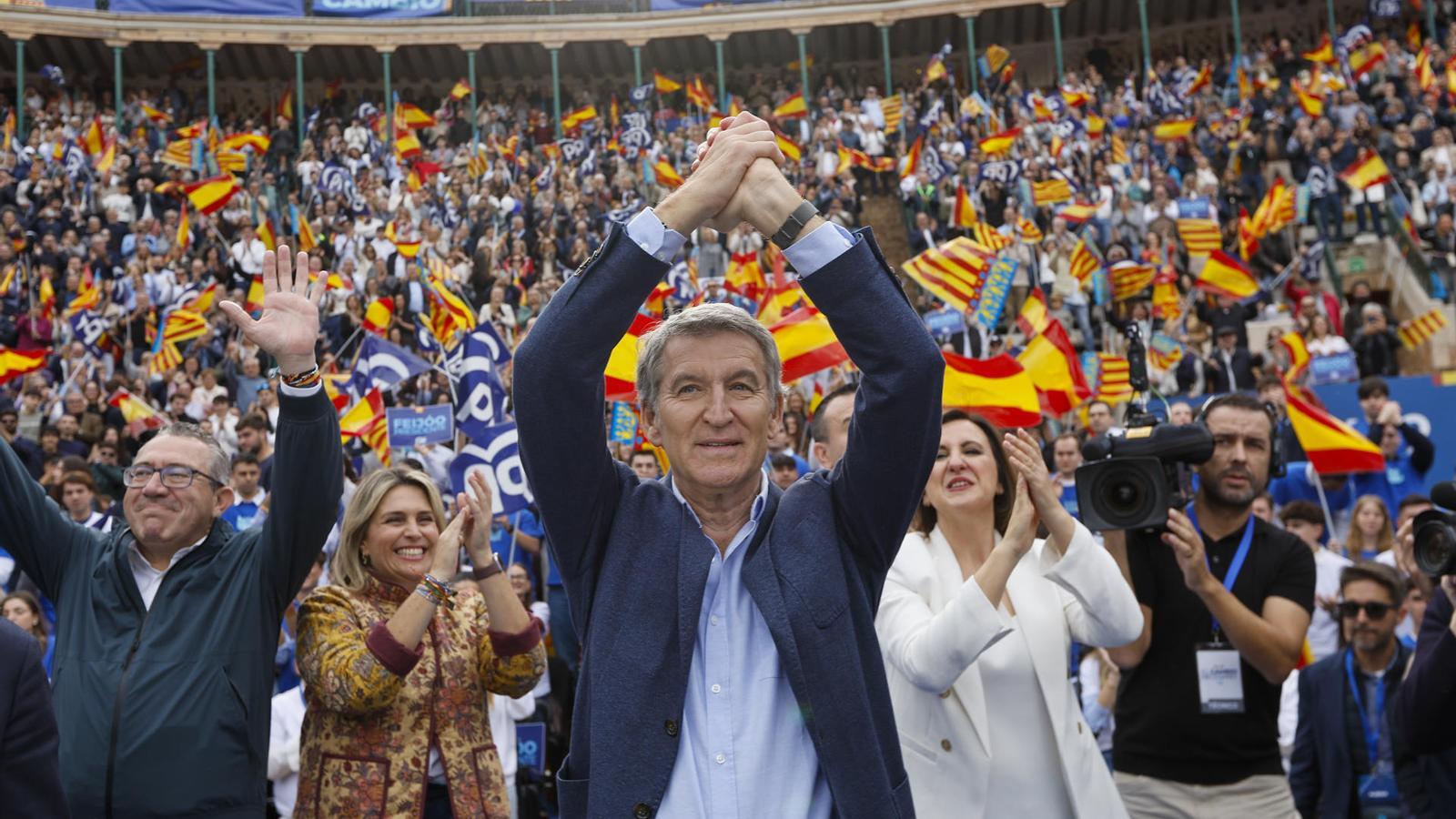
BarcelonaAlthough some polls show a certain narrowing of the distance between the conservatives and the socialists in the fight for the top position a week before the elections, the truth is that the PP arrives at the midpoint of the campaign in a state of unbridled euphoria after Thursday's face-to-face debate. This could be seen, for example, this Saturday at the central rally in the Valencia bullring, one of the most massive events of the campaign, with more than 10,000 attendees. If the campaign already began with a clear advantage for the PP-Vox bloc, as shown by the ARA poll, things remain the same after a week of rallies and debates.
Alongside this incontestable reality there is another, which is that experts agree that voters are increasingly deciding their vote at the last minute, which makes it difficult for polling companies to refine their forecasts. We had a good example of this, when Pedro Sánchez also emerged defeated from his face-to-face debate with Alberto Núñez Feijóo. Therefore, we are now entering the true decisive week of the campaign, the one that will confirm the forecasts or even reinforce them with a historic victory for the right and the far-right in Spain, or else it will cause a surprise.
In this sense, popular euphoria is a double-edged sword. On one hand, it can help the PP candidate thanks to the bandwagon effect, which means that many voters opt for the favorite because they want to feel like winners on election night. On the other hand, conversely, this euphoria can cause anxiety in the progressive electorate, today clearly less mobilized than the conservative one, and cause either the victory not to be so clear in the end or even for the tables to turn. In fact, the atmosphere in the PP recalls that of 1996, when the conservatives aspired to defeat a Felipe González who had been governing for 13 years with an administration hampered by multiple corruption scandals. González, however, kept narrowing the gap to practically a single point of difference, which forced Aznar to reach an agreement with CiU and the PNB. The socialists trust that Wednesday's four-way debate will serve to clearly outline the danger posed by the Feijóo-Abascal tandem, but the truth is that there are doubts that the fear of the far-right can mobilize the electorate the same way it did three years ago.
What does seem clear is that the political map of Catalonia will be very different from that of the rest of Spain. Here, the PSC is the favorite and in second position is an ERC driven by the popularity of its candidate, Gabriel Rufián. Mind you, a strong rise in Vox is also expected, which could also collect votes from supporters of Aliança Catalana. Conversely, both Junts and the Front Ampli are having difficulties finding a place in such a polarized campaign.
Be that as it may, this week should also serve to contrast programs and measures and finish convincing the undecided. Because all the candidates are right about one thing, and that is that on November 29th, something more than a simple change of government is at stake.
