Catalonia exceeds for the first time 400 deep technology start-ups
The emerging 'deeptech' grow at a higher rate than the whole of the ecosystem and already employ more than 3,000 people

-
CAT -
CAST
- Catalan technology startups increase turnover with new leaps into the market
- Health dominates the landscape, but AI is growing strongly
- Capital is mobilizing around the country's innovation
The fabric of technology companies in Catalonia continues to expand. According to a report prepared by Acció, the agency for business growth of the Department of Business and Labor of the Generalitat, the Principality had 402 deep technology startups at the close of 2025. This is the first time that more than 400 businesses of this profile have been registered in the country. The figure represents a growth of 7.5% compared to the previous year.
The figure demonstrates the capacity of the Catalan knowledge ecosystem to make the leap to the market in the technological field. The number of deeptech start-ups, in fact, is growing at a higher rate than the overall start-up system, which expanded in 2025 by 5.2% year-on-year. In total, Catalonia reached the end of last year with 2,403 companies of this profile. Deep technologies, therefore, already account for nearly 17% of the total sample; and the Generalitat's goal is to continue increasing the ratio. "We aspire for deep technologies to be a quarter of the start-ups," recalls the Secretary of Business and Innovation of the department and CEO of Acció, Jaume Baró, in statements to ARA.
In Baró's opinion, this advancement of deep technologies "has a lot to do with the maturity of the ecosystem": with better access to financing, more dynamic ways to transfer technology from research to the market, and a growing ability to attract talent, the country's "technological positioning" improves year by year.
Market presence
Catalan technological startups, moreover, are already demonstrating substantive economic activity. According to the analysis prepared by the agency, Catalan deeptech startups employed a total of 3,087 people in 2024, the last year with complete data, an increase of 8.5%; mostly with highly qualified profiles. Furthermore, in the same year, they generated a turnover of 188 million euros, 12.6% above the previous year. In other words, the turnover of this segment is growing at a speed substantially higher than the total volume of companies.
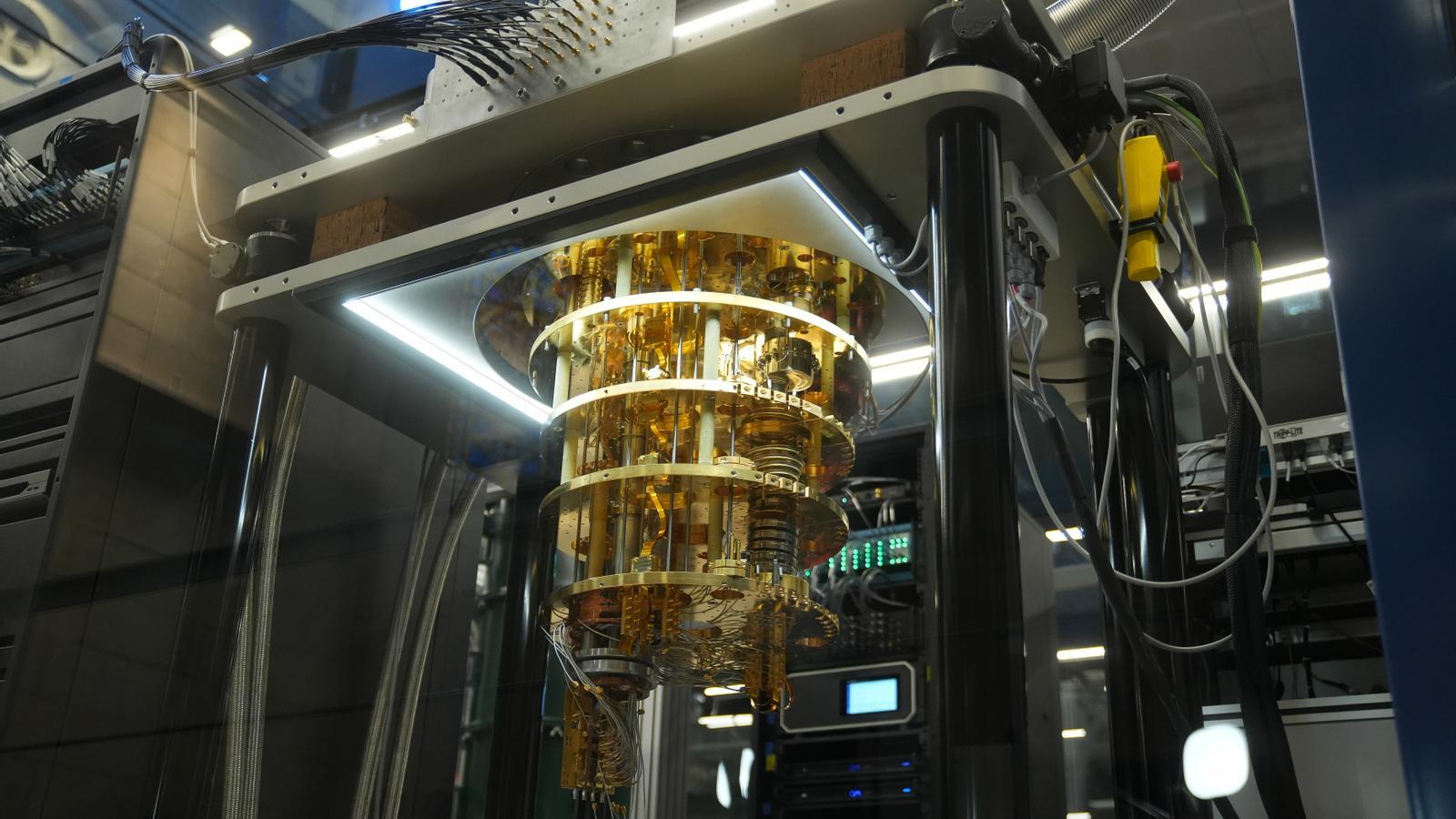
The ability of Catalan technology companies to access the market—and, therefore, generate revenue—makes them "doubly attractive," in the eyes of Acció's CEO. "They are not researching and have not sold anything yet: they already have their own technology, and have demonstrated that they can sell it," highlights Baró. Among the most prominent examples of this trend is Qilimanjaro, a benchmark in the quantum computing sector; or companies from the aerospace world such as Sateliot or Open Cosmos, among others.
Acció's data shows that Catalan deep technologies are following a trend that was already detected by the Mobile World Capital in its recent report on technological spinoffs in the State, which studies technology companies emerging from scientific research in universities and centers: the biotechnology and health sector continues to dominate the Catalan innovation landscape; but computing and artificial intelligence are also gaining weight in the country. In this sense, 34.1% of the country's deeptech startups are dedicated to medical and health technologies; but those offering AI and supercomputing solutions are already approaching 29% of the total.
Rising funding
The business performance of companies with this profile and their position in high-value-added sectors also explain a substantial improvement in their capacity to secure funding. According to Acció's figures, more than 57% of the Principality's deeptech startups have obtained venture capital throughout their trajectory; and nearly 49% have achieved investment rounds exceeding one million euros.
In total, Catalan technological startups raised 436 million euros in venture capital between 2023 and 2025, a substantial increase of 49% compared to the previous three-year period; thanks in large part to an increase in the average amount of the rounds, which has doubled in the period studied.
The forecasts for 2026 and beyond are even better: It is worth remembering that Open Cosmos closed a 300 million euro round in September; while Qilimanjaro recently announced a first closing of its Series A with nearly 20 million provided by Indra and the Spanish Society for Technological Transformation (SETT). The company led by Marta P. Estarellas, in fact, expects an even more ambitious financing operation for 2027, with the goal of raising between 100 and 150 million euros.
For Baró, the increase in venture capital activity towards Catalan companies demonstrates the presence of "much more specialized funds"; and also increasingly larger profiles in segments such as health and biotechnology. "There is maturity for this to be a reality, and next year it will be even more so," he celebrates. He also highlights the role of public instruments dedicated to investing in innovation, the Institut Català de Finances and Avançsa, which have recently been "profiled to help this type of company." "We must focus on increasing the number of high-value-added startups," urged the secretary.
