European justice rules that BYD has plagiarized Land Rover
The Hague court rules that the Ti7 reproduces several elements of the Land Rover Defender and prohibits its sale in the European Union
-
CAT -
CAST
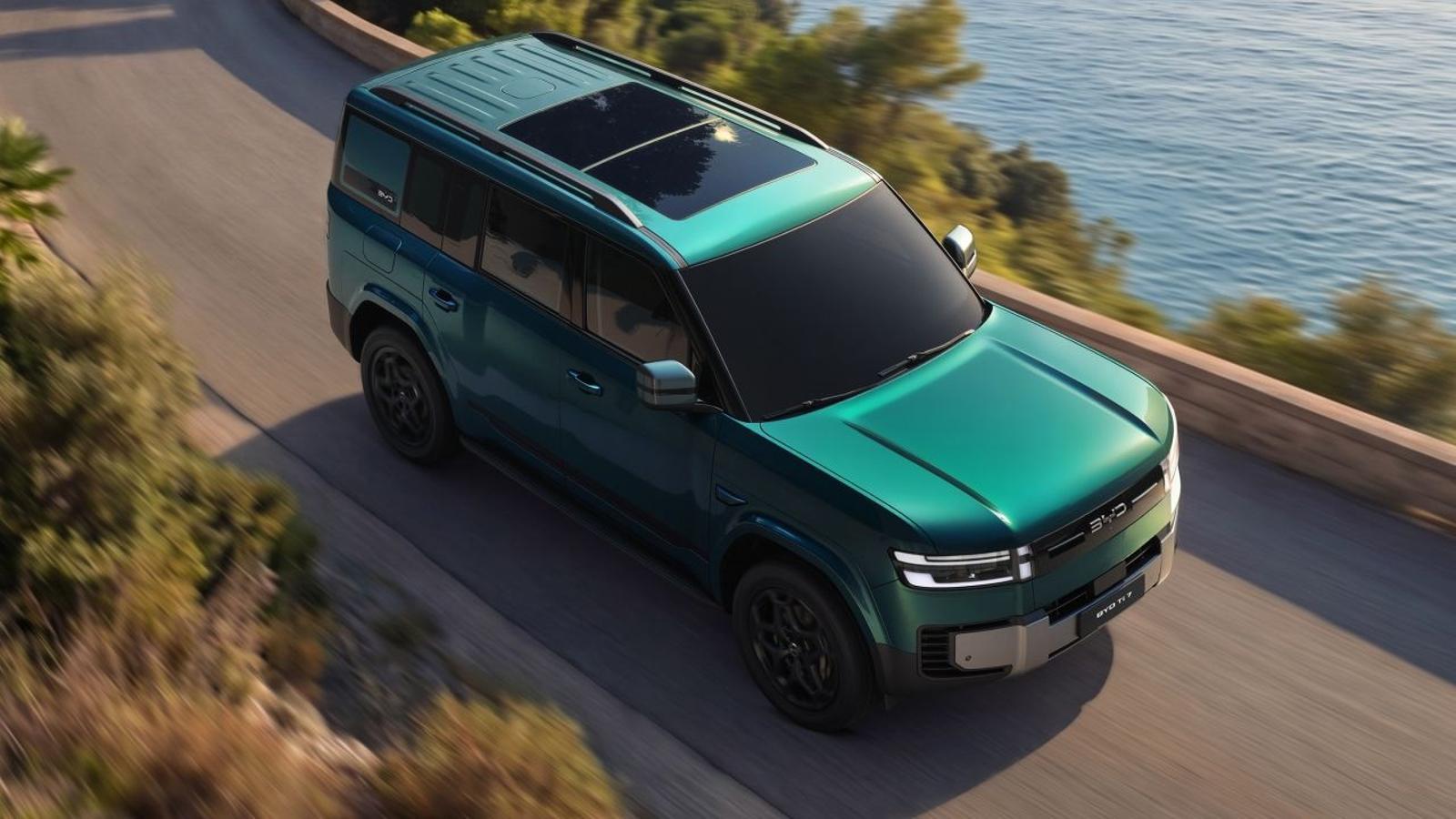
BarcelonaBYD will have to stop selling its Ti7 SUV in Europe immediately, in accordance with the resolution ruled by a court in The Hague (Netherlands) in relation to a plagiarism complaint issued by Land Rover against the Chinese manufacturer. Land Rover's complaint was based on the fact that the side and rear design of the BYD Ti7 is strongly reminiscent of the Defender, one of the English brand's commercial pillars. According to Land Rover, the Chinese had plagiarized the side design of the bodywork and the panels integrated into the rear of the car, over the slope of the trunk door. In addition, the British suspected that BYD copied the car using reverse engineering, that is, by buying units of the Defender to dismantle it and copy various production and technological processes of its rival.
This practice is quite common among large manufacturers and is not a crime unless industrial and technological solutions patented by another manufacturer are used fraudulently without their permission or without the payment of corresponding rights, as the European justice system believes to be the case in this matter. The court's resolution, issued on November 20th, rules that the Chinese model has fraudulently reproduced several technological and design elements patented by Land Rover, and expressly prohibits the sale, marketing, manufacture, or delivery of the vehicle within the European Union. Curiously, this resolution will not have effect in the United Kingdom –Land Rover's country of origin–, since this country is not part of the European Union and the European court does not have jurisdiction over BYD's subsidiary in the United Kingdom.
It is not the first time that BYD has received accusations of plagiarism or copying by European manufacturers. Without going any further Seat challenged the commercial names BYD Sealion and Seal in court, considering that they were too similar to the registered commercial rights of the Seat León.
However, the resolution is not yet final, and BYD now has a legal period of six months to file appeals and challenge the court's decision, which it has already announced it will do. The Chinese brand asserts that the Ti7 is not a model copied from any other, but rather its own product, the result of many design and engineering efforts. Finally, it is worth remembering that BYD is at a crucial moment of expansion in the European market, with the opening of new factories in Hungary and Turkey and the drafting of ambitious growth plans on the Old Continent, and that the Chinese brand considers that European justice might not be entirely impartial in defending the interests of domestic manufacturers.
