Contemporary heritage: transforming without erasing
AADIPA promotes 12 principles to identify, recognize and conserve contemporary architecture

-
CAT -
CAST
BarcelonaBarcelona now has a foundation to delve into the conservation of the best architecture of the 20th and 21st centuries. The 49th edition of the course by the association Architects for the Defense and Intervention in Architectural Heritage (AADIPA) concluded this Sunday morning with the presentation of the Barcelona Bases on Contemporary Architectural Heritage. “Contemporary architecture constitutes a cultural legacy before historical distance has consolidated its recognition [...] A part of this legacy remains inhabited and active; another faces abandonment, substitution, or alterations that can erase its values before they have been identified”, states the preamble of the bases, which are addressed to “administrations, professionals, owners, institutions, and society”. “Temporal proximity allows for listening to direct witnesses, recovering documents, and understanding decisions still present in memory. It also makes it difficult to distinguish what deserves to be transmitted and can encourage the urgency to renovate to precede knowledge. This circumstance demands a patrimonial responsibility capable of acting in time and accompanying change”, the preamble also says.
The Barcelona Bases encompass “buildings, interiors, housing, facilities, infrastructures, public spaces, complexes, and landscapes linked to architecture, as well as the documents and knowledge that allow its meaning to be understood”. The bases consist of 12 points, the first of which is Know to Recognize and addresses the need to value contemporary heritage before “an irreversible transformation erases its values”. Likewise, AADIPA wants to go beyond the works of established architects. “When there are consistent signs of significance and an irreversible threat, it is proposed to activate an urgent evaluation and proportional preventive measures”, they say.
To protect an architectural work, first you must “identify the values that need to be transmitted”, as the title of the second point of the guidelines says. “Inventories and selections must examine territorial, social, gender, authorship, and typological biases that may leave out housing, interiors, work architectures, or everyday spaces. Awards, publications, and popular recognition provide clues that require critical interpretation. The object of protection may reside in a singular work, in the relationships between the parts of a whole, or in its contribution to a landscape. This scale must be specified to prevent the conservation of a façade or an emblematic element from legitimizing the disappearance of the space, the system, or the environment that give it meaning,” states the text.
The third point is based on “respecting authorship, assuming the duty of consultation and collective responsibility.” Therefore, the association promotes that, in the event that the author is alive, the architects who are to carry out an intervention should consult them in order to “understand the intentions and criteria of the original work, share the scope of the intervention, and listen to observations regarding the proposed changes.”
Conserving a building does not mean turning it into a museum object. The fourth point proposes “preserving heritage with its inhabitants,” because living conditions and the continuity of communities are also part of heritage. Thus, inhabitants and users must participate in the process “from the diagnosis, with understandable information about the alternatives, costs, and impacts,” they affirm. Regarding change of use, the idea is clear: “A profitable use that destroys these values does not guarantee preservation; a historical use that maintains inadequate conditions does not ensure its future either.”
From recognition to action
In the fifth point, the foundations propose "converting knowledge into effective protection," through inventories, cataloging, and updated planning. To achieve this, it is necessary to establish continuous monitoring mechanisms, such as an "observatory," to "detect risks and warn about possible loss of value," the text states. "This observatory must facilitate public and verifiable information, promote coordination between institutions, and incorporate professional, academic, and citizen knowledge," the foundations conclude.
The "essential values" of a work are the key to the sixth point. "Every intervention must first define what should endure and be oriented towards maintaining or accommodating a use that preserves the essential values and the specificity of the building or space, justifying changes based on this criterion," the text establishes. In this sense, it is also necessary to evaluate "previous transformations" because they may have incorporated values that deserve to be conserved.
Contrary to what usually happens, in the seventh point, the foundations ask that "continuous maintenance and repair must be the first response to conservation needs." And in the eighth, the foundations warn that "conservation must make possible an accessible, safe, and appropriate use for people's needs." "Universal accessibility, safety, healthiness, and comfort must be incorporated from the beginning of the project," they emphasize from the AADIPA.
In the midst of a climate emergency, the ninth point proposes "jointly evaluating heritage and environmental impact." "Decisions about heritage must prioritize maintenance, conservation, and reuse over demolition and substitution, jointly evaluating cultural values and environmental impact," the text says. However, on the other hand, "environmental indicators inform the heritage decision, but do not replace cultural assessment," they add.
Demolishing a building should not be so easy. In the tenth point, the foundations ask that "the irreversible loss of heritage values requires reinforced justification and a real examination of alternatives." "The value of the land or the immediate convenience of an operation are not sufficient arguments. Conservation in situ maintains relationships that a relocation can destroy," the text warns.
The penultimate point of the foundations states that “the dissemination of current architecture is the protection of future heritage”. This includes architectural archives, universities, studios, foundations, and public institutions. “Education in architecture and heritage must have a presence in primary and secondary school, in university and vocational training, and in lifelong learning,” say the foundations.
To conclude, the foundations highlight the need to “assign responsibilities, guarantee instruments and resources”. “Administrations must coordinate recognition, planning, protection, and support; owners and managers, organize care; professionals, justify and document decisions; academic and cultural institutions, provide knowledge and comparison. Social communities must have effective channels to participate in the preservation of their own heritage and landscapes,” say the foundations.
The Barcelona Bases on Contemporary Architectural Heritage are addressed to “administrations, professionals, owners, institutions, and society”. From now on, it is planned to continue developing them, also internationally, as they will be the basis for a future Barcelona Charter.
A permanent exhibition space of the COAC Historical Archive.
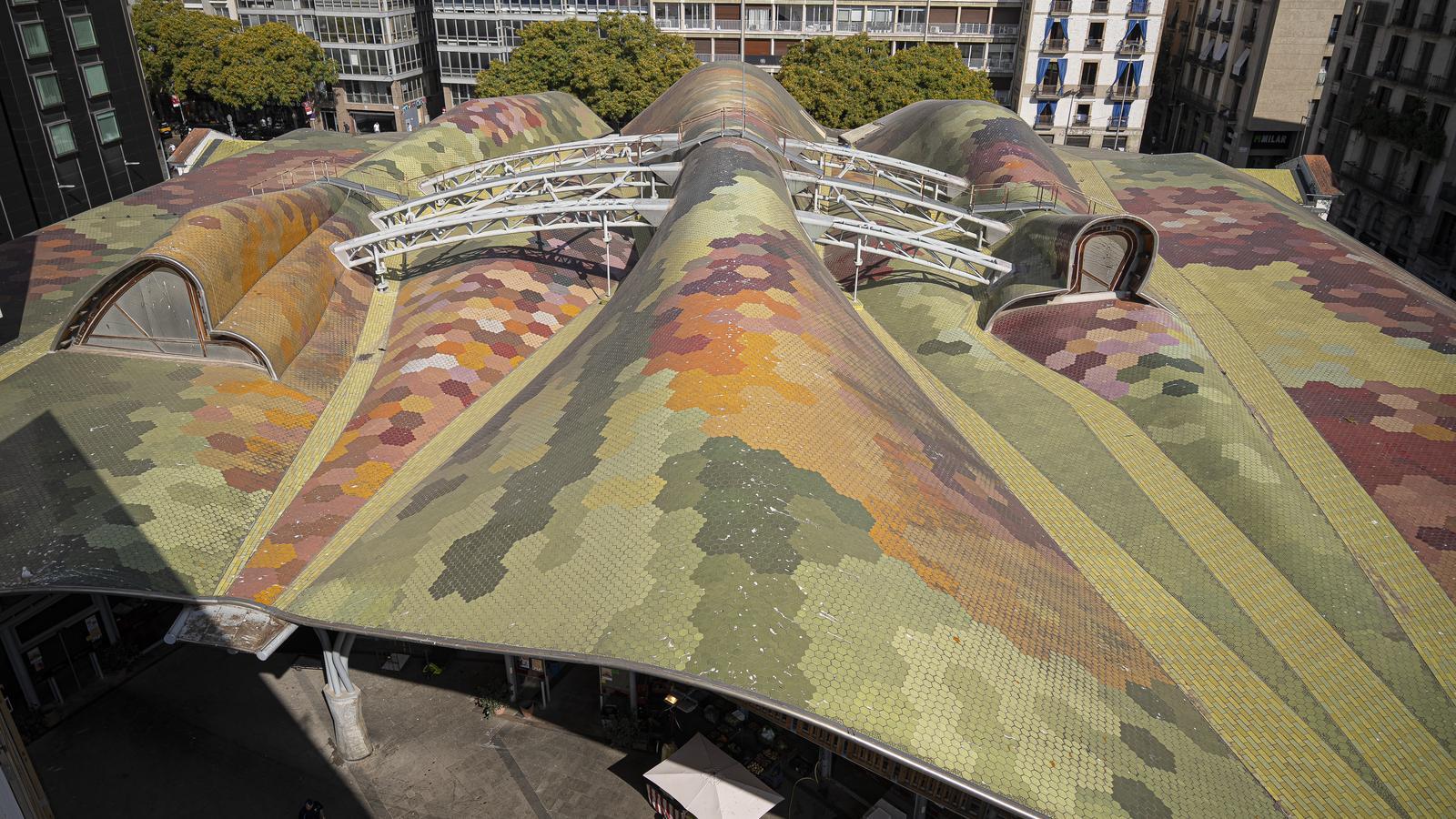
After the closing of the course, the Santa Caterina Market in Barcelona hosted the solemn reception ceremony of the Barcelona Bases, with the participation of AADIPA, the COAC, the Government of Catalonia, the Barcelona City Council, the Barcelona Provincial Council, the Barcelona Metropolitan Area, and several universities. During her speech, the dean of the COAC, Sandra Bestraten, announced that next year she will dedicate a major exhibition to the Historical Archive, which will have a permanent exhibition space on the same floor where the Jordi Capell Cooperative is currently located.
