The illustrator of the emotions of the 'New York Times' who exhibits in Gràcia
The Fosforito gallery hosts an exhibition and a workshop by Brian Rea, who illustrates the 'Modern love' column of the newspaper

-
CAT -
CAST
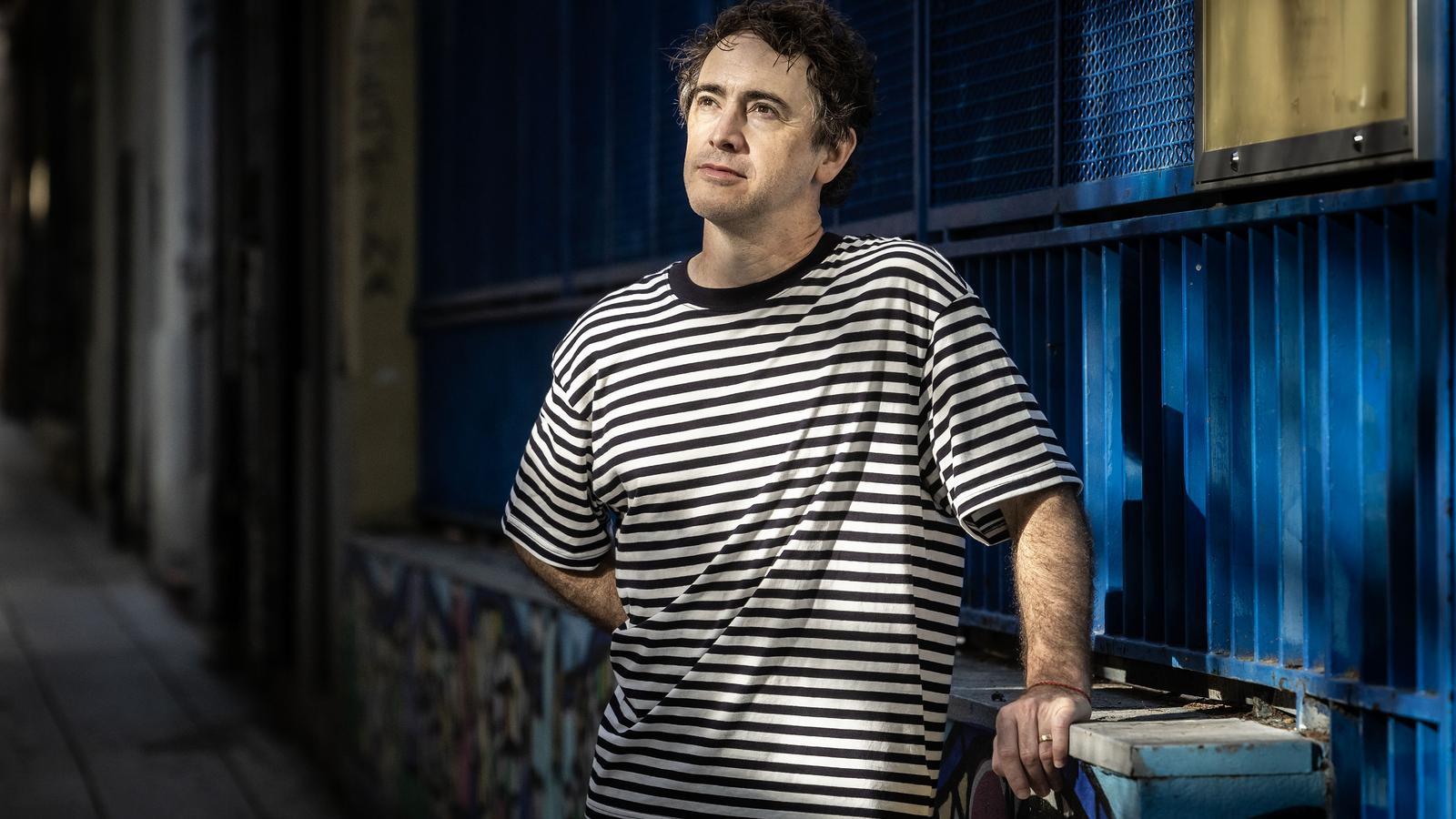
BarcelonaWhen he was invited to create a mural at the Joan Miró Foundation in 2010, the American illustrator Brian Rea was working full-time as an art director for the opinion section of the New York Times, a stressful job that caused him a lot of anxiety. A compulsive list-maker, Rea had started writing down in his diary all the things that caused him stress with the goal of reducing his anxiety. The list grew and grew until Rea had the idea of turning it into one of the murals to paint at the Joan Miró Foundation, the piece Fears. “It was a wall of words, and I remember how the public looked at it and how they reacted,” explains Rea. “People crying, people laughing, people pointing at parts of it. As an illustrator, you don't have much contact with your audience. Yes, someone would tell me once in a while that they liked a drawing of mine, and that was it. So seeing people's reactions in real time was very important to me. But, at the end of the day, it was a text-based work, and I decided to work on achieving that level of emotional resonance in my visual works.”
Shortly after, Rea left his job as an art director and today he is one of the most renowned illustrators in the world, especially known for his work in the acclaimed Modern love section of the New York Times, which he illustrates weekly. This Thursday, Rea inaugurated Look, a cloud!, an exhibition of his work at the Fosforito gallery run by Miguel Pang and Iratxe López de Munáin, on Bruniquer street in the Gràcia neighborhood. The illustrator will also hold a workshop at Fosforito which, under the title Finding the feelings. Bringing emotions to your work, focuses on the most characteristic and defining trait of his work: the ability to capture emotions using minimal resources. “Many artists put barriers between their work and emotions and are afraid to portray them, but I don't,” he states. “Why shouldn't we celebrate joy, love, or the connections between people? It's what we all want, after all. And as a person who now has a family, I feel emotions more intensely every time. Even the smallest things make me cry. And what am I supposed to do, suddenly ignore that part of myself when I enter the studio to work?”.

In Rea's illustrations, a constant search for simplicity is detected, although he prefers to speak of “restraint”. “A friend of mine says that first you learn to draw, then to look, and then to choose, which in my case would be deciding what you leave in the drawing and, more importantly, what you leave out. And my style was built by removing elements, so we could call it minimalist”. Simplicity in Rea's work is anything but simple. For example, in the nearly 800 illustrations he has drawn for the Modern love section, which explores the complexity of love through real stories, he has only used the heart symbol twice. “It is a cliché that we all use, but for me, love is much more than a heart –explains Rea–. Love is little moments. It’s two people connecting on opposite ends of a room, the gesture of bending down to hug your child, the way a dog looks at its owner. These are the things I try to capture. Putting a heart over someone's head... We all know what it means, but there is no emotion in that symbol”.
Despite the more than 15 years he has been illustrating Modern love, the illustrator assures that the work continues to be exciting and motivating: “It is impossible to get tired of it because every person has a different love story to tell, we all fall in love in a particular way. And for each story, you could create 10,000 different images to illustrate it”. For Rea, the most important thing about his work on Modern love is “to capture the emotional tone that the author tries to convey” but also to make a drawing that exists in parallel to the text so that the reader is the one who connects the two things. “It is this space between the story and the illustration that interests me, to create a parallel and unique journey –he says–. Recreating the story word for word makes no sense, for that, it is better to take a photo”.
The sabbatical year of death
Beyond Modern love, one of Rea's most irresistible works is her illustrated book Death wins a goldfish, unpublished in our country, which follows Death during the sabbatical year she is forced to take, since the incarnation of the Grim Reaper had never taken a day off. Funny and tender, the book portrays Death trying to enjoy her first vacation: a visit to an amusement park, Tinder dates –they don't end well–, painting pictures, surfing, traveling to Death Valley... The humor is delightful, but so is the portrait of everyday moments and their often invisible beauty.
Like the mural at the Fundació Joan Miró, Death wins a goldfish started as a list of fun things that death would do if it took the day off. “I wanted to send those jokes to the New Yorker with the hope that they would publish one, it would have been the pinnacle of my career. But back then I was working at the New York Times, and I had so much work that I lived to work, it was a toxic relationship with work. But when they proposed that I make a book based on that material and I started working on it again, I was no longer working at the newspaper and was living in California. My relationship with work was healthier and that allowed me to also talk about what it means to live more slowly.” As he explains in the book's prologue, Brian Rea grew up in a family with a very strict work ethic, but when his father retired, the cartoonist asked him what advice he would give himself if he could travel back in time: “Work less,” the man said. “The book is, for me, a reminder that one must try to live without so much rush –explains Rea–. You can have a demanding job and, nevertheless, be present in your life and savor the little moments. It is incredibly hard and requires a great effort, but it can be done.
