“Musical notation inaugurated the desire to control sounds”
The Cap Roig Meetings bring together writers, scientists, philosophers and artists to reflect on the relationship between humanity and nature

-
CAT -
CAST
Cap RoigThis weekend, the splendid Cap Roig Gardens, perched above the coves of Palafrugell, have become the luxury setting for the second Cap Roig Encounters, organized by the La Caixa Foundation and the magazine La Maleta de Portbou, united under the initiative of the European School of Humanities. The symposium brings together writers, scientists, philosophers, and artists from diverse disciplines around the theme "The meaning of nature," which invites reflection on the relationship between humans and the natural world.
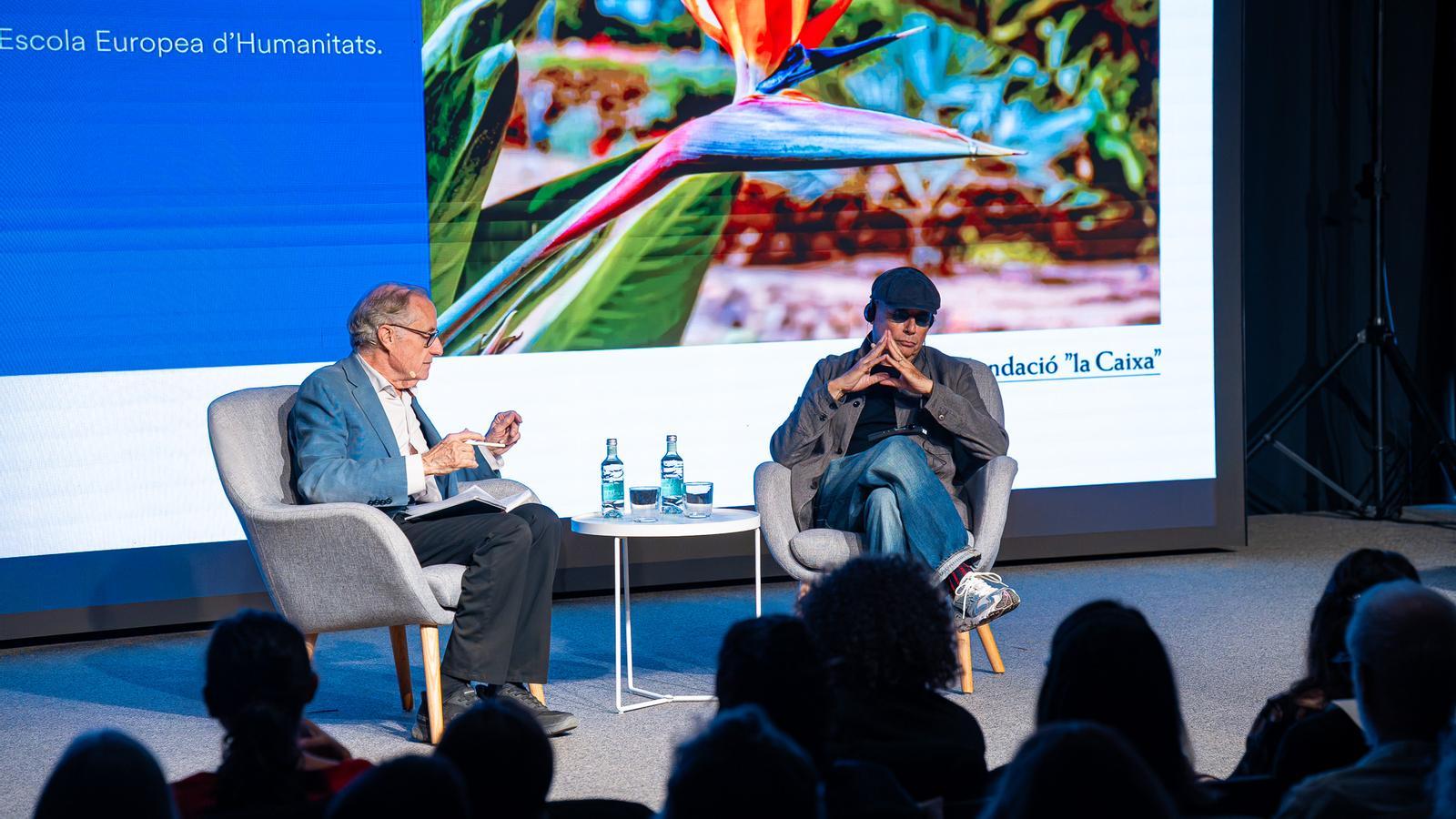
Friday's session hosted an erudite inaugural lecture by the Italian writer Alessandro Baricco, author of very famous novels such as Silk (1996) and the recent essay A Brief Heretical History of Classical Music (Ara Llibres / Anagrama, 2026). Alongside Josep Ramoneda, director of La Maleta de Portbou, Baricco has traversed the history of Western music, from Gregorian chant to the 20th century, discoursing on the links between artistic creation, progress, and the mastery of nature. Through figures such as Guido d’Arezzo, Palestrina, Monteverdi, Mozart, Beethoven, and Wagner, he has proposed that the evolution of musical language also reflects a transformation in the way humans understand the world and their capacity to intervene in it.
The starting point of the disquisition has been Gregorian chant, a monodic tradition linked to Christian worship, in which music is understood as an expression in the service of a transcendent reality. In the 11th century, the Benedictine monk Guido of Arezzo contributed to the development of musical notation, a key step in the history of music that Baricco interprets as a first form of domination of men over reality and nature. "He inaugurated the desire to control sounds. The act of naming has to do with paternity and dominion," he has argued.
Centuries later, the development of polyphony opened new creative horizons and contributed to consolidating an increasingly autonomous conception of music, leading up to Beethoven, the ultimate exponent of a modernity in which the human being assumes the absolute leading role in creation over any divinity. "And where has God gone? Where has he ended up? He is not seen," the writer posited, humming the famous sixteenth notes from the beginning of Beethoven's Fifth Symphony. This exaltation of human creative capacity, however, also hides a will to dominate which, by way of conclusion, Baricco has linked to the European legacy and the power relations that still persist. "Europe is also this, the instinct for domination. We are heirs to this, in turning into servants all those who are not of this family, with great violence, and the history of sounds must be taken very seriously," he warned.
On Friday, in addition to Baricco, the Trobades program also included proposals by Lúa Coderch and Paco Calvo. Then, on Saturday the 17th, Antonio Monegal and Xavier Pla will reflect on memory and the passage of time, while Paolo Pecere, Meg Lowman, and Cristina O’Callaghan Gordo will address new ways of observing and understanding the planet. The day will also include an intervention by Najat El Hachmi on new freedoms and a reflection by Joan Fontcuberta on the future of nature through images, before the Trio Tico concert. On Sunday the 18th, the Trobades will close with the dialogue Distrusting the Future, with Xavier Mas de Xaxàs and Esther Vera, director of ARA, regarding the uncertainties and challenges posed by the future, followed by a meeting with all the weekend's authors at the Plaça Nova in Palafrugell.
