Lava Skin terrifies Barcelona with all tickets sold out
'Petróleo' is represented at La Villarroel and 'Parlamento' at the Teatre de Salt
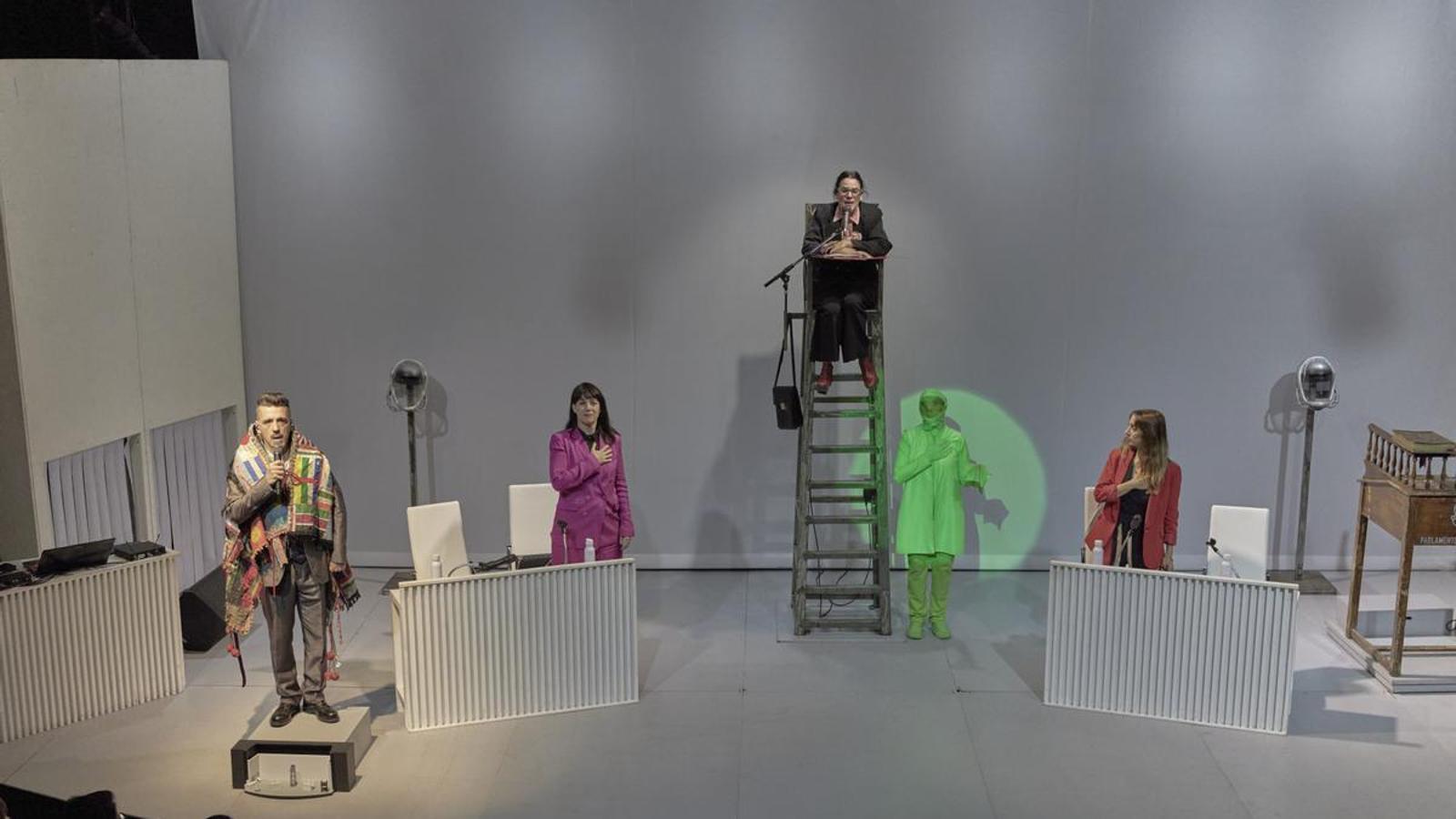

BarcelonaThe Argentine company Piel de Lava already raised expectations four years ago, when it performed for the first time at the Temporada Alta Festival with its star show, Petróleo. That piece, which questions masculinity through four workers on an oil rig, became the most anticipated play of the festival. Now Pilar Gamboa, Elisa Carricajo, Laura Paredes and Valeria Correa –the four members of the company, who share authorship, direction and performance of all their productions– return to Catalonia for a double bill. Petróleo will be performed for the first time in Barcelona, this Monday and Tuesday at La Villarroel, as part of the Flaix de Tardor Festival, and will mark the debut of Piel de Lava in the Catalan capital. And taking advantage of the connections between Flaix de Tardor and Temporada Alta (both festivals are promoted by Bitò), the company will also premiere its latest production in Girona, Parlamento, which can be seen on Friday at the Teatre de Salt. All performances of both shows are already sold out.
Piel de Lava stands out because there are no hierarchies among its members. The four artists create horizontally, starting from a desire or a stage challenge. If in Petróleo this impulse consisted of representing on stage four men with a very rigid idea of masculinity, in Parlamento they have focused on the female politicians who lead far-right movements. "We started to conceive the show when Milei was not yet president in Argentina. Back then we were looking at Europe and Brazil. The fascist wave, in our country, came later," explains Gamboa. Unlike Petróleo, which adopts a realistic tone and seeks to adjust as much as possible to the inhospitable conditions of the workers on an oil rig in the Patagonian desert, in ParlamentoPiel de Lava has opted for dystopia.
The play depicts an Earth set ablaze by citizens' protests and a group of female politicians who have fled from it. From a satellite, they orbit the planet and discuss how to govern. "They are a series of far-right women who exalt a very specific type of femininity. Their empowerment comes from feminism, but from the act of denying it. We saw them mostly in Europe and they attracted us as characters," says Paredes. Parlamento takes its name from these political spaces because, according to the artists, they have lost their most evident function. "Bureaucracy traps the protagonists. For them, it is better to perform politics, to put on a show, than to make truly effective decisions," points out Gamboa, who highlights that the show is a farce full of humor.
Empathy towards men
Also through humor, the company approaches masculinity with Petróleo, their most successful show. Premiered eight years ago, the production has toured internationally and continues to attract spectators. "Barcelona is a city that we have always kept very much in mind. We are especially excited to be able to perform here," highlights Correa. The play, he adds, delves into masculine gender roles "from a place of truth and empathy" and is the result of a long research process into the daily lives of oil workers, who live together in small groups inside trailers, where they eat and sleep for days. "Domestic chores are usually assigned to women. How do they cook and how do they rest in such small spaces, with such great proximity to other bodies? How do they sustain masculinity? All of this was what interested us to bring to the stage," adds Gamboa.
