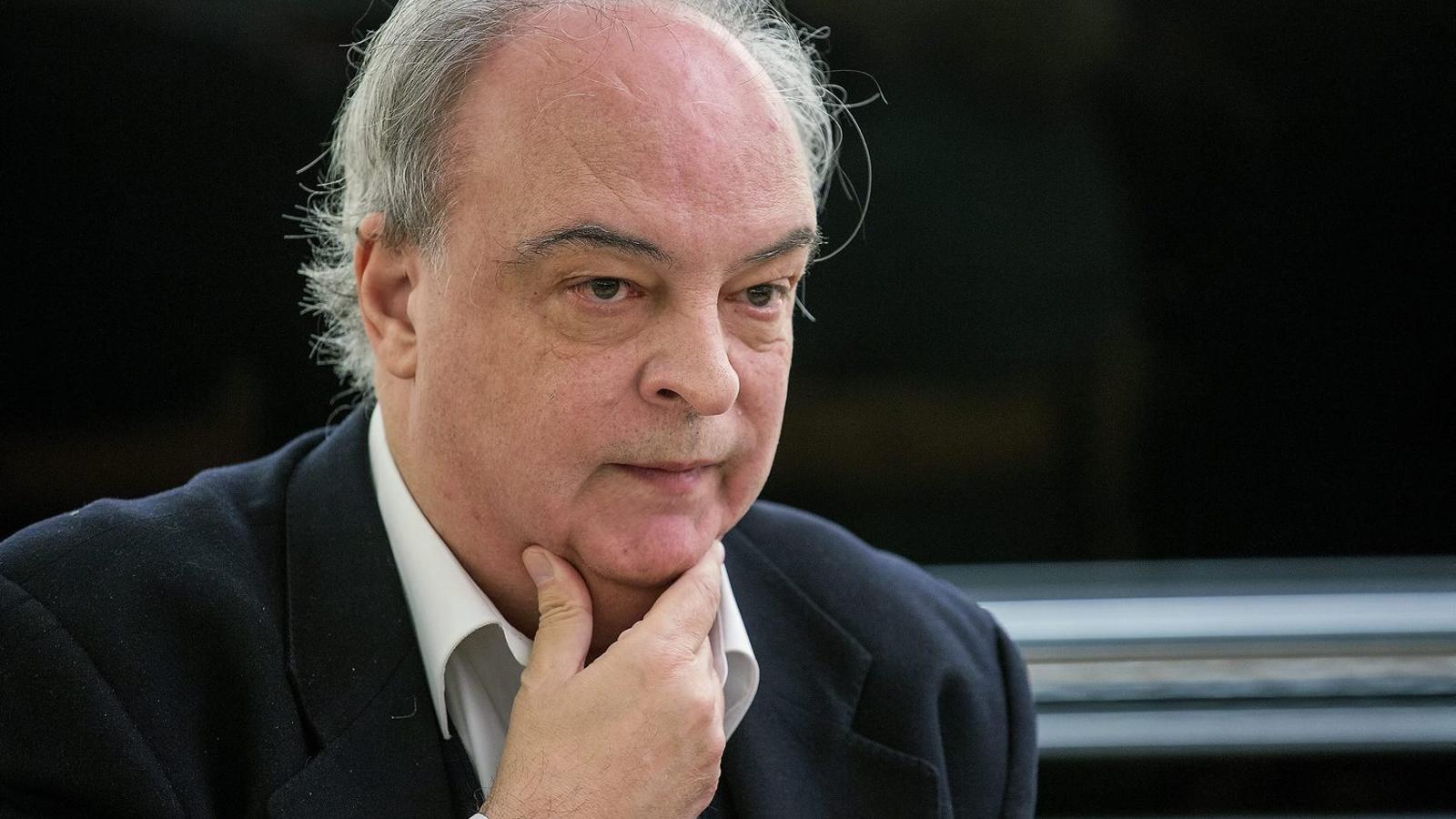
Enrique Vila-Matas wins the National Prize for Spanish Letters
The Barcelona author has published novels such as 'Bartleby and Co.', 'Montano's Malady' and 'Never Any End to Paris'

-
CAT -
CAST
BarcelonaThe jury of the National Prize for Spanish Letters recognized this Tuesday the trajectory of the prolific and influential writer Enrique Vila-Matas (Barcelona, 1948) "because he masters, in a masterful way, the medullary principles of postmodern fiction through a particular style where the boundaries between reality and fabulation blur and intermingle with absolute fluidity, with the ability to build a literary universe that dialogues with tradition while reinventing it.".
Endowed with 50,000 euros, the National Prize recognizes the long and prestigious career of the Barcelona-born author, who has produced a long list of about thirty books, among which are El viaje vertical (Anagrama, 1999), El mal de Montano (Anagrama, 2002), París no se acaba nunca (Anagrama, 2003) and Dublinesca (Seix Barral, 2010). Translated into more than 30 languages, Vila-Matas has received awards such as the Ciutat de Barcelona (2001), the Herralde (2003), the National Critics Award (2003), the Médicis étranger (2003) and the Formentor. In the last two years, moreover, he has been one of the most highly rated authors in betting houses as a possible winner of the Nobel Prize in Literature. "Intertextuality has been understood as the weak point to attack me, but I do not need to copy anyone... I am not a strange author, but a singular one", he explained on the occasion of the publication of the book of conversations with André Gabastou Fuera de aquí (Galaxia Gutenberg, 2013).
Vila-Matas' literature has played with the idea of building canons, or rather anti-canons, from the creation of the secret society of the Shandys in Historia abreviada de la literatura portátil (Anagrama, 1985), the gallery of deserters of writing in Bartleby y compañía (Anagrama, 2002) and the creation of an altar of chosen authors based on fragments chosen at random in Cánon de cámara oscura (Seix Barral, 2025). "It is a catacomb novel, just as Montevideo [Seix Barral, 2022] was —Vila-Matas commented last year—. Someone asked me recently how many books I have left to write. The truth is that I do not know. I do not worry much about such things".
Among the other points that the National Prize jury highlights are "the formal originality and fidelity to the metafictional spirit of Cervantes from a long and exemplary career", "the questioning of narrative authority, added to a laconic and ironic acuity and sense of humor" and the "subversion" and "risk" of his narrative proposal". "Master of the feint and specialist in opening new fronts, Vila-Matas is an unclassifiable and surprising author —continues the jury—. His acuity and passion for literature have made him one of our most recognized authors on the international scene". Instituted in 1984, the National Prize for Spanish Letters includes, in its list of winners, poets such as J.V. Foix and Pere Gimferrer, storytellers such as Rosa Chacel, Manuel Vázquez Montalbán and Francisco Umbral, philologists such as Martí de Riquer and philosophers such as Emilio Lledó.
