Inside the engine room of 'Com si fos ahir'
We enter a meeting of the scriptwriters who are developing the plot of the longest-running series on TV3

-
CAT -
CAST
BarcelonaI know people who would kill to be here. One of the best-kept secrets of the Catalan identity. The Rosetta Stone of our local audiovisual scene. I have been let into a scriptwriting meeting for "Com si fos ahir", the TV3 soap opera that has broken all longevity records with its tenth season. Maintaining a drama for so long requires a well-oiled, impeccable gear, and the origin of it all is who writes the words, which is what interests us.
The "Com si fos ahir" has a dozen scriptwriters grouped into three teams—which are rotating because "that way you don't pick up bad habits," they tell me—: 1) the bible writers who invent what will happen to the characters that quarter, 2) the screenwriters who develop the plots by sequences, and 3) the dialogue writers who finish the script that is handed to the actors. Playwright Carles Mallol is the script coordinator, and in fact, this Monday I also find him working at the DAMA offices (the entity that manages the copyrights for screenwriters and directors), which they use as a meeting space.
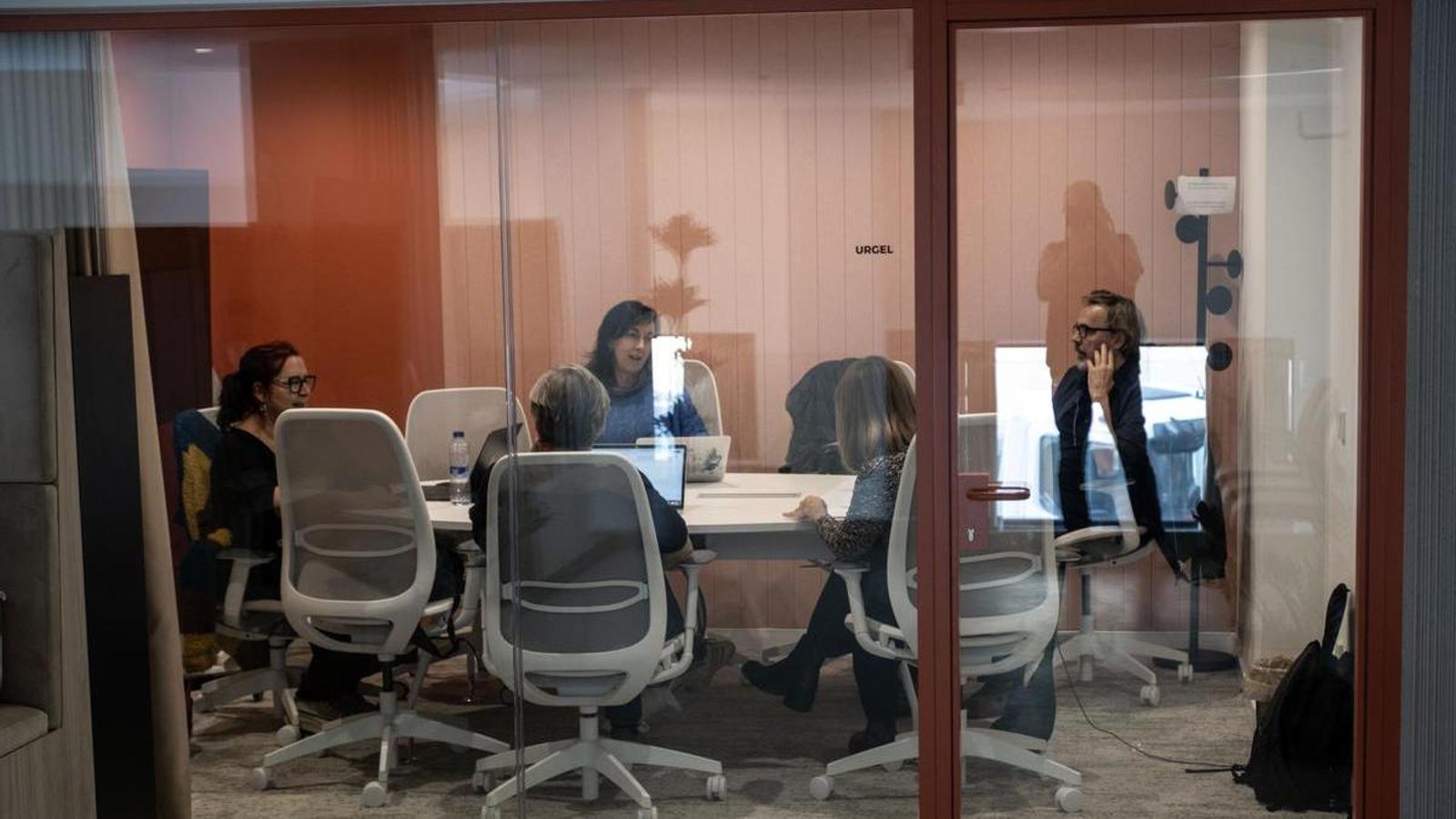
In a fishbowl are Cristina Clemente, Pau Miró, David Plana, and Marta Grau, who are plotting the five episodes of week 21. They are about three months ahead of the series broadcast, because after finishing the script, it must be reviewed, produced, and filmed. Behind the letters, there are numbers that are non-negotiable: each episode must have 12 sequences and about 5,800 words. And they also have constraints to keep production costs down: they can only do 10 outdoor scenes per week. That is why the characters "spend the day having coffee, we wish they would go rafting!", they comment. Carles Mallol enters with a key question: "Do you know if there is an oven at Marta's house? They put down that they are eating pizza for dinner." They have to consult the shared appliance document.

Today they are plotting Gemma's (Àurea Márquez) storyline, who moved into Fede's (Xavier Ricart) house, and problems can already be foreseen. First, they read what the bible tells them, and then they start throwing ideas around, which I see flying from one to the other. “Let’s put some sexist jokes here” “Fede gets hooked on it” “Andreu gets uncomfortable” “These men are too perfect, too deconstructed,” they observe. Perhaps they won’t be realistic enough, then. The bible dictates that there should be a climactic scene between Fede and Aniol (censored in this chronicle). “We draw heavily from reality. We incorporate current debates, but toned down to the everyday life of the Com si fos ahir,” they explain. This forces them to consult with experts to speak properly about criminal law, sexual violence, or Japanese cuisine.
It is no coincidence that, among the screenwriters, there are several playwrights—without going any further, Cristina Clemente has Xirgu currently playing at the Lliure—. It is a Catalan tradition inaugurated by our forefather, Josep Maria Benet i Jornet. “The soap opera comes from the theater, because it is based on orality,” affirms Grau. “Here there are many more dialogues than in nighttime series. Everything is sustained by dialogue.” “What the telenovela gives is a very great possibility of knowing the characters, because you can see them in many different situations and over a long time,” points out Plana. “For me, theater is the art of the word in action and is more situational. Theater is an intense moment of life and the telenovela is a sum of moments.” This means that the actors, the screenwriters, and the viewers have a lot of information about the protagonists. At the same time, the longevity means that the Com si fos ahir must necessarily be “a very everyday series, so that the characters can endure many situations,” warns Clemente, “otherwise we would have to send some of them to a psychiatric hospital!”.
