Stephen Frears: “I am not a monarchist, but Elizabeth II was a clearly extraordinary woman”
Filmmaker, receives the Grand Honorary Award of the Clam Festival
-
CAT -
CAST
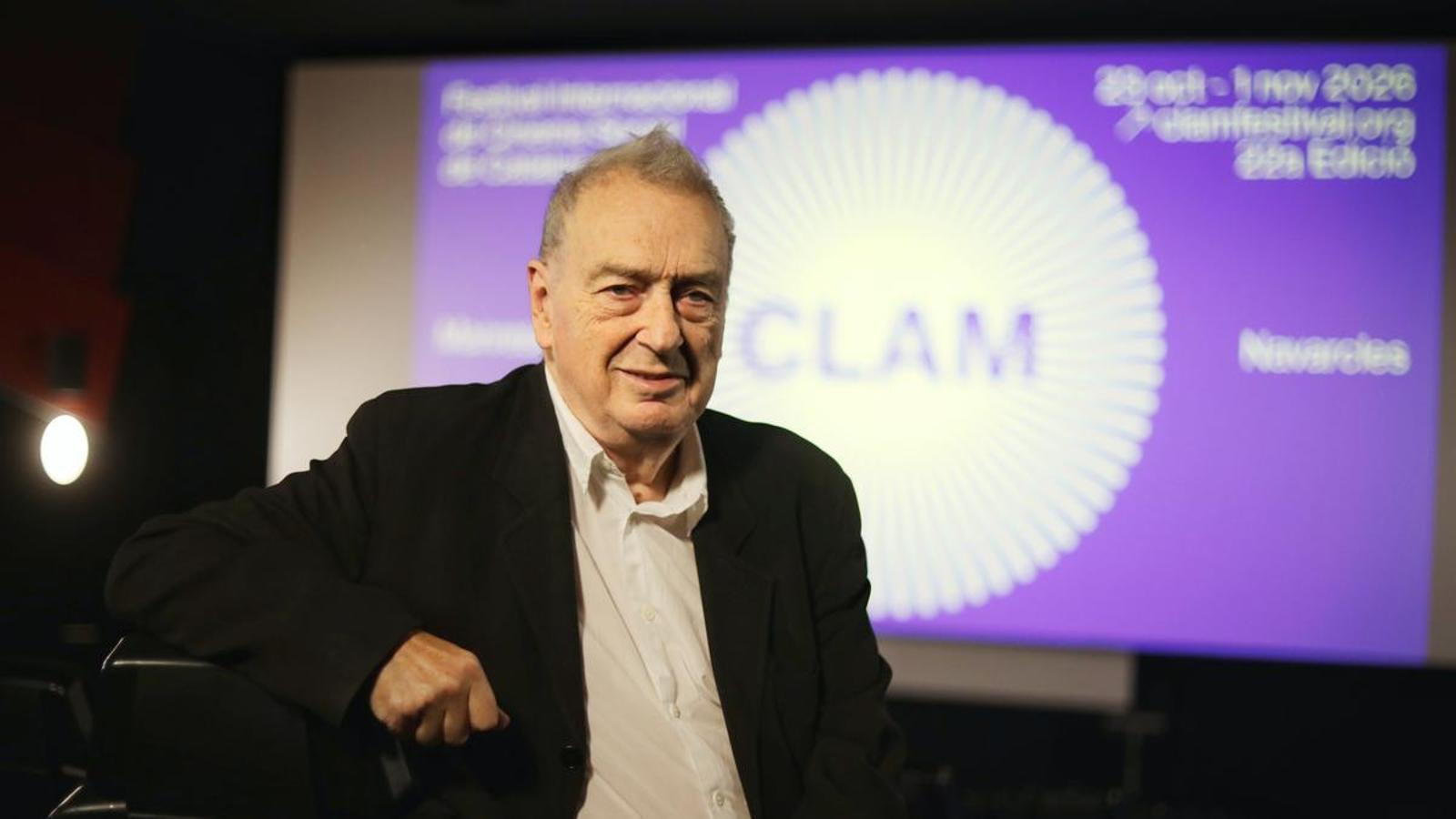
BarcelonaThe first film that Stephen Frears (Leicester, 1941) saw in the cinema, when he was very small, was Walt Disney's Pinocchio. “When the whale swallowed him they had to take me out of the cinema, it scared me a lot”, recalls the director of Dangerous Liaisons and The Queen, one of the great masters of British cinema. A versatile director with a sense of humor and a genuine interest in people and their stories, Frears receives this Friday in Manresa the Honorary Award of the Clam, the International Social Film Festival of Catalonia, where on Saturday he will offer a masterclass conducted by Àlex Gorina. Frears' visit is the highlight of a festival that will screen until November 1st essential films of the season such as the Palme d'Or Fjord, by Cristian Mungiu, or The debut, by Jesse Eisenberg.
Do you remember the first shot you filmed?
— No, but I was very anxious. It was my first film [the short The burning, from 1968]. Above all, I was worried that there would be film in the camera, it was my main concern.
What led him to work in cinema?
— Karel Reisz, who was a film director. I met him when I was working at the Royal Court Theatre in London. He said to me: “Come work with me”. And that is how it all began. I had never stepped onto a film set before.
In his youth he worked a lot for television, mainly at the BBC. As a filmmaker, what did that experience bring you?
— A lot. I worked with very good writers, and also with excellent actors. In a way, they were the same values that they had taught me at the Royal Court. So I continued doing what they had taught me to do. The experience allowed me to be a better director. In the end, all you need to learn the craft is to work a lot.
In the 80s he worked a couple of times with the writer Hanif Kureishi. My Beautiful Laundrette (1985) was decisive in launching his career. How did the collaboration come about?
— He left me the script for My Beautiful Laundrette in the mailbox, and I read it and thought it was very good. It was that simple. And then, miraculously, we managed to make the film thanks to a series of strokes of luck. Later we made Prick Up Your Ears (1987) together, but My Beautiful Laundrette was really explosive.
Do you keep in touch with Kureishi?
— Yes, I was with him two days ago. He suffered a horrible accident, you must already know, and he is in a wheelchair. It is terrible what happened to him, a horrible experience. I go to see him every week.
After years of making cinema deeply rooted in British culture and with British actors, in 1988 he directed Dangerous Liaisons, a project with a Hollywood cast.
— Yes, it was a big leap, but deep down they are just actors. They were American and much more famous and they came from another tradition, but they were very good.
His later films, The Grifters and Hero, were profoundly American. What changed and what remained intact in his way of directing?
— The Grifters was basically a tribute to good writing. The material [Donald E. Westlake's screenplay adapted Jim Thompson's novel The Grifters (1963; in Catalan, Edicions 62)] was very well written. So, in that sense, I stayed true to the good writing, as in Dangerous Liaisons. Actually, the better the script is, the better things go for me. The danger is when you think you don't need to have a good script or you become careless and make mistakes in your choices.
And how do you choose the scripts? Because you have never written any...
— It is an instinctive decision. Simply put, you either like a script or you don't. It's like falling in love; there is nothing you can do about it. It is a system that has worked well enough for me most of the time, although occasionally it has brought me some trouble.
For example?
— I have made films that embarrass me. Films that have not had any kind of success. And in general, it has been my fault. I wish I hadn't made them, I wish they didn't exist. I would like not to have made so many mistakes, but I suppose that is how you learn.
Returning to his relationship with American culture, when he adapted Nick Hornby's novel High Fidelity (2000) he moved the action from London to Chicago.
— Yes, but it was the doing of the lead actor, John Cusack, and his friends, not mine. At first I thought it was a big mistake, but in the end it worked. I am sure there are many differences between one city and the other, especially when it comes to music. But the guys who wrote the script, especially D.V. DeVincentis, knew Chicago very well. They knew it as well as Nick [Hornby] knows London. So they helped me a lot, I had some very good guides.
In the 90s he returned to make two films with a writer, the Irishman Roddy Doyle: The Snapper (1993) and The Van (1996).
— Yes, he is a wonderful man. And his writing is so good and funny... It was a pleasure to work with him, especially on Irish Coffee. Sometimes I think it is the best film I have ever made. Ireland was completely new to me, it was like traveling to the Moon. A completely different culture from rigid England.
He directed those films between major Hollywood productions like Hero (1992), Mary Reilly (1996)or The Hi-Lo Country (1998). Was it a way to cleanse the palate and lower the pressure?
— Surely. Spending a lot of money on a film always makes you lose your nerves, so moving on to do a low-budget project with such a brilliant script was like going on vacation. That is how I remember Irish Coffee, it was like a dream. I was so happy... I had a lot of affection for the whole project team, all Irish. And they laughed at me the whole time. It was very beautiful.
You made a film about a singer panned by the critics, Florence Foster Jenkins (2016). In general, how do you think the critics have treated you?
— I think I've managed quite well. I don't know how they've allowed me to make all these movies, I've been very lucky. I've slipped away many times. My motto is: "Never get caught". Robert Mitchum used to say that too.
What led a Labour and republican filmmaker like you to direct the 2006 The Queen, about Queen Elizabeth II?
— Curiosity. Shortly before, I had made a television movie about Tony Blair and his rise to prime minister [The deal, from 2003] with a script by Peter Morgan, the creator of The Crown, who is a very intelligent guy. And Peter wrote this other script. I, like most English people, don't think much about the monarchy. They are simply there, like the mountains. I didn't have any particularly strong feelings towards them. But I saw that the script for The Queen was very, very good. So it was a pleasure to make the movie. And Helen [Mirren] is a wonderful actress.
To direct a film like this and be fair to the character, was it necessary to leave out your own political opinions?
— No, I don't think so. Why do you say that?
You are not exactly a monarchist.
— I am not a monarchist, but Elizabeth II was a clearly extraordinary woman. It was not difficult to separate her from the institution she represents. And perhaps only someone like me could do that. A monarchist might not have had a lucid perspective.
In 2023, the son of Elizabeth II named him a Knight of the British Empire...
— Has it been three years already? I am a rascal [laughs]. I should be ashamed, but my mother would have been very excited. What I remember most about the ceremony is that they had a painting by Anthony van Dyck, the triptych of Charles I. I had seen it my whole life in photos and there it was, hanging on the wall of Windsor Castle.
Great actors abound in your films, but even more so do great performances. You must be somewhat to blame for that.
— I am not sure if we directors are responsible for the performances. Most of the time what the actors bring is very precise, and the best thing you can do is leave room for their interpretation. In The Queen, I remember thinking that Helen [Mirren] could do whatever she wanted, she was perfect. So I focused on the people she had around her, on creating a world where she could be the queen. The last thing actors want is someone talking to them all the time. There is an anecdote about Anthony Hopkins telling someone on a set: “Can you make the director shut up a bit? He is driving me crazy”. Actors know what they have to do, you don't have to explain it to them. And if they do something you don't like, you tell them and that's it.
He offered his personal vision of the history of British cinema in the documentary Typically British (1995). Traditionally, it is a cinema that stood out for its interest in ordinary people and class conflicts. Do you believe these themes are still represented in current British cinema, especially those related to social class?
— Probably not. In the 60s we had the war more recently and society changed a lot. The filmmakers of that generation tried to portray it and record it. What is happening to us now is more complex and difficult to explain, and perhaps that is why we do not make films about our society. Well, I still make them, but... Before, that was what interested the public, but now not anymore. People have the right to be interested in whatever interests them today. But I am still interested in British society. Now, if you tell me to make a film about the riots in France, I wouldn't know where to start.
He is 85 years old and still active. Does he plan to retire at some point?
— I do not know if I am still active as a filmmaker, I have not worked for a couple of years. It is complicated to make cinema in Great Britain. And it is a profession for young people. It may be that I have already retired, I am not sure. I still have good material to film, but there is no money in English cinema.
In fact, lately he has worked more for television and platforms than for the cinema.
— Yes, but I don't care who I work for. In my country, cinema is over, but television remains very active. When we made My Beautiful Laundrette I wanted it to be seen on television because it seemed to me that the film had something important to say, and I wanted it to reach everyone. Television seemed the best way to reach everywhere. In the end, they released the film in theaters, and now I am very grateful for that, but at the time I only cared that people saw the film.
