Alfredo Sanzol seeks hope in the loss of a brother
'The last night with my brother' is performed at the Sala Gran of the National Theatre

-
CAT -
CAST
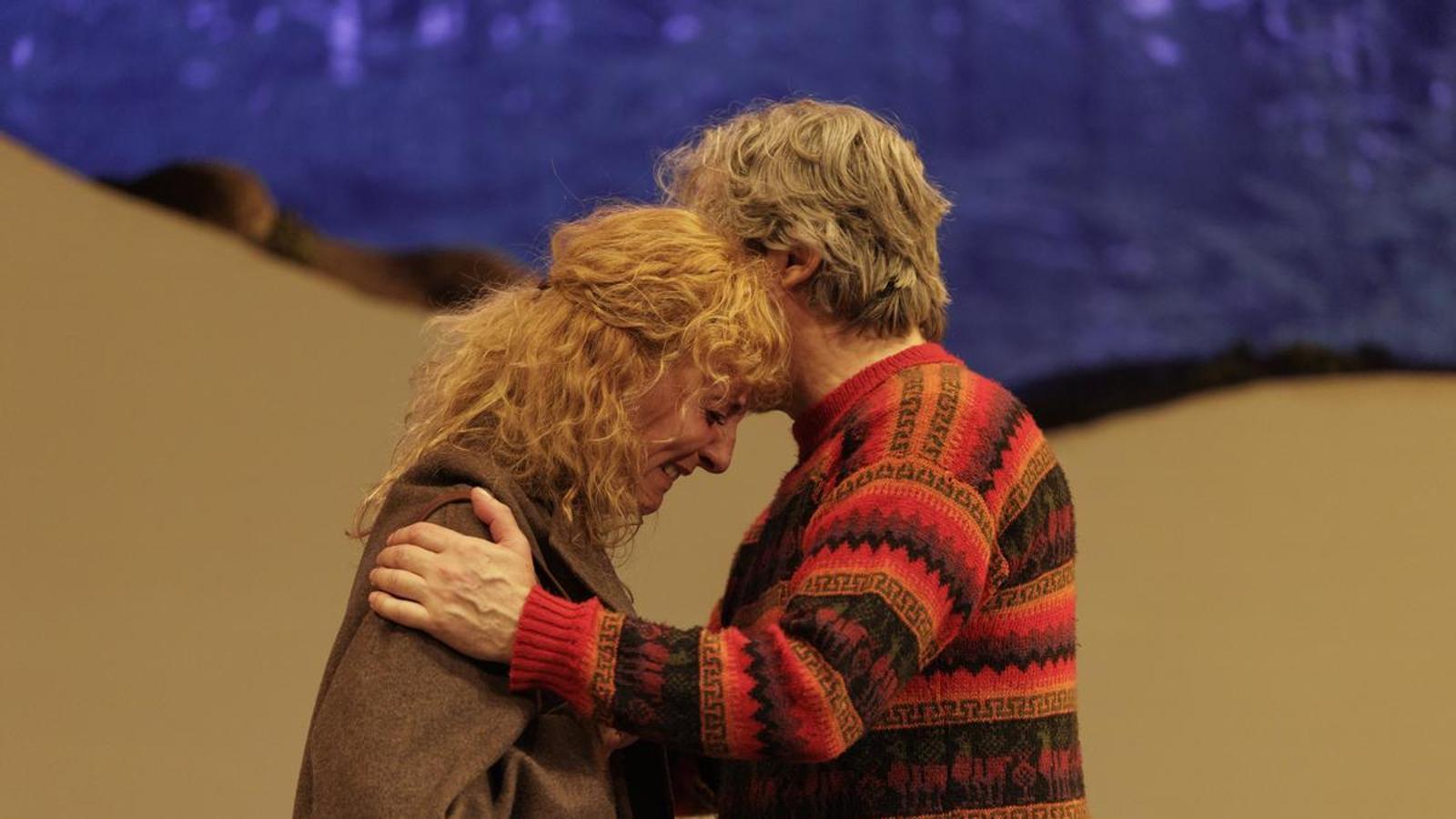
BarcelonaPlaywright and theatre director Alfredo Sanzol (Madrid, 1972) says that, in recent years, rather than searching for stories "like a miner," what he does is "open windows, listen to others, and give them space." That is how he came across the experience of a friend, Ruth, who had spent the last night with her brother in the hospital before he died of an illness. Suddenly, Sanzol—author of multi-award-winning shows such as La tendresa (2019) and El bar que se tragó a todos los españoles (2021) and director of the Centro Dramático Nacional (CDN)—could not get that story out of his head. After a long process of research and interviewing about twenty pairs of siblings, the playwright wrote La última noche con mi hermano, which arrives this Thursday at the Sala Gran of the Teatre Nacional de Catalunya and will be performed there until November 1st. The production stars Nuria Mencía and Jesús Noguero and ends its run in Barcelona, after premiering in Madrid and also visiting Pamplona, Valencia, Seville, and Las Palmas.
The play, which is a co-production between the TNC and the CDN and is performed in Spanish, is structured around three pairs of siblings connected to each other. Nagore (Mencía) and Alberto (Noguero) live their final days together after she is diagnosed with terminal cancer. Ainhoa (Elisabet Gelabert) and Claudio (Cristóbal Suárez) are also two siblings destined to separate, but in this case due to hatred and political disagreements. And Oier (Biel Montoro) and Nahia (Ariadna Llobet) share a bond as step-siblings and, unlike the others, will manage to move forward together thanks to shared generosity.
The text emerged after many meetings Sanzol had with people who have lost their sibling and who have shared their experience. One of them is, precisely, the director of the TNC, Carme Portaceli, who lost her brother. "It is a show that talks about negative topics but is not dark. It is very connected to life," notes Sanzol, who highlights that there are moments of humor in the text.
Collective salvation
Beyond the bonds between siblings, the playwright wanted to explore the idea of fraternity in the present. "We live in a social and democratic state under the rule of law, which does not allow for individual salvation. Despite certain ideologies that say the smartest ones will be saved here, the state says that we are all in this together, that the problems of others are not foreign to us," reflects the director, who through the six characters wanted to delve into the idea of "collective salvation."
The political question also translates into the younger characters, especially Oier's. "He is 20 years old, studies law at the university, and is trying to discover who he is. He looks for answers in the adults, but, since they do not quite convince him, he moves towards the more conservative and right-wing side," explains Montoro. Despite the shadow of ideological discrepancies, which will cause a family upheaval, and the constant presence of death, La última noche con mi hermano moves between drama and comedy. "Although life is very hard, drama is accompanied by comedy. Here it allows us to breathe even in the hardest moments," says Mencía, who adds that the play "is very positive and gives a lot of hope."
