Alfa Romeo Cuorerosso: the necessary beauty, but with a gasoline engine
The Cuorerosso is the prototype that advances the stylistic and technological future of the Lombard brand, at the same time that it makes evident the technological commitment of Alfa Romeo
-
CAT -
CAST
The automotive industry in Italy is experiencing confusing times: Ferrari has manufactured an electric car (Luce) that has little or nothing to do with the style of the legendary Maranello brand, while Maserati seems to be for sale and the Modena-based manufacturer is letting itself be courted by Chinese automotive groups. But the bleak transalpine landscape does not end there, as Abarth has not yet found the key to boosting model sales in a new electrified market and Lancia has become a brand that only sells a single model in a 100% electric format.
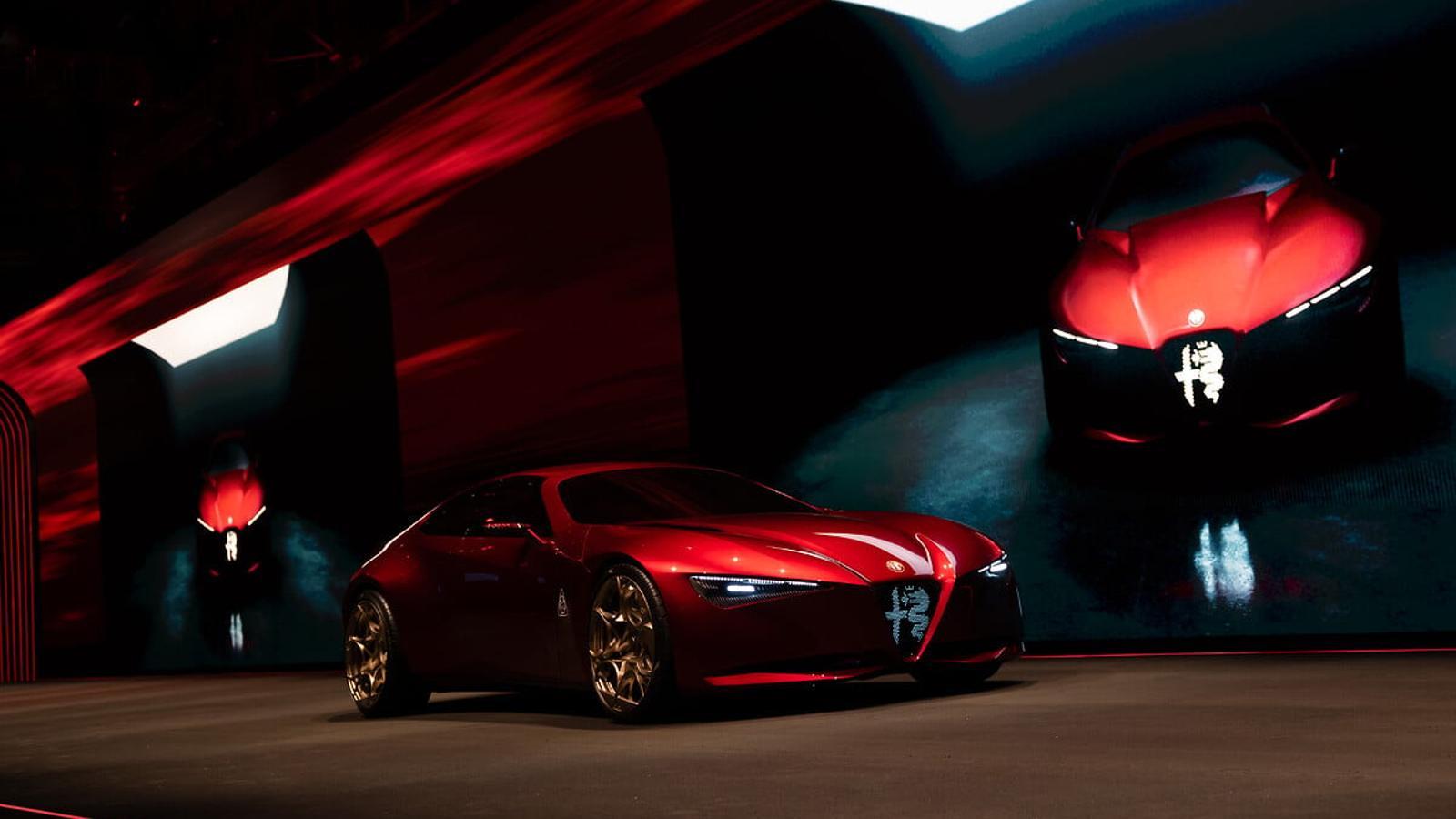
In an increasingly complicated context for the legendary Italian brands, Alfa Romeo has decided to go against the current (as it has often done throughout its history) with the presentation of the new Cuorerosso at the Paris Motor Show. The Cuorerosso (red heart, like the color that identifies Italian racing cars) is a design exercise that shows the master lines of the future of the Milanese brand and advances the new stylistic language led by the Spaniard Alejandro Mesonero-Romanos, a designer trained at Elisava who for many years was head of design at Seat and Cupra.

Enzo Ferrari, one of the main architects of Alfa Romeo's golden years before it became an independent manufacturer, once said that “cars must not only be fast, they must also look the part”. And in a context of somewhat boring electric cars and retro-electrics that interpret the design of the 80s and 90s of the last century, the Cuorerosso shines with its own light, enchanting, surprising and enamouring in equal parts. In fact, Alfa Romeo is already just that: the 33 or the 75, the 147 and 156, the Brera and 159 or the recent Giulia, Stelvio or the magnificent 33 Stradale. There has not been a single Alfa Romeo that is not objectively beautiful.
The ‘necessary beauty’
The Italian Santo Ficili, CEO of the brand, has stated that the Cuorerosso initiates the brand's new design language, christened with the name 'Bellezza Necessaria' and which he describes as “the creation of automobiles designed by driving enthusiasts” and which over time may become “icons of their time”. The Cuorerosso is precisely that, a 4.7-meter-long, 1.98-meter-wide and only 1.33-meter-high passenger car with a four-seater coupe body and an aerodynamic coefficient of just 0.28.
In fact, it is no mystery that the Cuorerosso is the evolution of the current Giulia, the best sports sedan manufactured in the 21st century, which despite being over ten years old, remains just as attractive and modern as when it was introduced. The recipe, in fact, is exactly the same: wide and low body, elongated hood, stylized headlights, grille presided over by the iconic triangular air intake, door handles integrated into the body, and lobed wheels. It seems incredible how the sum of all these elements of the recipe always works, and obviously it also works in this Alfa Romeo Cuorerosso.

The other element to highlight about the Cuorerosso is its mechanics. The prototype uses a 2.9 six-cylinder V-engine (or V6, if you prefer) that is already used by the most powerful versions of the Stelvio and the Giulia. This is a magnificent engine, heir to the Ferrari eight-cylinder engines and which critics and fans have valued very positively. In fact, we were also able to test it and we assure you that for sound, feel, and refinement, Alfa Romeo's 2.9 six-cylinder petrol engine is a work of art, possibly the best petrol engine currently available outside of those used by Ferrari and Lamborghini. Alfa Romeo's commitment is to provide continuity to this engine, but by adding an electric system that allows for a hybrid powertrain and Q4 all-wheel drive with a total combined power that exceeds 700 hp.

This Cuorerosso, however, will never be mass-produced. We will have to be very attentive, however, to the new generations of the Alfa Romeo Giulia and Stelvio, planned for around the year 2028, to check what remains of this stylistic preview from the Lombard brand. And finally, we will also have to see if Alfa Romeo continues to bet on combustion engines in an increasingly electrified market.
